
The most powerful inverter isn’t automatically the right one for your home. A solar and power inverter needs to suit your panels, household electricity use and plans for a battery. A bigger rating alone won’t tell you whether it’s the right fit.
If the differences between grid-connected, hybrid, battery and off-grid inverters feel unclear, you’re not alone. Capacity, single-phase or three-phase supply and equipment compatibility all affect how a system works together. A poor match can limit performance or make future upgrades more complex.
This guide explains how an inverter converts and manages electricity, then compares the main types in practical terms. You’ll learn what to consider when matching inverter capacity to your panels and power needs, what to check before adding battery storage, and what to ask a qualified installer. Whether your property is on the Gold Coast, in Tweed or Tweed Heads, or further north in the Northern Rivers, Ocean Shores or Byron Bay, the right choice depends on the equipment and conditions at your site.
Key Takeaways
- A solar and power inverter converts electricity into a form your home can use and helps manage how energy moves through the system.
- String, battery, hybrid and off-grid inverters serve different setups. An optimiser can support panel performance, but it isn’t a complete inverter.
- Inverter capacity is only one part of system design. Panel output, household demand, export arrangements and battery plans all matter.
- Before choosing, consider your existing system, energy goals, power supply, battery plans and site conditions, then discuss the details with a qualified installer.
- Monitoring can help you review system performance, while installation checks confirm the equipment works together as intended.
What does a solar and power inverter do in a home system?
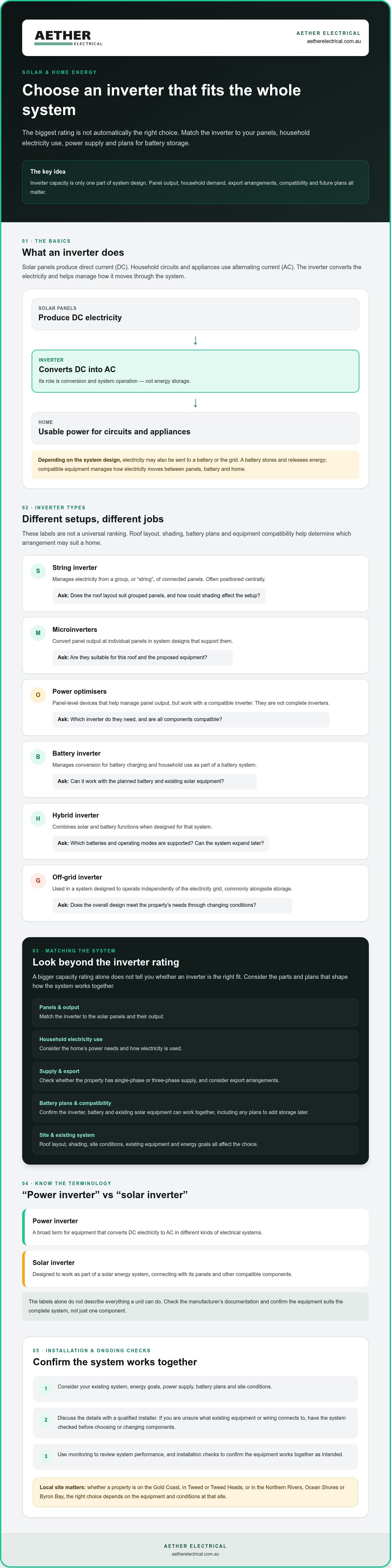
An inverter changes electricity into a form the connected system can use. In a home solar setup, it converts the direct current (DC) produced by solar panels into alternating current (AC), which household circuits and appliances use.
Think of the inverter as a link between parts of the system. Panels produce electricity, the inverter converts it, and the home’s electrical system distributes usable power. The exact layout depends on the system design. An inverter may connect with the switchboard and panels, and in some setups it also works with a battery.
How does an inverter convert solar electricity?
DC flows in one direction. AC changes direction regularly and is the form used by standard household circuits. During the day, panels generate DC and the inverter converts it to AC for use around the home. Depending on the system, electricity may also be sent to a battery or the grid. The Solar inverter overview explains common inverter types and functions.
For example, solar electricity can help run appliances while they’re being used during daylight hours. The inverter’s role is conversion and system operation, not energy storage. A battery stores and releases energy; compatible equipment manages how electricity is converted and moves between the panels, battery and home.
What is the difference between a solar inverter and a power inverter?
Power inverter is a broad term for equipment that converts DC electricity to AC. It can describe devices used in different kinds of electrical systems. A solar inverter is designed to work as part of a solar energy system, connecting with its panels and other compatible components.
The labels alone don’t tell you everything a unit can do. Some inverters are designed to work with batteries, while others have different roles. When comparing a solar and power inverter, check the manufacturer’s documentation and confirm that the equipment suits the complete system, not just one component.
This distinction matters when planning an installation or adding storage later. A battery and inverter need to be compatible, and the system design needs to support how you want to use electricity. If you’re unsure what your existing equipment or wiring connects to, have a qualified installer check the system before you choose or change components.
Solar, battery, and hybrid inverters: what does each type do?
Inverter labels describe different jobs and configurations, not a universal ranking. Roof shape, shading, battery plans and equipment compatibility all influence which arrangement may suit your home. Use this comparison to narrow down the questions, then consider the whole system rather than choosing by name alone.
| Type | Function and common configuration | Questions to ask |
|---|---|---|
| String inverter | Manages electricity from a group, or “string”, of connected solar panels. Often used in a central location. | Does the roof layout suit grouped panels? How could shading affect the setup? |
| Microinverters | Convert panel output at individual panels in system designs that support them. | Are they suitable for this roof and the proposed equipment? |
| Power optimisers | Panel-level devices that work with a compatible inverter. They help manage panel output but aren’t complete inverters. | Which inverter do they need to work with, and are all components compatible? |
| Battery inverter | Manages conversion for battery charging and household use as part of a battery system. | Can it work with the planned battery and existing solar equipment? |
| Hybrid inverter | Combines solar and battery functions when designed for that system. | Which batteries and operating modes are supported? Can the system expand later? |
| Off-grid inverter | Used in a system designed to operate independently of the electricity grid, commonly alongside storage. | Does the overall system design meet the property’s needs through changing conditions? |
String inverters, microinverters, and power optimisers
A string inverter manages output from panels connected together. Microinverters convert electricity at individual panels, but only in system designs that support them. Optimisers also sit at panel level, but rely on a compatible inverter to complete the system. They aren’t interchangeable options. The suitable arrangement depends on roof layout, shading and the equipment selected.
Battery and hybrid inverters: how do they differ?
A battery inverter manages power moving to and from storage, while a hybrid inverter combines solar and battery functions when designed for that setup. Neither label by itself confirms compatibility. Ask the installer to check the battery, inverter, operating modes and any plans to expand the system together.
There’s no best type for every property. If you’re unsure how your existing system or roof conditions affect the choice, a qualified assessment can clarify the options. Aether Electrical provides solar and battery services across the Gold Coast and Northern Rivers.
How do inverter capacity, phases, and system design fit together?
An inverter’s capacity is one part of the design, not a score for the whole system. The right match depends on how much electricity the panels can produce, how your household uses power, what can be exported and whether you plan to add a battery.
An inverter and the equipment connected to it need to be assessed together, because capacity alone can’t show whether a system suits your property. Comparing a solar and power inverter by its headline kilowatt rating alone can therefore be misleading.
What does inverter capacity tell you?
The inverter’s rated output describes the power it’s designed to deliver under specified conditions. Read that rating alongside the solar array specifications: panel capacity and inverter output describe different parts of the system, so neither figure tells the whole story on its own.
There’s no single sizing ratio that suits every installation. The appropriate design depends on the equipment, current product guidance and how the system is intended to operate. A qualified installer can check the switchboard and electrical supply, consider the loads you want to run, and review battery plans before specifying equipment.
Export arrangements matter too. The amount of solar power that can be sent to the grid may be affected by network requirements at the property. Confirm any export constraints as part of the design instead of assuming the inverter’s rated output is the amount you can export.
Does a single-phase or three-phase inverter suit your property?
Single-phase and three-phase describe how electricity is supplied to a property. In simple terms, three-phase supply uses three active electrical phases rather than one. This can affect which inverter and system configuration are suitable, but the label alone doesn’t determine what your home needs.
Don’t guess your supply type from the number of appliances you own or from an inverter’s marketing. Ask an installer to confirm the phase at your property and check how it relates to the proposed equipment and the loads you intend to run.
Before settling on a design, ask the installer to explain how these pieces fit together:
- Solar array capacity and inverter rated output
- Household demand and the loads you want to support
- Supply phase and switchboard suitability
- Battery plans and equipment compatibility
- Network requirements and any export limits
Reviewing these details keeps the decision grounded in your property and energy goals, rather than a single number on a product sheet.
How do you choose an inverter for solar, batteries, and local site conditions?
Start with what you need the system to do, then check what your property can support. Is your priority using solar during the day, adding battery storage or planning an off-grid setup? Your answer helps narrow the options, but the existing equipment, electrical supply and installation site still need to be considered together.
What should you check before choosing an inverter?
Gather what you know before speaking with an installer. This checklist helps make the conversation practical:
- 1. Current system: Note the panel and inverter details, electricity-use patterns and any available switchboard information.
- 2. Energy goals: Decide whether you want to use solar during the day, add storage or support an off-grid setup.
- 3. Supply: Ask the installer to confirm your property’s electrical supply and any relevant network requirements.
- 4. Battery plans: Record planned battery additions, the backup you expect and whether you may want to expand the system later.
- 5. Household changes: Mention planned changes that could affect electricity demand, such as adding major electrical equipment.
- 6. Qualified advice: Ask the installer to confirm component compatibility and explain any design limits in writing.
For more on the broader project, see this Gold Coast solar installation guide. A well-chosen solar and power inverter should suit the panels, battery plans and property, not just one part of the setup.
Where should an inverter be installed around the Gold Coast or Northern Rivers?
Location matters. The installer should consider safe access for inspection, ventilation, protection from weather and the manufacturer’s placement instructions. Around the Gold Coast, Tweed and Tweed Heads, and across the Northern Rivers, including Ocean Shores and Byron Bay, ask the installer to assess the site conditions, including any coastal exposure, before deciding where equipment should go.
Export arrangements are another part of the picture. Confirm what applies to your property and how it may affect the system design. This solar feed-in tariff guide offers further reading on exports.
If equipment compatibility or site conditions are unclear, ask Aether Electrical about solar and battery system assessment across the Gold Coast and Northern Rivers.
What should you expect from inverter installation, monitoring, and maintenance?
A well-planned installation involves more than mounting an inverter and connecting cables. A qualified installer assesses the site, checks that the equipment works together, integrates it with the switchboard, then tests the system. These steps help confirm that the solar and power inverter setup suits the property and operates as intended.
What happens during inverter installation and commissioning?
Before work begins, the installer should review the proposed location, existing electrical setup and system components. They’ll confirm compatibility, complete the installation and test the system after it’s connected. Ask what was checked and request the relevant system documents.
Before handover, make sure you know how to use the monitoring tools, what system alerts mean and how to shut the system down if needed. Keep the instructions and equipment details somewhere easy to find. They’ll be useful if you need servicing or fault checks later.
When should an inverter be checked or serviced?
Monitoring gives you a way to review system performance and spot changes worth following up. It doesn’t necessarily identify or diagnose every fault. Check alerts and reported output from time to time, and note persistent warnings or unexpected changes. Output can vary, so look at the pattern rather than reacting to one reading.
Don’t open the inverter or attempt electrical repairs yourself. Arrange a professional assessment if an alert continues, you see visible damage or performance changes without a clear explanation. For broader household electrical context, read this Gold Coast home electrical services guide.
Aether Electrical provides solar installation, servicing, inspections and repairs, as well as battery storage installation across the Gold Coast and Northern Rivers. Talk to Aether Electrical about solar inverter installation if you’d like qualified advice for your system.
Choose a system that’s ready for what’s next
The right solar and power inverter is the one that fits your whole setup, not simply the one with the biggest capacity. Panel output, household demand, electrical supply, export arrangements and battery plans all shape the decision. Checking these together helps you choose equipment that suits your property now and brings future needs into the conversation.
Before deciding, gather details about your existing system and energy goals. Ask a qualified installer to confirm compatibility, assess the site and explain any design limits. Clear answers make it easier to compare options without getting caught up in product jargon.
Aether Electrical provides solar installation, servicing, inspections and repairs for homes and businesses across the Gold Coast, Tweed and Northern Rivers. If you’re weighing up equipment or planning a solar or battery system, talk to Aether Electrical about your solar inverter options.
With a sound assessment and the right questions, you can move forward with greater confidence and a system designed around your property.
Frequently Asked Questions
What does a solar power inverter do?
A solar power inverter converts the direct current (DC) electricity produced by solar panels into alternating current (AC) for household circuits and appliances. It also helps manage how electricity moves through the solar system. Depending on the setup, solar power may be used in the home, stored in a compatible battery or exported to the grid. The inverter doesn’t store energy itself; that’s the battery’s role.
Can I add a battery to my existing solar inverter?
Possibly, but it depends on your existing inverter, the battery and how the solar system is configured. Some setups may support a battery addition with compatible equipment, while others may need a different arrangement. Before choosing a battery, gather your inverter and panel details, then ask a qualified installer to confirm compatibility, expected operation and any design limits. Don’t assume a battery can connect directly to every existing solar system.
Do I need a hybrid inverter for a solar battery?
No, a hybrid inverter isn’t the only possible way to combine solar and battery storage. A hybrid unit can manage solar and battery functions when designed for that system, while other compatible arrangements may use separate equipment. The right option depends on your existing solar setup, battery choice and the way you want the system to operate. Ask the installer to confirm supported equipment, operating modes and options for future expansion.
How do I know what size solar inverter I need?
There isn’t one inverter size that suits every home. The choice depends on the solar array, household electricity demand, electrical supply, export arrangements and any battery plans. An installer should consider the inverter’s rated output alongside the panel specifications and inspect the switchboard and supply before recommending equipment. Share how and when you use electricity, plus any planned changes to household demand, so the system design reflects your needs.
Is a single-phase or three-phase inverter better for my home?
Neither is automatically better. Single-phase and three-phase describe the electrical supply to your property, and the suitable inverter configuration depends on that supply and the wider system design. Don’t infer your phase from the number of appliances or an inverter listing. Ask a qualified installer to confirm the property’s supply, check the network’s requirements and identify any export constraints before selecting equipment.
What happens if my solar inverter stops working?
If your inverter stops operating, the system may not convert solar electricity as expected. Check the monitoring display or app for alerts and note any change in reported output, but don’t open the unit or attempt electrical repairs. Follow the manufacturer’s user guidance and contact a qualified professional if the issue persists, the inverter shows visible damage or performance changes without a clear explanation. Monitoring can flag changes, but it may not identify every fault.
How often should a solar inverter be checked or serviced?
Follow the manufacturer’s guidance for your equipment, as there isn’t one service interval that applies to every system. You can review monitoring data and alerts periodically, and keep a note of persistent warnings or unexpected changes in output. Arrange a professional assessment if concerns continue, rather than opening the inverter yourself. Aether Electrical provides solar installation, servicing, inspections and repairs across the Gold Coast, Tweed, Tweed Heads, Northern Rivers, Ocean Shores and Byron Bay.


