
Electrical safety is about more than whether the lights turn on. A home electrical safety inspection in the Northern Rivers checks key parts of the installation, including wiring, outlets, appliances and circuit breakers, to identify faults and potential hazards. It gives you a clearer picture of what’s working, what needs attention and whether safety repairs are recommended.
It’s sensible to want clear findings, not guesswork. A professional inspection can cover switchboards, power points, lighting, safety switches, fixed appliances and outdoor electrical installations. Testing helps assess whether electrical components are operating safely, but a general inspection can’t necessarily establish the condition of cables concealed inside finished walls. This guide explains what checks involve, why testing matters and how faults and recommended repairs are handled. It also covers factors that can affect inspection time and cost, and what to expect during an inspection at a Northern Rivers home.
Key Takeaways
- See how property size, electrical-system complexity and access shape an inspection, and what the process involves.
- Learn how testing checks key electrical components and helps identify faults that may otherwise go unnoticed.
- Understand how findings guide the next steps, including which safety repairs need attention first.
- Discover what residential inspections can reveal about an older home and how to plan suitable follow-up work.
What does a home electrical safety inspection entail?
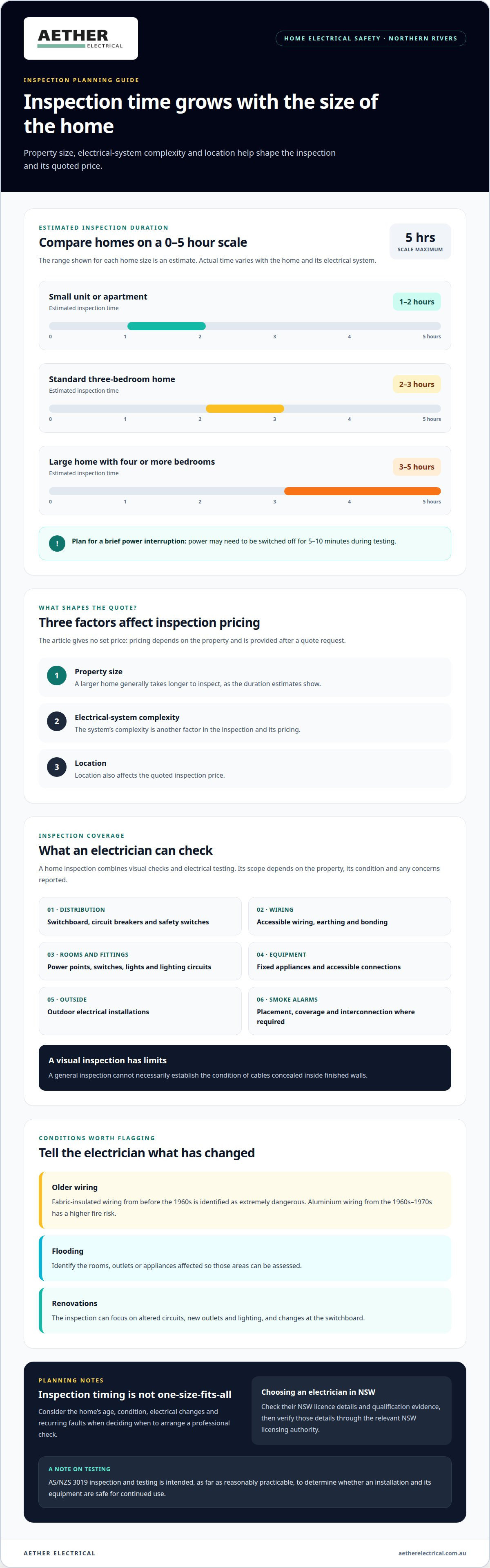
A home inspection combines visual checks and electrical testing. Its scope depends on the property, its condition and any concerns you report.
Inspection process and pricing factors
The electrician checks accessible wiring, the switchboard, outlets, lights, circuit protection and fixed appliances. Smoke alarm checks assess placement, coverage and interconnection where required. Inspection pricing depends on property size, system complexity and location, and is provided after a quote request. Findings can be documented with explanations and safety recommendations. A general inspection can’t necessarily establish the condition of cables concealed inside finished walls.
Time varies with the home’s size and electrical system. An inspection of a small unit or apartment is estimated at 1-2 hours; a standard three-bedroom home, 2-3 hours; and a large home with four or more bedrooms, 3-5 hours. Power may need to be switched off for 5-10 minutes during testing, so plan for a brief interruption.
There isn’t one inspection interval that suits every home. Consider the property’s age, condition, electrical changes and recurring faults when deciding when to arrange a professional check.
Choose a licensed electrician who carries out residential electrical inspections in the Northern Rivers. Ask for their NSW licence details and qualification evidence, then verify those details through the relevant NSW licensing authority.
Checks for older, flooded or renovated homes
Older wiring deserves close attention. Fabric-insulated wiring from before the 1960s is identified as extremely dangerous, while aluminium wiring from the 1960s-1970s has a higher fire risk. After flooding, tell the electrician which rooms, outlets or appliances were affected so those areas can be assessed. Following renovations, the inspection can focus on altered circuits, new outlets and lighting, and changes at the switchboard.
Why is electrical installation testing and inspection important?
Visual checks can reveal damage, while testing can uncover faults that aren’t obvious. Together, they help assess whether a residential installation is safe for continued use.
Switchboard and wiring checks
The electrician checks the switchboard for damage, loose connections and signs of overheating. Circuit breakers and safety switches are assessed for operation, while accessible wiring is examined for wear or deterioration. Testing also considers earthing and bonding. AS/NZS 3019 inspection and testing is intended, as far as reasonably practicable, to determine whether an installation and its equipment are safe for continued use.
Power points, switches and lighting
Outlets, switches and light fittings are checked for cracks, discolouration, looseness and heat damage. These visible signs can point to faults that need investigation. The electrician also assesses lighting circuits and outdoor electrical installations. A flickering light, buzzing switch or unusually warm outlet can help identify where to investigate.
Fixed appliance and fitting checks
Fixed appliances, such as ovens and cooktops, form part of a complete property inspection. The electrician checks their accessible connections and condition, alongside fittings such as exhaust fans and fixed lights. A fault may be in the appliance, its circuit or the connection supplying it. Testing helps pinpoint where attention is needed instead of relying on appearance alone.
Safety switch and RCD testing
A safety switch, also called a residual current device (RCD), is tested for correct operation and trip time. Testing can identify a switch that fails to operate as intended. A guide recommends having two or more safety switches protect circuits rather than relying on one RCD for every circuit. Safety switches should be checked regularly, and a professional inspection can assess their operation.
For owner-occupied homes in NSW, treat periodic inspections as planned electrical maintenance, with timing shaped by the home’s condition and changes. Warning signs include repeated circuit breaker trips, flickering lights, damaged outlets, burning smells or tingling from an appliance. Arrange professional assessment when these appear. An electrical maintenance and servicing inspection can help identify faults and clarify which repairs need attention.
Electrical fault finding and safety repairs
Fault finding starts with the symptom: a circuit that trips, a flickering light or an outlet that stops working. The electrician relates your report to the affected circuit, fitting or appliance, then carries out targeted checks. This narrows the search from a visible symptom to its likely source. Intermittent faults may need careful investigation because they can disappear before the electrician arrives.
The electrician then assesses the relevant parts of the installation and tests where needed. A tripping breaker, for example, may relate to a circuit fault or connected appliance. The electrician can isolate the affected area while investigating, then explain the findings. This distinction matters: replacing a fitting without finding the cause may leave the underlying fault unresolved.
For a rental property, a tenant can describe when the problem occurs and which room or fitting is affected. That detail helps direct the inspection, whether the issue involves bedroom lighting, a kitchen outlet or an appliance connection. A landlord or property manager can arrange access for the electrician. Clear notes about earlier symptoms also help distinguish a recurring fault from a new one.
When repairs are recommended, the electrician explains the fault, the work needed and any affected circuits or fittings. The repair may involve replacing a damaged component, correcting a connection or addressing a switchboard problem. After the work, further checks can assess the repaired area and confirm it operates as intended. A written record of findings and repairs gives the owner a practical reference for future maintenance.
Priorities depend on the fault’s location, visible damage and effect on other parts of the home. A licensed electrician can distinguish urgent safety concerns from maintenance that can be planned. For example, an unsafe outlet needs attention before cosmetic lighting changes. A clear sequence helps owners understand why each repair is recommended, what it affects and what happens next.
Residential electrical safety inspections
For a home, an inspection considers whether the electrical installation and its equipment are safe for continued use. AS/NZS 3000 is the Australian standard used to check electrical system compliance. The electrician assesses accessible components and testing results together, then identifies faults, safety concerns and possible next steps. The key takeaway is practical: inspection findings should explain what needs attention and why.
Older installations may need a closer look at their switchboards, wiring and protective devices. A switchboard replacement or planned upgrade is separate electrical work, not simply an inspection result. The report should distinguish between an observed issue, a recommended repair and work already completed. This helps owners plan repairs without treating every recommendation as an immediate replacement.
For rental homes, a general electrical safety inspection should not be described as a statutory rental electrical certificate unless that specific document and legal requirement apply. A landlord may use an inspection as a best-practice maintenance measure. The written report can include photos, explanations of findings, safety recommendations and compliance documentation. It gives the property owner a record of the installation’s condition at the time of inspection.
Between professional inspections, keep an eye on outlets and test smoke alarms using their test buttons. These routine observations don’t replace an electrical inspection, but they can help you spot a change worth reporting, such as a newly discoloured outlet or an alarm that fails its test.
After the inspection, use the documented findings to organise repairs by safety concern and affected area. Keep the report with property records, especially after electrical work or a switchboard upgrade. For a residential assessment and follow-up electrical work, arrange a home electrical inspection.
Aether Electrical
Aether Electrical can help when an inspection identifies a fault, safety repair or electrical work that needs planning. Its domestic electrical services cover residential needs, including follow-up work involving switchboards, circuits, lighting or power. It’s a practical next step when you want to understand what needs attention and arrange suitable work.
For homes with solar, battery storage or an EV charger, Aether Electrical also provides installation and servicing. The right work depends on the inspection findings and the property’s electrical needs. Clear results help focus the discussion on practical next steps.
Contact Aether Electrical to discuss your home’s electrical inspection findings and next steps.
Make your next electrical decision with confidence
A useful next step is to connect the inspection findings with your plans for the home. Before adding equipment or changing how a room is used, consider whether the existing electrical installation suits that change. A home electrical safety inspection in the Northern Rivers can give you a clearer starting point for those decisions, rather than leaving older concerns unaddressed.
Keep a record of the inspection and note any new symptoms or electrical changes over time. This context can help an electrician understand what has changed and focus follow-up work where it matters. If a finding is unclear, ask for it to be explained in plain language before deciding how to proceed.
For help with your home’s electrical needs, contact Aether Electrical. A clear next step can make electrical planning feel more manageable.
Frequently Asked Questions
How does a licensed electrician determine the appropriate AS/NZS 3019 inspection level for a home?
The electrician matches the inspection scope to the home’s condition, accessible components and reason for the check. For example, a routine assessment and an investigation after electrical damage may require different checks. Ask for the selected AS/NZS 3019 inspection level to be recorded with the findings, so you can understand what was assessed and what fell outside the inspection’s scope.
If the property switchboard does not have RCD protection, does it have to be upgraded to RCDs and circuit breakers?
Not automatically based on that observation alone. An electrician needs to assess the switchboard, circuits and installation to determine whether an upgrade or other work is needed. The report should explain the safety concern and recommended action, if any. RCDs and circuit breakers have different roles, so the advice should identify which protection is missing and what work would address it.
What happens after the inspection?
You receive an explanation of the findings and any recommended repairs. The report can help distinguish safety issues from maintenance or upgrade work that can be planned. If electrical work is carried out, keep its compliance documentation with the inspection report. This gives a future electrician a useful record when investigating a recurring fault or assessing later work.
What documents do I need to provide after an electrical safety check?
You generally don’t need to supply documents after the check unless a particular process requires them. Keep the inspection report, repair records and relevant documents from earlier electrical work together. If you’re arranging a follow-up assessment, previous reports, renovation records and notes about recurring problems can give the electrician useful context. For a rental, retain the records with the property’s maintenance documents.
What does a home electrical safety inspection include in Australia?
A residential inspection can assess accessible wiring, switchboards, outlets, lighting, safety switches, fixed appliances and outdoor electrical installations. Testing helps assess how protective devices operate, while visual checks can reveal damage or deterioration. The precise scope depends on the inspection arranged. Ask for the report to identify the components assessed, test results and any limits, such as concealed cables that weren’t accessible.
How much does a home electrical safety inspection cost in the Northern Rivers NSW?
The price depends on the job and is provided after a quote request. Property size, electrical-system complexity and location affect the cost. A compact home with a straightforward installation may need a different scope from a larger property with multiple circuits or difficult access. The quote should reflect the inspection requested and any additional testing or repair work, rather than assume every home needs identical checks.


