

A failed pool light needs a proper electrical assessment, not guesswork. In Queensland, pool wiring and electrical equipment must be installed and maintained by a licensed electrician. For pool and spa electrical services on the Gold Coast, start by finding out whether the fault is with the light, its connection or the electrical supply.
It’s understandable to want a quick fix when the pool area goes dark. But water and electricity need careful handling, and the right solution depends on the equipment and existing installation.
This guide explains what an electrician checks when pool lights fail, how spa circuits and safety switches are assessed, and what to consider for outdoor power and pool-area lighting. You’ll also see how planning changes for new equipment, replacement spas and pool projects across the Gold Coast, Tweed, Tweed Heads and Northern Rivers.
Key Takeaways
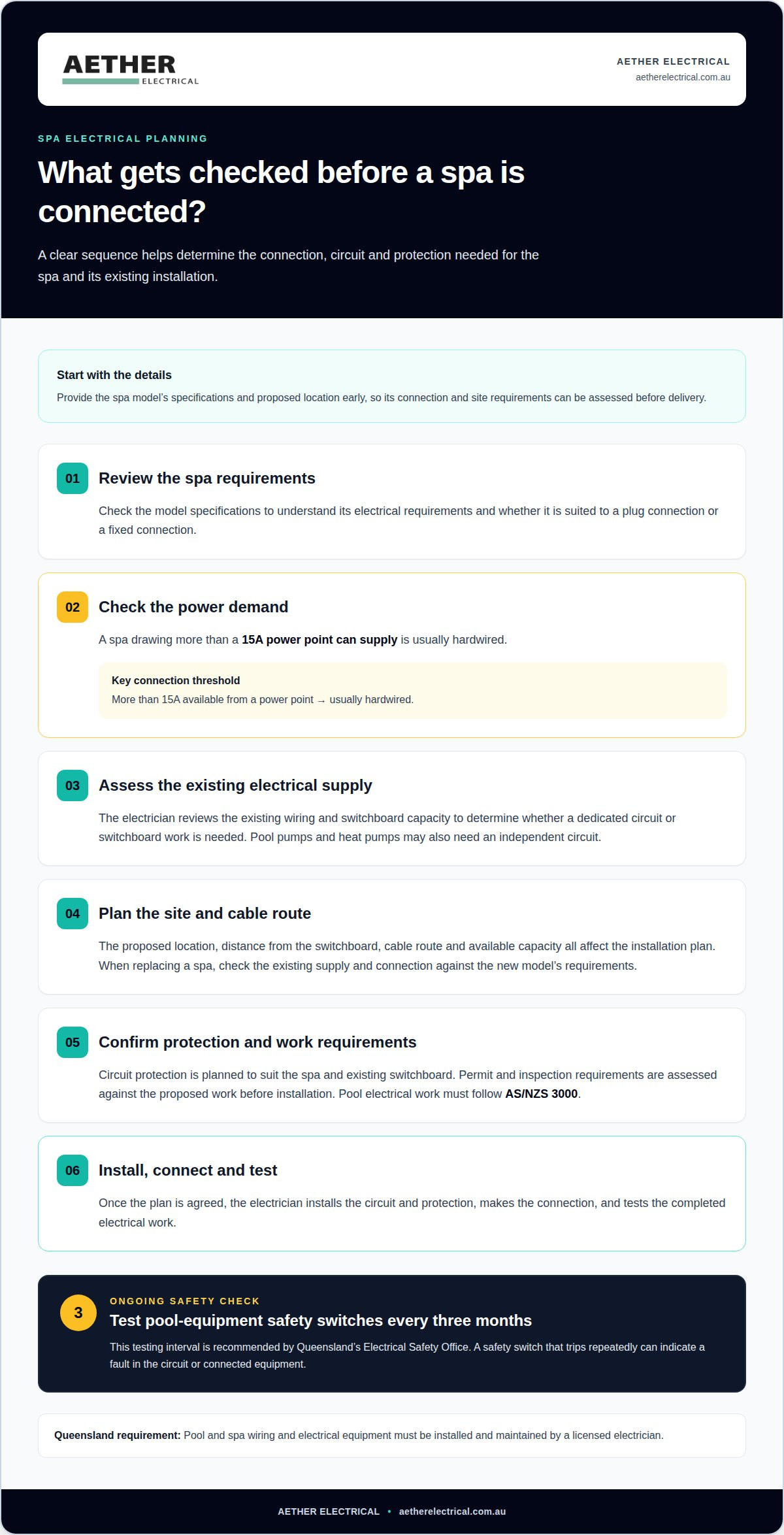
- Provide the spa model’s specifications and planned location early so its connection and site requirements can be assessed before delivery.
- A spa drawing more than a 15A power point can supply is usually hardwired; circuit needs and protection depend on the spa and the existing installation.
- According to Queensland’s Electrical Safety Office, test pool-equipment safety switches every three months.
- Plan outdoor power and pool lighting around the pool layout, and arrange bonding while new-pool reinforcing is exposed, before concrete is poured or sprayed.
Pool lights not working?
A dark pool light can point to a failed lamp, a damaged connection or a supply fault. In Queensland, a licensed electrician must install and maintain pool wiring and electrical equipment. The electrician can assess the light and its supply, then determine whether repair or replacement is appropriate. Don’t treat a pool light as an ordinary household fitting: it operates beside water and needs careful assessment.
For a new or replacement light, work starts with the pool’s existing setup. The electrician checks how the light connects, assesses related equipment and plans the installation around the pool area. The assessment can also establish whether the fault affects one light or other pool equipment. That distinction helps target the repair instead of replacing parts without identifying the cause.
Pool equipment can include pumps, chlorinators, pool cleaners, heaters, spa pumps and blowers. Electrical work may involve installing equipment or addressing its power connection. If a pump or chlorinator needs repair or replacement, the electrician assesses the supply and connection. A problem inside a spa’s pump, heater or controls may need a spa technician, rather than electrical work on the connection alone.
Installing a pool pump power point is another common electrical job. Its position and supply need to suit the equipment and outdoor location. A new or replacement pump can also change electrical demand, so assess the existing supply before connecting it. An electrician can determine whether the setup supports the equipment and whether it needs an independent circuit.
Plan for a spa’s electrical requirements before delivery. Provide its specifications and proposed location so the connection can be assessed in advance. Some models suit a plug connection; others need a fixed connection. When replacing a spa, check the existing supply and connection against the new model’s requirements. The distance from the switchboard, cable route and available capacity all affect the installation plan.
New spa circuits and safety switch protection
A spa needs suitable circuit protection before use. The right setup depends on its electrical requirements and the existing switchboard.
Spa circuits and safety switch faults
A spa drawing more than a 15A power point can supply is usually hardwired. A licensed electrician assesses the spa requirements, existing wiring and switchboard capacity to determine whether a dedicated circuit or switchboard work is needed. Pool pumps and heat pumps may also need an independent circuit. After installation, the connection and protection arrangements are tested.
A safety switch that trips repeatedly can indicate a fault in the circuit or connected equipment. Faulty electrical equipment around swimming water can create a shock risk. Queensland’s Electrical Safety Office recommends testing pool-equipment safety switches every three months. In Queensland, a licensed electrician must install and maintain pool and spa wiring and equipment.
Permits and installation steps
An electrician assesses permit and inspection requirements against the proposed work before installation. An electrical safety inspection can identify hazards and assess whether the work meets relevant safety standards. Pool electrical work must follow AS/NZS 3000. The electrician reviews the spa specifications, location, supply and switchboard, then plans the wiring and protection to suit.
Once the plan is agreed, the electrician installs the circuit and protection, makes the connection and tests the completed electrical work. A new spa’s specifications and proposed location help shape the assessment. The same careful process applies when investigating a pool-circuit fault or checking equipment after electrical work.
Pool and spa electricians can repair electrical faults and test installations. Emergency attendance is a separate service arrangement, so round-the-clock response isn’t automatic. If a fault affects pool equipment or its circuit, arrange an electrical assessment rather than continuing to use affected equipment. Arrange a pool electrical assessment to have the wiring and protection reviewed.
Outdoor power points and pool-area lighting
Pool-area power points and electrical equipment need careful placement around the pool edge. Their position must meet required clearances, so an electrician assesses the layout before installing outlets. The plan can account for pool lighting, spa pumps and solar pool-heater pumps. It also considers how people move between the house, pool and equipment area, keeping power accessible without placing fittings too close to the water.
Underwater pool lights combine electrical equipment and water, so faults need professional assessment. If a light fails, an electrician checks its supply, cable and transformer to identify what needs attention. Pool-lighting equipment includes halogen and LED options, with single- and twin-connect transformers. The existing transformer and light arrangement help determine which replacement components will suit the installation.
LED lighting is an option when replacing pool lights or planning a new setup. An electrician assesses the existing connections and transformer arrangement before selecting compatible equipment. Pool lights can also be switched from inside the house, helping people reach the pool area with the lights on. Underwater lights need professional assessment: water and electrical faults are not a safe combination.
Lighting beyond the pool can improve visibility along garden paths, steps and seating areas. A lighting plan can coordinate landscape fittings with pool lights and illuminate routes between the house and water. Timers can prevent pool-area lights being left on after people leave. An electrician can assess outdoor power points, lighting positions and switching together, then install an arrangement that suits the property and pool equipment.
Pool electrical services across the Gold Coast and Northern Rivers
Pool electrical projects across the Gold Coast, Tweed, Tweed Heads and Northern Rivers can involve wiring, lighting, pump connections, earthing and bonding. Electricians also assess switchboards and supplies before equipment such as pool heat pumps is added. Plan the electrical requirements alongside the pool layout, before paths, concrete and equipment locations are fixed.
For a new Queensland pool, WorkSafe Queensland says bonding conductors should be installed while reinforcing is exposed, before concrete is poured or sprayed. This lets the electrician connect conductors as the pool structure takes shape. Pool equipotential bonding connects conductive parts to electrical earth to reduce dangerous voltage differences around the water. The cited Queensland bonding requirements apply to conductive metal parts within 1.25 m of the pool edge.
Existing pools need an assessment of their own. An electrician can inspect wiring, earthing and bonding, then assess whether the installation suits the equipment and layout. A new pump or heat pump can draw substantial power, so the switchboard and supply should be checked first. Larger pool heat pumps may require 3-phase power and an independent circuit.
Pool electrical work can also include automation for lighting, heating and filtration. A planned upgrade might coordinate pump wiring with lighting controls rather than treating each item as a separate change. An existing pump wired for Tariff 33 can be rewired to operate at any time on normal-rate power. The electrical setup and intended operation guide the work.
A practical sequence is to assess the pool design, equipment and supply, then plan wiring, bonding and connection points before construction or installation. This gives the pool builder and electrician a clearer plan, especially before concrete paths restrict future cable routes.
Planning a pool project or electrical upgrade? Discuss pool electrical work before installation begins.
Aether Electrical
Aether Electrical handles pool and spa electrical faults, installations and upgrades. For pool and spa electrical services across the Gold Coast, an electrical assessment clarifies what needs attention and how the equipment, location and existing setup affect the work.
If your project includes landscaping or a new path, discuss the plans early. Coordinating electrical work with construction can help avoid changes to finished areas later. Aether Electrical also provides Domestic Electrical Services, Solar Installation & Servicing and Battery Storage Installation.
Share the equipment details, proposed location and any symptoms you’ve noticed. For pool and spa electrical services on the Gold Coast, contact Aether Electrical to discuss your requirements and next steps.
Plan your next step with confidence
Good pool and spa electrical services on the Gold Coast start with a clear picture of what needs attention. Note which equipment is affected, when the issue occurs and whether it followed a replacement or upgrade. For a planned spa installation, have the model details and proposed position ready to make the initial discussion more useful.
If your project includes landscaping or a new path, bring those plans into the discussion early. Coordinating electrical work with construction can help avoid changes to finished areas later. Alongside broader electrical planning, Aether Electrical provides Domestic Electrical Services, Solar Installation & Servicing and Battery Storage Installation.
Whether you’re planning ahead or dealing with a fault, sharing the details is a practical first step. Contact Aether Electrical about pool and spa electrical work to discuss your requirements and move forward with a clear plan.
Frequently Asked Questions
Which Gold Coast electricians specialise in pool and spa electrical services?
Aether Electrical provides electrical services for residential and commercial properties, including pool and spa electrical work. Its local service area covers the Gold Coast, Tweed, Tweed Heads, Northern Rivers, Ocean Shores and Byron Bay. For a pool light fault or planned spa connection, share the equipment details and issue you’ve noticed. This helps clarify the electrical work needed and whether the fault involves connected spa equipment.
What Australian electrical standards and regulations apply to pool and spa installations?
Pool electrical work in Australia must follow AS/NZS 3000, the wiring rules. In Queensland, a licensed electrician must install and maintain pool wiring and electrical equipment. These requirements matter for new installations, repairs and changes to existing equipment. A practical example is a spa replacement: the electrician assesses whether the existing electrical supply and connection suit the replacement model before connecting it.
What are the electrical safety-zone requirements around pools and spas in Queensland?
Queensland’s pool-bonding requirements cited for conductive metal parts apply within 1.25 m of the pool edge. The electrical layout also needs to account for specified clearances around pool equipment, power points and switchboards. Their permitted positions depend on the installation and pool layout. An electrician can assess the location of metal fittings and electrical equipment as part of planning or reviewing pool-area work.
How often should pool and spa electrical systems be inspected and maintained?
Test pool-equipment safety switches every three months, according to Queensland’s Electrical Safety Office. This interval applies to safety-switch testing, not every component or a full electrical inspection. Arrange an electrician’s assessment if a switch trips repeatedly, a light stops working, or equipment is added or replaced. For example, a new pump can change the demands on the existing electrical setup and may need its own assessment.
How do I choose a licensed electrician for pool or spa work in Queensland?
Choose a licensed electrician to install and maintain pool wiring and equipment, and confirm they can assess the spa or pool requirements, existing supply and safety protection. Pool electrical work must follow AS/NZS 3000.


