
The highest solar export rate isn’t always the best electricity plan. A generous solar power feed in tariff can look appealing, but higher usage rates or daily supply charges may reduce its value.
It’s reasonable to want a clear return for the solar energy your household sends to the grid. The credit can vary by retailer, network, plan conditions and how much you export, so the rate alone doesn’t tell the whole story.
This guide explains how feed-in tariffs work and how export credits may appear on your electricity bill. You’ll learn how to compare plans by looking at total household costs, not just the advertised export rate. We’ll also cover practical ways to use more of your solar power at home, where it suits your routine.
Feed-in tariffs are only one part of your system’s value. With a clearer view of your energy use, plan details and solar performance, you can make a more informed choice about what to do next.
Key Takeaways
- A solar power feed in tariff is a retailer credit for eligible electricity exported to the grid, shown separately from electricity you import.
- Check available plans and tariff arrangements by postcode, as options can differ across the Gold Coast and Northern Rivers.
- Compare export credits alongside usage rates, supply charges, eligibility rules and your household’s energy habits.
- Use your latest bill and retailer plan details to review exports, adjust when you use appliances, and recheck plan terms regularly.
- If solar output seems unexpectedly low, a system check may help; Aether Electrical installs and services solar and battery systems across the Gold Coast and Northern Rivers.
What is a solar power feed-in tariff, and how does it affect your bill?
A solar power feed-in tariff is a credit your electricity retailer applies for eligible solar electricity you export to the grid. Your system may generate more power than your household is using at a particular time. The surplus can flow to the grid, and your plan determines how that exported energy is credited.
The term Feed-in tariff describes a broader policy mechanism used in different places to credit electricity supplied to a grid. For Australian households, the practical detail is your retailer’s plan: it sets out the export rate, eligibility requirements and any limits or conditions.
A feed-in tariff is a credit for eligible exports, not free electricity or a guaranteed saving. The credit can reduce your bill, but it doesn’t cancel out the cost of power you import or other charges.
How does a solar feed-in tariff appear on an electricity bill?
Your bill may show exported electricity in kilowatt-hours (kWh), alongside a feed-in credit calculated under your plan. The layout and labels vary between retailers, so check the bill details or plan information if a line item isn’t clear.
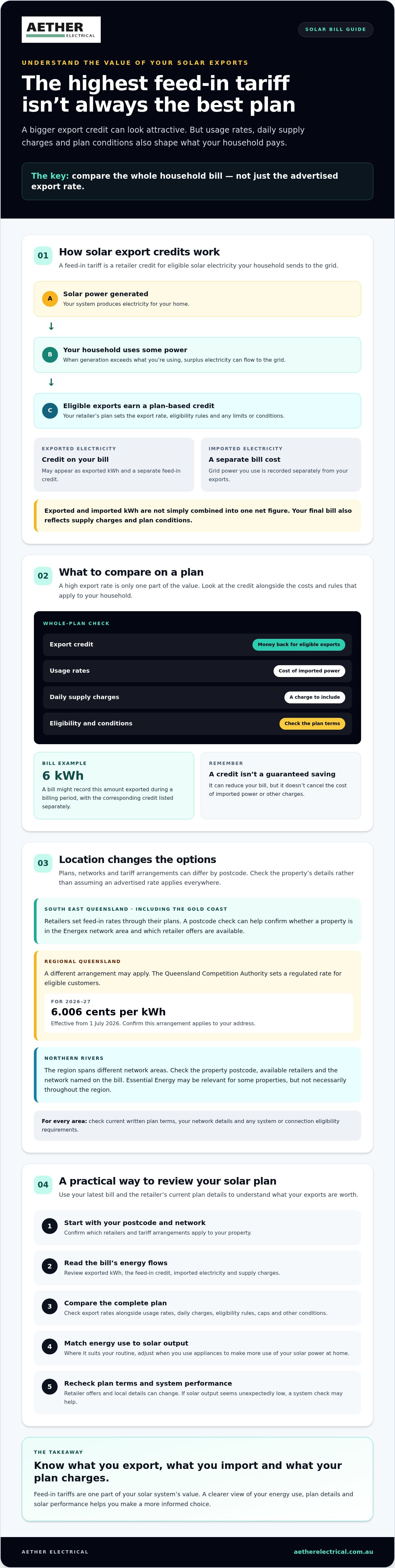
For example, a bill might record 6 kWh exported during a billing period and list the corresponding credit separately. It would also record electricity imported from the grid. The final amount reflects both energy flows, plus supply charges and any other plan conditions. Exported and imported kWh are not simply combined into one net figure.
Who sets the solar export credit in Australia?
Retailers offer electricity plans with their own export rates and terms, subject to applicable state or territory rules. Offers can vary by retailer, plan and location, and eligibility may depend on your system or connection. Check the current written offer rather than relying on a rate shown in an old bill or advertisement.
In South East Queensland, including the Energex network area, retailers set feed-in rates through their plans. Regional Queensland can have a different arrangement: the Queensland Competition Authority sets a regulated rate for eligible customers. For 2026-27, the rate is 6.006 cents per kWh, effective from 1 July 2026. Confirm that this arrangement applies to your address.
Start with your postcode and network details, then check your retailer’s plan terms and current guidance from the relevant official source, such as the Queensland Competition Authority for regional Queensland. This gives you a reliable basis for understanding how your own exports are credited.
How solar feed-in tariffs work across Queensland and Northern Rivers
Your postcode helps determine which electricity retailers and plans are available, which network serves your property and what tariff arrangements may apply. A solar power feed in tariff advertised for one area may not be available at another address, even within the same region. Check your own details before comparing offers.
For Gold Coast households, a postcode check can confirm whether the property is in the Energex network area and show which retailer plans are available. South East Queensland offers are set by retailers, so don’t assume one plan or export credit applies across the state. Regional Queensland can have different arrangements. The Queensland Government’s guide to Queensland's feed-in tariffs is a useful starting point for checking the relevant guidance.
What should Gold Coast households check before comparing tariffs?
Use the property postcode with retailer plan finders, then confirm the network details against your bill or connection information. If Energex is listed, compare offers available for that network, not a rate promoted for another part of Queensland.
Read the full plan terms. An advertised export credit may have eligibility rules, daily caps or other conditions. Check the offer’s current 2026 terms directly with the retailer, and verify any applicable Queensland guidance through official sources. Treat each offer as specific to its plan and location, not as a statewide standard.
What should Northern Rivers households check on their electricity plan?
The Northern Rivers spans different network areas, so the right details depend on the property’s postcode. Check which retailers can supply the address and confirm the network named on the bill. Essential Energy may be relevant for some properties, but don’t assume it applies throughout the region.
Then check how the plan treats your meter setup. Confirm that the export credit, import charges and any time-based conditions apply to your household’s arrangement. Retailer offers and local details can change, so use current New South Wales guidance and the retailer’s written plan terms before switching or making a decision.
If the plan details are clear but your solar system’s output seems unusual, a system check may help investigate the performance issue. Aether Electrical installs and services solar and battery systems across the Gold Coast and Northern Rivers. You can discuss your solar system needs with a local electrical specialist, while checking tariff terms with your retailer.
Is the highest solar feed-in tariff always the best deal?
No. A higher export credit doesn’t automatically mean a lower overall bill. The value of a solar power feed in tariff depends on how much electricity you export, what you pay for imported power and the plan’s other charges and conditions.
The best plan is the one that works out better across your whole bill, not the one with the biggest feed-in rate. A plan offering a stronger export credit may also have higher usage rates or a daily supply charge. Eligibility rules can matter too. Check the complete offer against your household’s actual energy use.
What plan details should you compare alongside the feed-in tariff?
Use your latest bill and the retailer’s current written plan information. Record the same details for each offer, then compare them over the same billing period and with the same usage assumptions. The Energy Made Easy comparison tool can help you compare available electricity plans.
| Plan detail | What to check |
|---|---|
| Export credit | Rate, any cap, and how eligible exports are counted. |
| Imported electricity | Usage charges and whether pricing changes by time of day. |
| Daily supply charge | The fixed daily amount charged under the plan. |
| Eligibility and conditions | Any requirements for your meter, solar system arrangement or customer status. |
Then compare how the credits and charges affect the total for the period. Avoid judging a plan from its headline export rate alone. If the offer’s conditions are unclear, ask the retailer to confirm them in writing before you switch.
When could using solar power at home be more valuable?
Solar electricity used directly in your home means you don’t need to buy that portion from the grid at that time. So, if it suits your household routine, running suitable appliances during solar-generating hours can make practical use of energy that might otherwise be exported. The benefit depends on your plan and usage, so there’s no single result that applies to every home.
A battery is another option to assess. It can store some solar energy for later use, but whether it suits your household depends on when you use power, your system design and current plan terms. Compare those factors before treating a battery as the answer. The aim is to make a choice that fits your home, not simply chase the highest export credit.
How to compare solar feed-in tariff plans and make better use of exports
A useful comparison starts with your household’s actual energy pattern, not a headline rate. Follow these steps to assess a solar power feed in tariff alongside the rest of the plan.
- 1. Gather your records. Have your latest electricity bill, the plan fact sheet, available solar export data and current retailer terms on hand. Check that the information relates to your property and meter.
- 2. Compare the full plan. Note each plan’s export credit, import charges, daily supply charge and eligibility conditions. Use your own imported and exported electricity figures over the same billing period to compare the overall effect, rather than relying on advertised examples.
- 3. Check the switch details. Before changing plans, confirm the start date, eligibility requirements and any changes to rates or conditions with the retailer. Save the written terms so you can refer back to them.
- 4. Review your solar exports. Look at your bill or available system data to see when and how much electricity you export. This can help you spot whether household use is lining up with solar generation.
- 5. Set a reminder to check again. Retailer offers and plan terms can change. Add a calendar reminder to review the offer before any known end date or when you next reassess your electricity plan.
For background on system choices and what to consider before installing solar, read this Gold Coast solar panel installation guide. If your questions extend beyond solar, the home solar electrical services guide offers broader household electrical context.
How can you use more of your solar power at home?
Check which appliances run during the day and whether suitable tasks can be shifted to solar-generating hours. You might run appliances such as a washing machine or dishwasher while solar production is available, if that fits your routine and the appliance instructions. The aim is practical timing, not changing your whole day around the system.
If generation seems unexpectedly low, an electrical specialist can assess the system’s performance. Aether Electrical installs and services solar systems across the Gold Coast and Northern Rivers. Discuss your solar system needs with a local specialist if a system check may help.
A battery is a separate decision. Consider when your household uses electricity, your system design and your current plan terms before assessing whether storage suits your home. It won’t automatically improve the household’s finances, so weigh it against your actual pattern of imports and exports.
When to get local solar advice about your feed-in tariff
If your solar system is producing as expected and your main concern is the export credit, start with your retailer. Ask them to explain the current plan rate, eligibility and any conditions that affect your bill. A tariff review is usually a plan question, not a reason to change or inspect your solar equipment.
But if your monitoring or bills suggest a change in solar generation, it may be worth having the system checked. A lower export credit alone doesn’t show that the system is underperforming. Look for a change in generation as well, and consider whether household use, weather or other circumstances could explain the difference.
When should you ask an electrician to check your solar system?
Consider an inspection if system monitoring shows an unexpected drop in output, or if your bill suggests you’re importing more power than usual despite similar household habits. Share the relevant bills or monitoring information, and ask what checks are included before arranging servicing or repair work.
Keep the questions in the right hands. Your retailer can explain the solar power feed in tariff, plan terms and bill credits. An electrical professional can assess the solar system itself. Aether Electrical installs, services and repairs solar systems across the Gold Coast and Northern Rivers, but it doesn’t set retailer tariffs, sell electricity plans or guarantee bill outcomes.
Could battery storage help if your export credit is low?
It might suit some households, but a low export credit by itself isn’t enough to decide. Compare when you use electricity with the plan’s import charges and export terms. A battery’s potential value depends on whether stored solar energy fits your household routine and system design.
Before making a decision, consider battery suitability, installation requirements and the current rules that apply to your property. Ask for advice based on your actual usage and solar setup. Battery storage may be a practical option to explore, but it can’t guarantee payback, energy independence or a particular bill reduction.
If you’d like a local view of your solar or battery system, talk with Aether Electrical about your solar system. Keep tariff questions with your retailer, and get system advice that focuses on performance and practical options.
Make your next solar decision with confidence
Your feed-in credit is only one part of your solar value. Compare the full electricity plan against your household’s imports and exports, then look for practical ways to use solar power at home. The right solar power feed in tariff depends on your location, plan conditions and energy habits, so check current terms with your retailer.
If your system’s output seems different from usual, a system check may help separate a performance issue from a plan change. Aether Electrical installs, maintains and repairs solar systems, and installs battery storage for homes across the Gold Coast and Northern Rivers. It doesn’t set retailer tariffs or guarantee bill outcomes, but can help you consider practical electrical options for your system.
For advice on solar or battery system needs, talk with Aether Electrical about your solar system. A clear plan review and the right system advice can help you make your next step with confidence.
Frequently Asked Questions
What is a solar power feed-in tariff?
A solar power feed-in tariff is a credit your electricity retailer applies for eligible solar electricity exported to the grid. It’s separate from the price you pay for electricity imported from the grid, so both can appear on your bill. The rate and plan conditions vary. Check your current plan and bill for the export credit that applies to your property, rather than relying on a general figure.
Are solar feed-in tariffs fixed in Australia?
No, there isn’t one feed-in tariff that applies across Australia. Retailers set many customer offers, while specific state or regional arrangements may also apply. Available plans and conditions can depend on your location and meter details. Check current official guidance for your postcode, then read your retailer’s written plan terms to confirm the export credit, eligibility and any other conditions that apply to your property.
How do I compare solar feed-in tariff plans?
Compare the export credit with import rates, daily supply charges and eligibility conditions. Use recent bill data to see how much electricity your household imports and exports over the same billing period. This gives you a more useful basis for comparing plans than the headline rate alone. Before switching, confirm current prices, conditions and the start date directly with the retailer, and check they suit your meter and system.
Is a higher feed-in tariff always better?
No. A higher export credit may be offset by other plan charges or conditions, and your household may still need to buy electricity when solar generation is low. Compare the whole bill using your actual imports, exports and energy habits. A plan that suits one household may not suit another. The best fit depends on the full plan terms and when your home uses electricity.
Can I get a solar feed-in tariff in Queensland?
Many Queensland households can access retailer plans that credit eligible electricity exports, but the offer depends on location, meter and plan terms. Arrangements can differ across the state. If you’re on the Gold Coast, check the plans available for your postcode and confirm the retailer’s current conditions. Don’t assume a regional tariff arrangement applies to your property without checking current official guidance.
Does a battery improve the value of a solar feed-in tariff?
Not necessarily. A battery can store some solar generation for later use, but whether it suits your household depends on your energy routine, system design, plan terms and installation requirements. A low export credit alone doesn’t show that a battery will be worthwhile. Compare the options using current information, and avoid assuming a particular payback or bill reduction before assessing your household’s needs.
Why has my solar feed-in tariff credit changed?
Your credit may change if your retailer updates your plan, you move to a different offer, or billing and meter details change. Check the plan name and terms, bill period and recorded exports first. If the credit doesn’t match the retailer’s stated offer, contact the retailer to clarify the bill. If your solar generation or system performance seems to have changed, ask an electrical professional to investigate.


