
Replacing a fuse box usually means upgrading the switchboard, not simply swapping one component for another. The cost to replace a fuse box with a circuit breaker in Byron Bay depends on the board’s condition, its circuits and whether additional electrical work is needed. The key distinction is whether the job replaces the old fuse gear or upgrades the wider switchboard to suit the home.
It’s understandable to want a clear figure before deciding what to do. But the scope of the work matters: a straightforward conversion differs from an upgrade that needs new cabling, mains work or a relocated board. This guide explains what each option involves, what can affect the cost, and how the installation and testing process works. You’ll have a clearer picture of the job before weighing up the next step.
Key Takeaways
- Replacing ceramic fuses with circuit breakers can also involve adding RCD safety switches to help protect circuits.
- The installation includes fitting the new switchboard equipment, then testing its operation before the work is complete.
- Single-phase and three-phase supply can lead to different upgrade requirements, so the supply type matters when planning the job.
- Learn what a conversion involves and which details shape the work before deciding how to update an older switchboard.
Is it a Switchboard Upgrade or a Fuse Box Replacement?
Replacing ceramic fuses with circuit breakers changes the protective equipment in an older electrical board. The work may also include RCD safety switches or extend to a full switchboard upgrade.
Safety Switches, Circuit Breakers and Labour
A fuse-board replacement removes the ceramic fuse gear and installs circuit breakers, with RCD safety switches included where required. The quoted scope should make clear which equipment is being replaced, which safety switches are being fitted and what other work is involved. That detail helps you compare equivalent jobs.
Electrical Loads and Switchboard Capacity
Switchboard capacity is the board’s ability to support the home’s electrical supply and circuits. Older residential boards may have been designed for smaller loads, while modern homes often use more appliances at once. An electrician assesses the existing supply and wiring, along with planned additions such as an oven or air conditioner. A circuit-breaker conversion alone may not provide the capacity needed for a larger upgrade.
Risks of Keeping an Old Fuse Box
An old fuse box may lack the circuit breakers and RCD safety switches found in an updated board. Without suitable protective devices, faults may not be managed in the same way. An RCD is designed to disconnect power when it detects an electrical problem. A damaged or crowded board can also limit options for safely adding circuits.
Do switchboard replacement costs include safety switches, circuit breakers and labour? They can, but the inclusions depend on whether the quote covers a fuse-board replacement or a wider upgrade. Price depends on the job and is provided after a quote request; the board’s condition, circuit count, supply and any mains or cabling work shape the scope.
Are there rebates or assistance for electrical switchboard upgrades in Byron Bay or NSW? Any assistance depends on whether a current programme covers the work and whether the property meets its criteria. Rebates are separate from deciding whether the job needs a fuse-board replacement or a full switchboard upgrade.
What are the risks of keeping an old fuse box instead of upgrading to circuit breakers? The board may lack modern protective devices, and its capacity may limit new appliances or circuits. An electrical assessment can identify which issues apply to the home.
Switchboard upgrade installation and testing process
A switchboard upgrade replaces outdated equipment and checks that the new protection operates correctly. Installation usually takes 4 to 8 hours, depending on the board and work involved.
Installation and Testing Steps
The process starts with assessing the existing board, supply and circuits. The electrician isolates the supply, removes the old equipment and installs the new enclosure, circuit breakers and RCD safety switches. An 8 to 12-pole enclosure may house the new protective devices. After connection, testing checks that the installation operates as intended. RCD trip-time testing checks that safety switches disconnect power within 300 milliseconds. In NSW, electrical wiring work must be completed by a licensed electrician, who provides a Certificate of Compliance for Electrical Work after testing.
A standalone safety switch installation is different from replacing the whole board. Its cost depends on the switch required, the existing switchboard and the work needed to connect and test it. The price depends on the job and is provided after a quote request; the number of switches, board condition, circuit layout and any additional cabling affect the scope.
Factors Affecting Installation Costs
Installation costs reflect the work involved, not just the new components. A simple replacement differs from an upgrade that adds circuits, repairs existing wiring or changes the mains supply. The board’s access and condition also affect the work. If there’s an electrical fault, it may need attention before a planned upgrade can proceed.
Future electrical plans can change the scope, too. For example, an EV charger may need a dedicated circuit, while other new appliances can add demand to the existing board. These requirements influence the equipment and cabling needed. A quote should distinguish a safety switch installation from a full switchboard upgrade, so the included work is clear. If you’re planning an upgrade, a switchboard assessment can help establish what the installation involves.
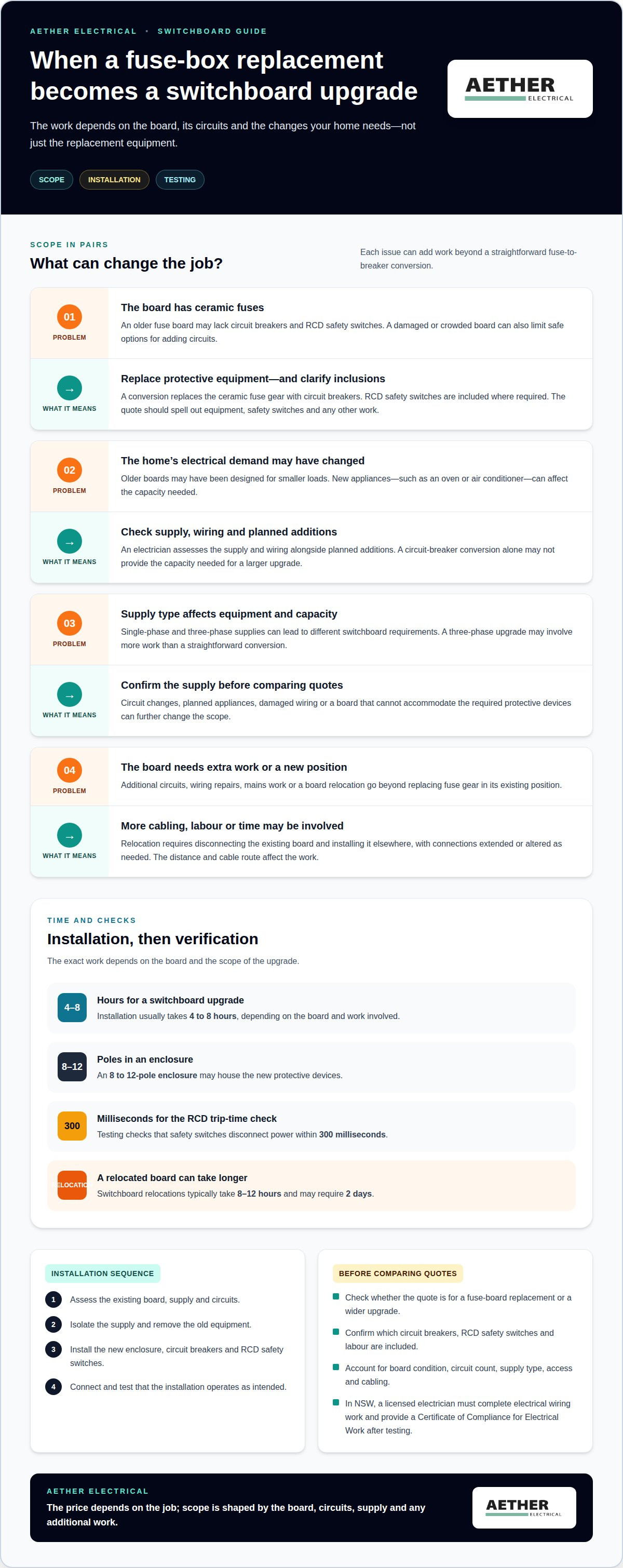
Factors affecting upgrade costs, including supply type and relocation
The work can range from replacing ceramic fuse gear to relocating the board or changing the supply. These differences affect materials, labour and how long the home may be without power.
Basic Fuse-to-Breaker Upgrade Costs
A basic upgrade replaces ceramic fuses with circuit breakers while using the existing switchboard position and suitable wiring. It’s generally a different job from replacing the whole board or altering the mains supply. The price depends on the job and is provided after a quote request; the board’s condition, circuit count, supply type and any required cabling shape the work.
Single-phase and three-phase supplies can require different switchboard equipment and capacity. A three-phase upgrade may involve more work than a straightforward conversion, particularly if circuits or planned appliances need changes. The scope also changes if an inspection finds damaged wiring or a board that cannot accommodate the required protective devices.
Upgrade Labour and Materials
Labour includes removing existing components, fitting replacement equipment, reconnecting circuits and testing the completed work. Materials depend on the board layout, circuit count and whether additional cabling is required. A licensed electrician also considers access to the switchboard and any repairs needed before installation.
Relocation adds work because the existing board must be disconnected and installed in a new position, with connections extended or altered as needed. Switchboard relocations typically take 8-12 hours and may require 2 days. The distance moved, cable route, wall access and condition of existing wiring all influence the scope.
During an upgrade, power is typically off for 4-6 hours, so lighting and appliances won’t be available during that period. A basic board replacement differs from relocation, which can extend the work and disruption. The electrician accounts for supply type, board condition, circuit changes and materials when setting out the job’s scope.
Fuse box to circuit breaker conversions
A conversion replaces ceramic fuse carriers with circuit breakers, but the condition of the existing board determines the full scope. In Byron Bay, the upgrade needs to suit the home’s wiring, supply and electrical load.
A home more than 30 years old may need its switchboard upgraded if it has never been updated. The electrician assesses the existing board, circuits and wiring before deciding whether a conversion is suitable or a full replacement makes more sense. A circuit breaker protects an individual circuit, while an RCD safety switch responds to certain electrical faults. They perform different jobs, so a conversion may require both.
Capacity matters when adding appliances. For example, installing air conditioning or planning another high-demand appliance can mean reviewing the existing circuits and supply, not simply swapping each ceramic fuse for a breaker. Typical circuit breaker ratings include 100, 150, 200 and 400 amps, but the correct setup depends on the electrical installation. The figures alone don’t determine what a home needs.
Age can also affect the work. A home more than 25 years old might have an asbestos panel in its switchboard. That possibility can change how the board is assessed and how electrical work proceeds. The panel’s condition and the planned scope are relevant; age alone doesn’t identify its material.
In NSW, a licensed electrician must perform electrical wiring work. After testing, the electrician must provide a Certificate of Compliance for Electrical Work. This records the completed work and supports a clear handover.
The practical takeaway is to assess the whole installation, not just the fuse carriers. Existing wiring, circuit protection, supply and planned additions all shape the right conversion scope. For a switchboard assessment and electrical work, arrange a switchboard assessment.
Aether Electrical
Aether Electrical helps homeowners determine whether an older fuse box needs a circuit-breaker conversion or a wider switchboard upgrade. Through its domestic electrical services, the team assesses the existing board, wiring and supply, as well as planned appliance additions, then explains how these affect the work.
This is useful when ceramic fuses remain in place, the board has limited room for new circuits, or you’re planning changes such as air conditioning or an EV charger. A clear scope helps distinguish a straightforward replacement from work involving extra cabling or other switchboard changes. The price depends on the job and is provided after a quote request.
For a practical assessment of your switchboard, contact Aether Electrical.
Plan the switchboard around what comes next
The cost to replace a fuse box with a circuit breaker in Byron Bay is only one part of planning an upgrade. Consider how your electrical needs may change, too. A switchboard suited to the home today should also be considered alongside planned renovations, new appliances or future energy systems. This context helps shape a practical scope rather than treating the board as an isolated repair.
If solar or battery storage is part of your plans, mention it when discussing the switchboard. Aether Electrical provides domestic electrical services, solar installation and servicing, and battery storage installation. For solar and battery projects, the team provides a free design and quote. Including these plans helps you consider the property’s wider electrical needs.
Take the next step at your pace. Talk with Aether Electrical about your switchboard and move towards a clear plan for your home.
Frequently Asked Questions
Breaking Down the Investment: What Influences the Price?
First distinguish a fuse-carrier change from a full board replacement, then review what the quote includes. Ask for the scope to identify which circuits are changing, whether existing wiring needs repair, and whether testing and compliance documentation are included. These details help you compare equivalent work rather than relying on a headline figure alone.
Can I just replace one fuse with a circuit breaker?
Not as a simple like-for-like swap. A circuit breaker must suit its circuit and the board’s protective arrangement, and the existing wiring also affects whether a conversion is suitable. Replacing a single fuse without assessing those parts may leave wider electrical issues unresolved. An electrician can determine whether one circuit can be updated independently or whether the board needs broader work.
Does a Switchboard Upgrade Add Value to Your Home?
A switchboard upgrade can make a home’s electrical setup more practical for its current needs, but it does not determine the property’s sale value. A prospective buyer may also consider the property’s overall condition, maintenance history and planned improvements. Keep the electrical work documentation with your home records to give future owners a clearer account of what was changed and tested.
How Long Does A Switchboard Installation Take?
A standard switchboard upgrade generally takes 4 to 8 hours, while the actual time depends on the work required. Extra circuits, wiring repairs or relocating the board can extend the visit. Plan for a temporary power interruption during installation, including for essential appliances and lighting. If the property has particular access needs, include them in the job planning.
Is A Switchboard Upgrade A Legal Requirement?
A board’s age alone does not mean every home must replace it. In NSW, a licensed electrician must perform electrical wiring work and provide a Certificate of Compliance for Electrical Work after testing. That requirement applies to the electrical work; it does not, by itself, mean every existing switchboard must be upgraded.
How much does it cost to replace a fuse box with a circuit breaker switchboard in Byron Bay?
The cost to replace a fuse box with a circuit breaker in Byron Bay depends on the work required, and the price is provided after a quote request. The quote reflects factors such as the board’s condition, the circuits involved, supply type and any relocation or additional cabling. A clear scope helps show whether the job is a basic conversion or a wider switchboard replacement.


