
Age alone doesn’t decide whether old wiring is safe. Standard PVC-insulated wiring typically lasts 50 to 70 years in Australia, but its condition and the demands placed on it matter too. If you’re asking, “Is my old wiring safe in the Northern Rivers?”, look at warning signs as well as the home’s age.
It’s easy to assume wiring is safe when the lights work and power points function. But faults can develop out of sight, and older circuits may face greater demands from modern appliances. So, is my old wiring safe in the Northern Rivers? The answer depends on its condition, not simply whether everything appears to work.
This article covers how long wiring typically lasts, warning signs to watch for and how modern appliance loads can affect older circuits. You’ll get a clearer idea of what to look for and when a professional electrical inspection can help.
Key Takeaways
- Age is a useful prompt for closer attention, but visible wear and the wiring’s condition help show whether it needs assessment.
- Flickering lights, tripped breakers, discoloured outlets, buzzing or a persistent burning smell are warning signs worth taking seriously.
- Old and newer wiring can coexist after partial upgrades, making professional inspection important before electrical work or renovations.
- Modern high-draw appliances can put extra pressure on older circuits; repeated trips or blown fuses may signal the load needs attention.
How long does electrical wiring typically last in Australia?
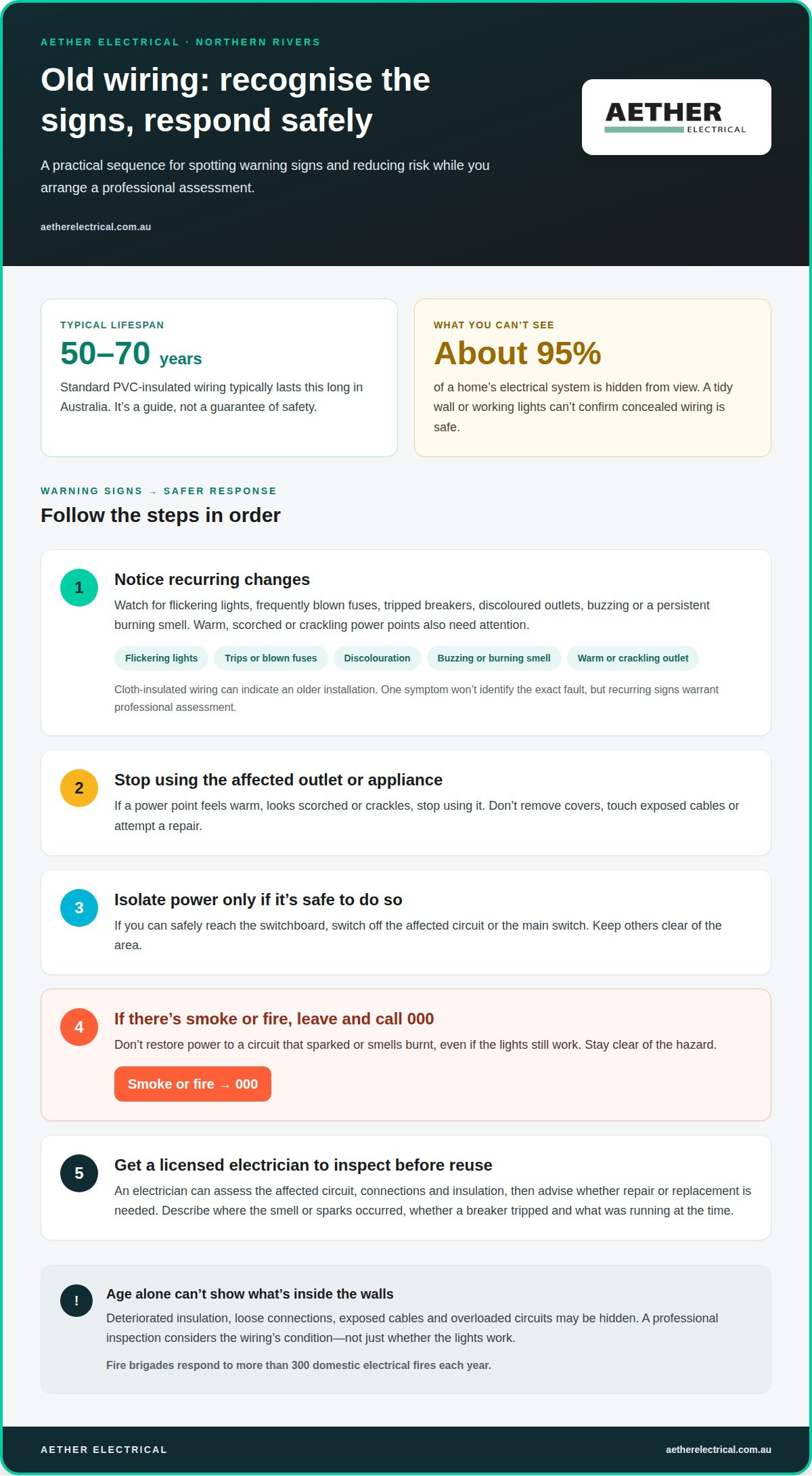
Standard PVC-insulated electrical wiring typically lasts 50 to 70 years in Australia. That lifespan is a guide, not a safety guarantee. Age, insulation, connections and electrical load all affect its condition.
In the Northern Rivers, key concerns include deteriorated insulation, loose connections, exposed cables and overloaded circuits. A home’s age can’t reveal what’s hidden in its walls or roof space. A licensed electrician can inspect and test the electrical system, then explain whether the wiring needs attention.
AS/NZS 3000:2018 is the wiring standard referenced for home electrical safety in Australia. New homes in the Northern Rivers should have electrical wiring that meets applicable safety standards and building codes. Older work may pre-date current requirements. Renovations and additions can also leave different wiring types or colours within one property.
Deteriorated insulation can expose live conductors. Loose or damaged connections can create heat. Exposed cables can increase the risk of electrical shock. Fire brigades respond to more than 300 domestic electrical fires each year. Warm outlets or a faint burning smell near a switchboard can signal a potential fire hazard.
Ungrounded two-prong outlets lack the earth connection provided by grounded three-prong Type I power points. Have a licensed electrician assess the outlets and circuit protection together. Replacing an outlet alone doesn’t establish whether the wiring behind it is sound.
Use a licensed electrician for electrical work and upgrades. A thorough inspection considers insulation, connections, protection devices and visible cable condition, not just whether the lights work. Don’t handle wiring yourself. A damaged cable can remain dangerous even when the room looks normal.
Safety and compliance when working with wiring
Electrical safety in Australia relies on sound wiring, effective protection and work that meets applicable standards. Safety switches, circuit breakers and visual checks each address different hazards.
Homeowner visual safety checks
A homeowner visual check means examining accessible fittings without opening a switchboard or touching cables. Look at power points, switches and the fuse board for cracks, heat marks, loose covers or damaged labels. About 95% of a home's electrical system is hidden from view. A tidy wall can't prove concealed wiring is safe. Stop using a visibly damaged fitting and arrange assessment by a licensed electrician.
Safety checks in older homes
A house built more than forty years ago is a warning sign worth factoring into an electrical safety check. Wiring in a house more than 30 years old should be checked, particularly if it hasn’t had a proper assessment after renovation or rewiring. Older homes may retain ceramic- or rubber-based wiring, which can become brittle with age. Partial upgrades can also leave old and current wire colours together. Mixed-colour circuits or fixed cables should be labelled or tested, with warning signage on the fuse board. Don’t identify cables by colour alone.
Safety switches and switchboards
A safety switch monitors electricity flow and trips when it detects a problem that may threaten personal safety. It can switch power off within 0.03 of a second. Look for a test button and ‘30ma’ marking on the switchboard. A safety switch provides additional protection alongside fuses or circuit breakers, but may not protect every cable or appliance or prevent every shock. An electrician can assess the switchboard and protection coverage. For a professional check, arrange electrical maintenance and servicing.
Warning signs of aged or failing wiring
Faulty wiring can show visible symptoms, but damage may also remain hidden inside walls or roof spaces. Recognising changes early helps you respond before a small fault becomes a fire or shock hazard.
Signs of wiring deterioration
Wiring deteriorates when insulation, cables or connections wear, fray or become damaged. These faults can expose live parts or generate heat, so don’t dismiss recurring changes as a nuisance.
Watch for flickering lights, frequently blown fuses, tripped breakers, discoloured outlets, buzzing or a persistent burning smell. Cloth-insulated wiring can also indicate an older installation. Pests may damage cables inside roofs or walls, while insulation can dry out or fray with age. One symptom alone won’t identify the exact fault, but recurring signs need professional assessment.
If a power point feels warm, looks scorched or crackles, stop using it. Don’t remove covers or try to replace wiring yourself. A licensed electrician can inspect the affected circuit, connections and insulation, then advise whether repair or replacement is needed. This is especially important after renovations, when outdated wiring may remain alongside newer work.
Insurance cover for damage linked to old or faulty wiring depends on your policy wording and the cause of the damage. Review the terms for electrical faults, gradual deterioration and maintenance, then contact your insurer about your circumstances.
Responding to burning smells or sparks
A burning smell or visible sparks can signal an immediate electrical hazard. Stop using the affected outlet or appliance. Don’t touch exposed cables or attempt a repair.
If you can reach the switchboard safely, switch off the affected circuit or main switch. If there’s smoke or fire, leave the property and call 000. Keep others clear of the area. Don’t restore power to a circuit that sparked or smells burnt, even if the lights still work.
Once everyone is safe, arrange an inspection by a licensed electrician before using the affected circuit again. Describe where the smell or sparks occurred, whether a breaker tripped and what was running at the time. These details can help pinpoint the fault and establish whether damaged wiring, loose connections or an appliance needs attention.
Modern appliance loads on legacy circuits
Older circuits may now supply appliances and devices they weren’t designed to handle. The combined load matters, particularly when several high-draw items run at once.
Overloaded circuits and extension cords
An overloaded circuit carries more current than its wiring and connected equipment can safely handle. A kettle, heater and microwave on the same circuit can create substantial demand. Modern high-draw devices can pull up to four times the current of their vintage counterparts, increasing pressure on older electrical systems.
Extension cords don’t increase a circuit’s capacity. Using one outlet to run several appliances can concentrate demand and create a tripping or overheating risk. Avoid joining cords or covering them with rugs, which can hide damage and heat. If a breaker trips when particular devices run together, unplug them and don’t repeat that combination.
Repeated trips are a warning, not a reason to fit a larger breaker. The circuit’s wiring, connections and intended load all affect what it can safely supply. An electrician can inspect the circuit and identify whether the issue comes from the appliances, wiring or another fault.
Circuit breaker protection
A circuit breaker interrupts power when it detects a short circuit or excessive current, such as from an overloaded power point. It helps protect the circuit, but a tripping breaker doesn’t identify the underlying cause or mean the wiring can safely support every modern appliance.
Don’t hold a breaker in place or keep resetting it while the same devices are operating. Note which appliances were in use when it tripped, then have the circuit assessed if the problem recurs. A licensed electrician can check whether the circuit and its protection suit the load.
If you’re adding high-demand appliances or seeing recurring trips, arrange an electrical circuit assessment before relying on the existing setup.
Aether Electrical
Aether Electrical helps Northern Rivers homeowners understand ageing wiring, warning signs and circuits under strain from modern appliances. Through Domestic Electrical Services and Electrical Maintenance & Servicing, the team assesses electrical concerns and carries out appropriate maintenance or repairs. It’s a practical next step if your home has older wiring, recurring electrical issues or planned upgrades that will add demand to existing circuits.
An assessment can clarify what needs attention and whether the issue involves wiring, connections or the wider electrical system. You don’t need to diagnose the fault yourself. Describe what you’ve noticed, such as flickering lights, a repeatedly tripping breaker or a burning smell, so the concern is clear from the outset.
Contact Aether Electrical to discuss your home’s wiring concerns.
Plan the next electrical change with confidence
If you’re asking whether your old wiring is safe in the Northern Rivers, consider its condition before changing how your home uses electricity. A renovation, new appliance or future system upgrade can affect existing circuits. It’s worth assessing old wiring before making changes.
Before arranging an assessment, note previous electrical work, changes to the property and upgrades you’re considering. You don’t need to diagnose a fault yourself. Sharing this background helps the electrician understand your concerns and what you want your home to support. If you’re still wondering whether your old wiring is safe in the Northern Rivers, an assessment can clarify the next step.
For a practical next step, contact Aether Electrical about your wiring. A clear conversation can help you move from uncertainty to a sensible plan for your home’s electrical needs.
Frequently Asked Questions
Can I just replace my switchboard instead of a full rewire?
Sometimes, but replacing a switchboard doesn’t automatically resolve deteriorated wiring elsewhere in the home. The decision depends on the condition of the cables, connections and circuits, as well as the switchboard itself. An electrician can assess both before recommending the work needed. Aether Electrical provides switchboard upgrades through its Domestic Electrical Services, so the assessment can consider the switchboard and the wider home electrical system together.
How do I know if the wiring system in my home is old?
The home’s construction date and records of past electrical work can offer useful clues, but neither confirms the wiring’s condition. Older Australian installations may use red active and black neutral wires, while newer colour schemes use brown active and blue neutral. Renovations can leave different wire colours in the same property. Don’t open fittings to investigate. A licensed electrician can identify and assess the installation safely.
How can I tell if old house wiring is unsafe in Australia?
You can spot some warning signs, but a visual check can’t establish whether concealed wiring is safe. A licensed electrician can inspect and test the electrical system, including cables and connections that aren’t visible. This is particularly useful before buying an older home, planning renovations or adding electrical equipment. In Australia, electrical work and upgrades should be handled by a licensed electrician, not attempted as a DIY project.
What are the warning signs of faulty or deteriorating electrical wiring?
Look for changes that recur or appear together, rather than relying on one isolated symptom. For example, lights that flicker when an appliance runs, followed by a tripped breaker, signal a concern that needs assessment. A burning smell, sparks or visible damage need prompt attention. Stop using the affected outlet or circuit, keep clear of exposed wiring and arrange professional help.
How old is too old for electrical wiring in Australian homes?
There isn’t one age that makes every installation unsafe. Standard PVC-insulated wiring typically lasts 50 to 70 years in Australia, but its actual condition depends on factors such as insulation, connections and use. That lifespan isn’t a guarantee or an automatic replacement deadline. A home can need electrical attention sooner if wiring is damaged, while age alone doesn’t establish that every circuit needs replacing.
When should a licensed electrician inspect or replace old wiring?
Arrange an inspection if you notice a fault, before renovations or when an older home hasn’t had its wiring assessed for years. An electrical inspection at least once every ten years is recommended. Replacement may be considered when testing shows wiring is damaged or no longer suitable for the installation. The electrician can explain which parts need work, basing any replacement on the system’s condition rather than guesswork.


