

A battery isn’t essential for every solar home. A Sungrow battery installer in Byron Bay can help assess whether storing daytime solar for evening use or backup power suits your system. A typical 5 kW solar system in Byron Bay produces around 22 kWh of electricity per day, while average local household consumption is 21 kWh per day.
Those averages are a useful starting point, but your own electricity use matters more. A battery may be worth considering if you regularly export solar power during the day and use electricity after sunset, or if you want selected household circuits to keep running during an outage.
This guide explains what to consider before choosing a Sungrow battery, including system compatibility, coastal siting, warranty terms, grid approval, electrical compliance and backup design. You’ll also learn how installation planning works and which details shape a setup for your home. The aim is to help you decide whether a battery suits your needs, without adding complexity where it isn’t needed.
Key Takeaways
- Compare when your home uses electricity with when your solar system generates it. That pattern helps show whether storage could suit your needs.
- Plan battery placement with the coastal environment in mind. Most battery makers installed recommend keeping batteries about 500 metres from the coastline.
- Allow for grid approval in your installation plan. According to Essential Energy, the maximum inverter size and export limit for Byron Bay homes depend on whether the supply is single-phase or three-phase.
- Decide which circuits you want to keep running during an outage. Backup design depends on the loads you prioritise and the system setup.
- Bring solar, battery and household electrical requirements together in the installation plan, including compliance with Australian building and electrical standards and codes.
Solar and battery installation in Byron Bay
Byron Bay homes have a substantial solar base. The Clean Energy Regulator records 3,813 small-scale solar installations around Byron Bay since 2001, including residential and commercial systems, upgrades and repeat installations. A 5 kW solar system produces around 22 kWh of electricity per day on average, or approximately 8,000 kWh annually. Average local household consumption is 21 kWh per day, so timing matters as much as total generation.
Start by comparing your electricity use with your solar generation throughout the day. If your panels produce more power than your home uses around midday, a battery can store some surplus for evening use. If you already use most of your solar power as it is generated, the case for storage may be different. A Sungrow battery installer in Byron Bay can assess your solar system, household loads and backup priorities together.
Across the Northern Rivers, an installation needs to suit the property, not just the postcode. Roof space, panel orientation, shading and the condition of existing electrical equipment all affect solar system design. For an existing system, first check the inverter and wiring against the proposed battery setup. For a new installation, plan compatible panels and inverter equipment, along with a suitable battery location.
How do Sungrow batteries compare with Tesla Powerwall and other home batteries available in Byron Bay? Compare usable storage, backup needs, system compatibility, warranty terms and siting requirements rather than choosing by brand alone. The right fit depends on how much power your home uses after sunset and which circuits matter during an outage.
What rebates or incentives apply to installing a Sungrow battery in Byron Bay, NSW? The NSW Government offers a solar battery rebate of up to A$2,400, while the federal battery rebate usually amounts to A$244 per kWh of usable storage after administrative costs. The Federal Government’s Small-scale Renewable Energy Scheme provides financial incentives through Small-scale Technology Certificates.
Coastal conditions need attention too. Most battery makers the installation page covers recommend keeping batteries about 500 metres from the coastline. Byron Bay receives around 4.4 kWh of solar energy per square metre daily, but strong solar generation doesn’t remove the need for sensible equipment placement. Check the manufacturer’s siting guidance and plan a sheltered, accessible location before installation.
Local businesses and farms can have different demand patterns from homes. A farm may use power for pumps during the day, while a Byron Bay business may need energy after trading hours. Map those loads first, then size the solar panels and battery around actual usage. In postcode 2481, covering Byron Bay, Suffolk Park and Ewingsdale, 465 home batteries were installed from July 2025 to August 2026.
- Review electricity bills and identify daytime, evening and essential backup loads.
- Check the existing inverter, panels and battery location before choosing equipment.
- Compare system compatibility, warranty and coastal siting requirements.
- Consider NSW and federal incentives when assessing the overall installation.
Grid connection approvals and electrical compliance
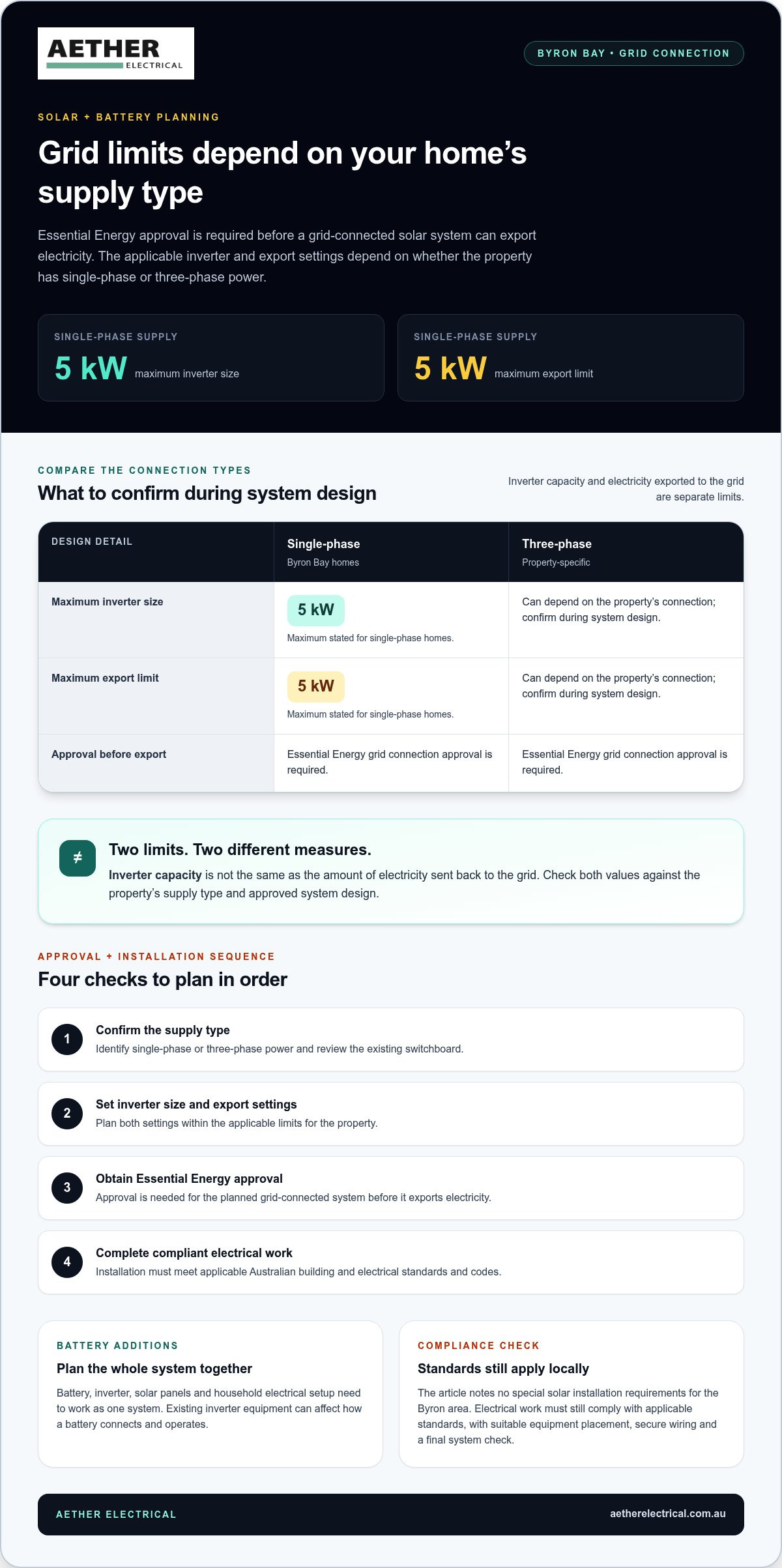
Grid-connected solar in Byron Bay requires connection approval from Essential Energy before a system can export electricity to the network. The planned inverter and export settings need to suit the property’s supply type, so identify whether your home has single-phase or three-phase power during the design stage.
Essential Energy sets a maximum inverter size of 5 kW and a maximum export limit of 5 kW for single-phase homes in Byron Bay. For three-phase homes, inverter and export limits can depend on the property’s connection and should be confirmed during system design. These are distinct limits: inverter capacity is not the same as electricity sent back to the grid.
For a new system, the practical sequence is straightforward:
- Confirm the property’s supply type and review the existing switchboard.
- Set the proposed inverter size and export settings within the applicable limits.
- Obtain Essential Energy grid connection approval for the planned system.
- Complete the electrical work and ensure the installation meets applicable standards and codes.
Battery additions need the same joined-up planning. The battery, inverter, solar panels and household electrical setup must work as one system. For example, an existing inverter can affect how a battery connects and operates. The design should account for installed equipment, intended export settings and your home’s backup priorities.
Solar installations must comply with Australian building and electrical standards and codes. There are currently no special requirements for solar installations in the Byron area, but electrical work still needs to comply with applicable standards. Safe installation also depends on suitable equipment placement, secure wiring and a final system check before connection.
The details of a completed installation reveal how well it was managed. A well-planned project accounts for the property’s supply type, grid approval, existing switchboard and equipment compatibility before work begins. Clear records of the design, installed components and commissioning help explain how the finished system is intended to operate. These details matter for homes, farms and local businesses with different electricity demands.
Grid approval and electrical compliance are connected, but they serve different purposes. Essential Energy assesses the grid connection, while installation work must meet Australian standards and codes. Keeping both in view helps prevent design changes late in the process. For practical planning, solar and battery installation should account for the property’s connection, existing electrical equipment and intended system operation.
Backup power
A home battery can store solar power for later use, but backup during an outage requires deliberate system design. Standard grid-connected solar systems may shut down during a network outage. The battery setup needs backup capability and suitable electrical connections to supply selected household circuits safely.
Start with a simple list of essential loads. A fridge, selected lights, internet equipment or a medical device may matter more than running every appliance at once. Then consider which items will operate together and how long they need power. This gives the installer a practical basis for matching battery storage and backup capacity to your home.
Battery capacity alone doesn’t determine how backup works in daily use. The available power, the circuits connected for backup and the energy those circuits consume all matter. For example, running a fridge and lights is different from adding an electric oven or large air conditioner. Prioritise loads before finalising the design.
Solar panels can recharge a battery when sunlight is available, helping your home use renewable energy beyond daylight hours. Performance during an outage still depends on the system configuration, remaining battery charge and household demand. A backup plan should make clear which circuits remain available and how to manage power during an extended interruption.
A typical 16 kWh battery added to an existing 10 kW solar system in Byron Bay is estimated to have a 12.6-year payback period. That estimate concerns payback, not backup performance. To judge value for your home, separate the two goals: storing solar energy for regular use and keeping selected circuits supplied during outages.
Use these steps to shape a practical backup plan:
- List the appliances and circuits you want powered during an outage.
- Identify which loads can be switched off or used at different times.
- Review how the existing solar inverter and electrical setup connect.
- Choose battery capacity around both everyday use and backup priorities.
- Plan where the battery and backup equipment will sit, with access for servicing.
Ask for the proposed backup circuits to be clearly identified in the system design. That makes it easier to understand what stays on, what switches off and how to reduce demand if an outage lasts. Battery Storage Installation should account for those priorities alongside solar generation, rather than treating storage capacity as the only decision.
For Byron Bay households, the best backup setup supports essential routines without assuming whole-home power. A clear load plan, compatible equipment and considered circuit selection make a battery a useful part of your home’s energy system.
Sungrow battery installation
A Sungrow battery installation needs to work with your home’s solar panels, inverter and electrical layout. Start by checking the equipment already installed. This helps establish whether the battery can connect to the existing system or whether the design needs changes. For a new solar setup, plan the panels, inverter and battery as one coordinated system.
What Sungrow battery models and capacities can Byron Bay installers supply? Choose a model and capacity based on usable storage, system compatibility and the loads you want supported. A battery for evening energy use may need a different configuration from one designed to support selected backup circuits.
Installation planning should also cover the battery location and its connection to the switchboard. Keep the access route clear for installation and future servicing. The design should show how solar power reaches the battery, how stored energy supplies the home and which circuits receive backup power. These details make the system easier to understand.
For an existing solar system, check the inverter arrangement before choosing a battery. The connection method depends on the installed equipment and intended system design. For example, a home adding storage to an older solar setup needs its existing inverter and wiring assessed first. A new installation can coordinate the battery and solar equipment from the outset.
Installation typically follows a clear sequence:
- Review the existing solar panels, inverters, switchboard and household loads.
- Set storage capacity around everyday use and backup priorities.
- Plan the battery position, wiring route and required electrical changes.
- Complete grid approval and installation planning before connecting equipment.
- Test the finished system and explain its normal and backup operation.
That final explanation matters. You should know which circuits remain powered during an outage, how stored energy is used and what changes when the grid returns. A clean energy system is easier to manage when its intended operation is clear from the start.
Byron Bay’s coastal setting makes equipment placement part of the design, not an afterthought. Follow the manufacturer’s siting guidance, allow practical access for servicing and protect equipment from avoidable exposure. Property access and the switchboard location can also affect the installation plan. Any council process relevant to a property project is separate from planning the battery’s electrical connection.
Before approving the design, review the proposed Sungrow equipment, usable capacity, inverter compatibility, backup circuits and installation location together. This gives you a direct basis for comparing options. The best fit is the configuration that matches your home’s electricity use and backup needs, rather than capacity chosen on its own.
Which solar and battery installers in Byron Bay install Sungrow batteries?
For a Sungrow battery installation in Byron Bay, look for an installer who can plan the battery, solar equipment and electrical work together. The job involves more than mounting storage. The design needs to suit your existing system, electricity use and any backup circuits you want powered.
Start with your property’s current setup. The installer needs to know whether you’re adding a battery to existing solar or planning a new system. For example, an existing inverter and switchboard can affect how the battery connects. A new solar installation allows the panels, inverter and battery to be planned as one system.
A well-managed process includes a site assessment, system design, grid connection approval and electrical work. The installer should also explain how the system operates after installation, including how stored energy is used, which circuits receive backup and what happens during a grid outage.
Review the proposed scope before work begins. It should make clear what equipment is included, where the battery will sit and how the system connects. A clear design also identifies the intended backup loads. For instance, powering selected lights and a fridge is different from aiming to run every household appliance.
Completed work is relevant when it shows careful planning across the whole installation. Look for a process that accounts for:
- The existing solar panels, inverter and switchboard.
- Battery placement, access and manufacturer siting guidance.
- Grid approval and applicable Australian electrical standards and codes.
- Testing, handover and a clear explanation of backup operation.
These points help distinguish a battery-only installation from a coordinated solar and storage project. They also keep the discussion focused on practical outcomes, such as storing daytime generation or supporting selected circuits during an outage. For Byron Bay properties, coastal siting guidance should be part of the installation plan.
Choose a Sungrow battery installer in Byron Bay who can explain how the proposed equipment suits your property, rather than treating capacity as the only decision. The right design brings the battery’s role, existing electrical setup and household priorities together in one plan. That makes it easier to understand how the installation will work.
Ready to plan a Sungrow battery installation around your solar system and backup needs? Discuss your battery installation and take the next step towards a coordinated setup.
Aether Electrical: Domestic Electrical Services
Aether Electrical is a practical next step for homeowners planning solar or battery work. Its Solar Installation & Servicing and Battery Storage Installation services can help bring system design, electrical requirements and household priorities into one plan.
Turn to Aether Electrical when weighing up a battery for an existing solar system, planning a new installation or considering how backup power fits your home. Domestic electrical services can address related electrical needs, while EV charger installation may also be relevant if you’re planning for home vehicle charging.
Share your solar setup, electricity use and backup priorities to start a focused conversation about the work. For help with your home’s solar and battery installation, contact Aether Electrical.
Turn your battery decision into a clear plan
Your next step is to turn your priorities into a design that fits your home. Think about what you want stored solar power to do, which circuits matter during an outage and how the battery should work with your existing equipment. These choices give the installation conversation a practical starting point.
Choosing a Sungrow battery installer in Byron Bay is about more than selecting a battery. It’s about bringing the equipment, electrical setup and backup priorities together in a way that makes sense for your household. Aether Electrical offers Domestic Electrical Services, Solar Installation & Servicing, and Battery Storage Installation to support that work.
If you’re ready to discuss your home’s solar and battery needs, contact Aether Electrical about your battery. A clear conversation is a straightforward way to start shaping a setup that suits your plans. You can take the next step at your own pace, with your priorities leading the way.
Frequently Asked Questions
Do I need a battery with my system?
Not necessarily. A battery is more relevant if your solar system regularly generates surplus power during the day while your household uses more electricity later. For example, evening cooking and appliance use may make stored solar useful. If daytime activities already use most of your solar generation, storage may offer less value. Compare your electricity use throughout the day and consider whether outage backup matters to you.
How do I know which installer to trust?
Look for a clear design and written scope that explain the proposed equipment, electrical work, grid connection steps and handover. A capable installer should be able to explain in plain language how the battery fits your existing system. Ask to see examples of relevant completed work and find out what documentation you’ll receive. Clear explanations of system limits matter more than broad claims about performance.
How long does it take to install my system?
A typical house needing a 10 kW solar and 10 kWh battery system would take most installers about a day to install. That describes installation time, not the full project timeline. Existing equipment, site access, electrical changes and grid approval can affect planning. A retrofit involving an older inverter may need different preparation from a new solar and battery system designed together.
Are Sungrow battery installers available in Byron Bay and nearby Northern Rivers towns?
Aether Electrical provides battery storage installation across the Northern Rivers, including Byron Bay and Ocean Shores, as well as Tweed, Tweed Heads and the Gold Coast. For a Sungrow project, the system still needs to suit your home’s existing solar and electrical setup. Share the property location and system details when discussing the work so the installation requirements can be considered together.
Which Byron Bay installers are Sungrow-authorised or accredited?
Aether Electrical offers Battery Storage Installation. Sungrow authorisation and installer accreditation are specific credentials, so only describe an installer as holding either when the relevant credential is documented. General battery installation experience alone doesn’t establish manufacturer authorisation. Keep the proposed equipment details, installation documents and commissioning information together with your system paperwork.
How long does a Sungrow battery installation take, and what is the booking process?
Installation duration depends on the system and property; a typical 10 kW solar and 10 kWh battery setup takes most installers about a day to install. To get the planning conversation underway, gather your address, existing solar and inverter details, recent electricity bills and backup priorities. Those details help shape a suitable assessment and clarify what the proposed work involves.
What warranties and after-sales support do Sungrow installers in Byron Bay provide?
Warranty terms depend on the specific battery model and its product documentation. Keep the product warranty, installation paperwork and commissioning records together, and distinguish equipment cover from any separate workmanship terms. Aether Electrical provides Solar & Battery services, including system inspections and repairs, and maintains and repairs solar and battery systems. The paperwork helps identify the relevant equipment if servicing is needed.
What should Byron Bay homeowners check before choosing a Sungrow battery installer?
Gather recent electricity bills, solar equipment details and a list of appliances you’d prioritise during an outage. Check that the proposed scope identifies the battery location, included equipment, electrical work and handover documents. If you’re planning renovations or a future EV charger, mention that early, as the electrical layout and household demands can shape the system plan.


