
A sudden drop in solar output doesn’t automatically mean your panels need replacing. A higher power bill or an unfamiliar inverter warning can be worrying, but the fault may have a straightforward fix. With solar system repairs Tweed Heads property owners can start with a proper diagnosis, not guesswork.
The issue could be with the panels, inverter or electrical connections, and a repair may be enough. This guide covers common warning signs, safe checks you can make without handling electrical equipment, and what a technician considers when weighing repair against replacement.
You’ll also learn what to expect from a solar inspection and how to choose a practical next step for your property. Aether Electrical provides solar inspections, servicing and repairs across Tweed Heads for homes and businesses. The right fix starts with understanding the fault.
Key Takeaways
- Look out for inverter alerts, unexpected production changes, visible damage or a system shutdown, but leave electrical checks to a technician.
- For solar system repairs Tweed Heads, diagnosis can help identify whether the issue involves panels, the inverter, isolators, wiring or monitoring.
- Repair or replacement decisions depend on the fault, the system’s condition, component compatibility and your future energy needs.
- Make an inspection more productive by gathering inverter messages, monitoring records and any system or installation documents you have.
- Aether Electrical provides solar inspections, servicing and repairs for homes and businesses across Tweed Heads.
Solar system repairs in Tweed Heads: signs your system needs attention
Lower solar output or a warning light is a reason to investigate, not guess at the cause. Weather, new shade or an equipment issue can all change generation, and one symptom rarely identifies the faulty part. For solar system repairs Tweed Heads property owners can start by noting what has changed and leaving electrical checks to a technician.
A solar system fault is a problem that stops or reduces a system’s ability to generate, convert or safely deliver electricity as intended. It may affect one component or several. A technician can assess the system before recommending a repair.
What are the common signs of a solar system fault?
Some clues are visible; others appear on the inverter display or in monitoring data. Compare your system with its usual pattern rather than assuming one low reading means a component has failed. For background on how panels work and what can affect their performance, see this overview of solar panel technology and maintenance.
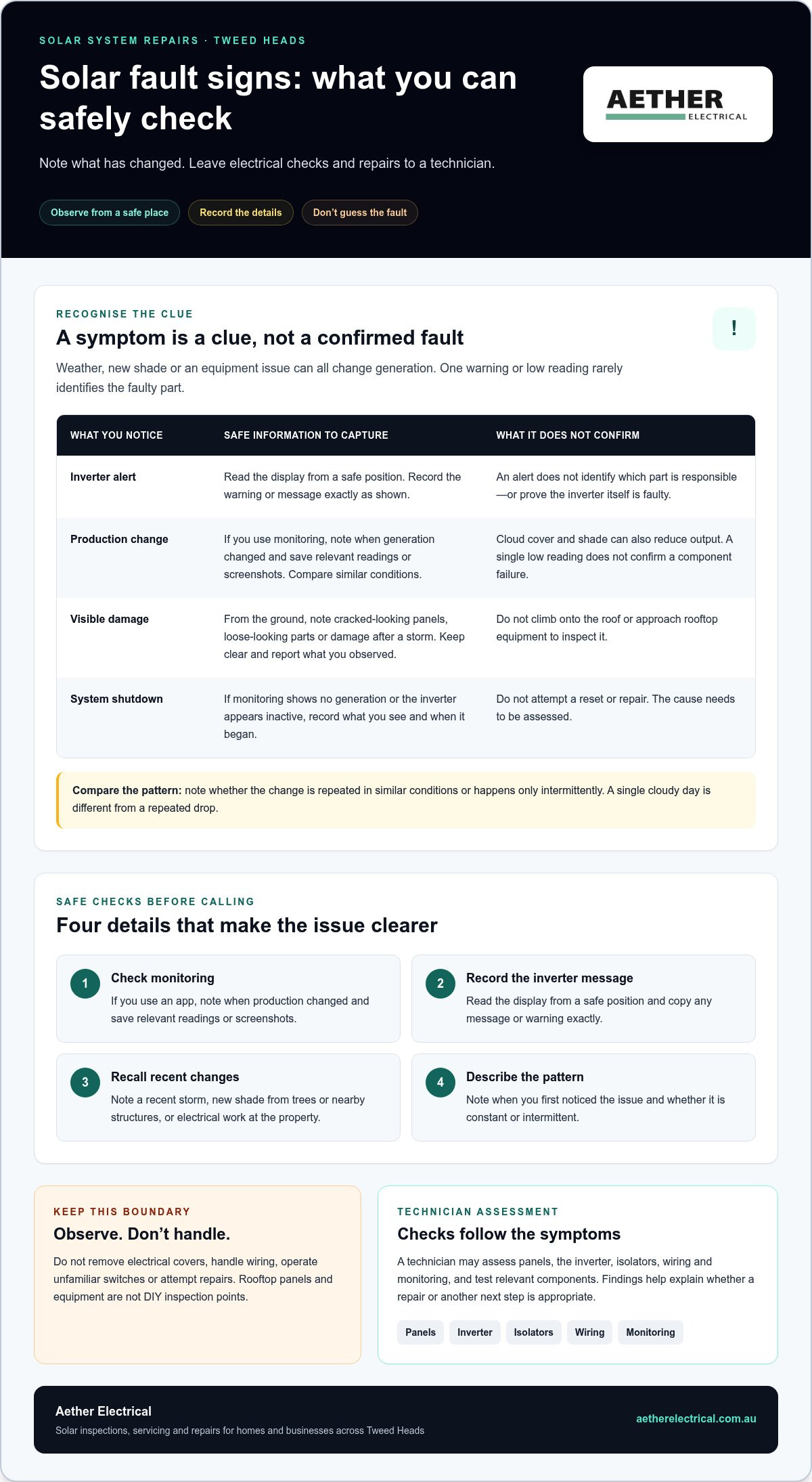
- Inverter alerts: A warning light, error message or unusual display may signal a problem, but it doesn’t confirm which part is responsible.
- Production changes: Monitoring may show generation falling, stopping or fluctuating compared with similar conditions. Cloud cover and shade can also reduce output.
- Visible damage: From a safe place on the ground, note cracked-looking panels, loose-looking parts or damage after a storm. Don’t climb onto the roof to inspect them.
- System shutdown: If monitoring shows no generation or the inverter appears inactive, record what you see rather than attempting a reset or repair.
Note when the change began and whether it happens consistently. A single cloudy day is different from a repeated drop in similar conditions. Household usage affects how much solar power you use or export, but it isn’t the same as a change in generation.
What can Tweed Heads owners safely check before calling?
Limit your checks to information you can access without opening equipment or approaching rooftop components. A few details can help you describe the issue clearly.
- Open your monitoring app, if you use one, and note when production changed. Save relevant readings or screenshots.
- Read the inverter display from a safe position. Record any message or warning exactly as shown.
- Think about recent changes, such as a storm, new shade from trees or nearby structures, or electrical work at the property.
- Note whether the issue is constant or intermittent, and when you first noticed it.
Don’t remove electrical covers, handle wiring, operate unfamiliar switches or attempt repairs. Rooftop panels and equipment aren’t DIY inspection points. If you see damage, keep clear and report what you observed. A technician can inspect the panels, inverter, isolators, wiring and monitoring as needed, explain the findings and discuss the next step.
How a solar technician diagnoses and repairs system faults
A useful repair starts by finding the cause, not swapping parts based on a warning light alone. For solar system repairs Tweed Heads property owners can expect a technician to review the symptoms, inspect the system and test relevant components before discussing a fix. The symptoms guide the inspection; test results guide the decision.
- Gather the symptoms. The technician reviews what you’ve noticed, when it began and whether monitoring or the inverter shows a message.
- Inspect the equipment. Depending on the reported issue, this may include a visual review of accessible panels, the inverter, isolators, wiring and monitoring equipment.
- Test relevant components. Electrical testing helps narrow down where the problem lies and whether the system is operating as expected.
- Explain the findings. The technician outlines what the checks show and discusses an appropriate repair or next step.
A symptom is a clue, not a confirmed fault. Reduced production, for example, doesn’t prove that a panel or inverter has failed. Similar readings can have different causes, so diagnosis matters before work is recommended. Fluke’s guide to troubleshooting solar power equipment also illustrates why checking a system methodically is more useful than guessing from one symptom.
What does a solar system inspection usually cover?
The inspection is shaped by the system and the reported problem. A technician may review accessible equipment, the inverter display or monitoring information, and visible indicators relevant to the issue. Electrical testing can help narrow down the cause safely. The aim is to assess the parts connected to the symptoms, not assume every component needs attention.
An inverter alert may direct the checks, but it doesn’t automatically establish that the inverter itself is faulty. A production change might also lead the technician to consider panels, isolators, wiring or monitoring. These are possible inspection areas, not presumed faults. The scope depends on what the system shows and what the technician finds.
How are inverter, panel and wiring issues approached?
Different components can produce similar signs, so a repair should follow the evidence. The technician uses inspection findings and test results to determine whether a targeted repair is suitable or a component needs replacing. The wider system’s condition matters too. A fix should address the identified issue, rather than treat the most obvious warning as the cause.
If checks point to an inverter issue, the technician can explain what the results mean for that unit. If panel or wiring concerns are found, those findings shape the recommended work. The right approach depends on the system’s condition and the specific fault. For an existing system in Tweed Heads, Aether Electrical’s solar inspection and repair service can help establish what’s happening before you decide on the next step.
Solar repair or replacement in Tweed Heads: how to weigh up the options
A fault doesn’t automatically mean your whole solar system needs replacing. The choice depends on what has failed, the condition of the rest of the system and whether a suitable replacement component can work with the existing equipment. For solar system repairs Tweed Heads homeowners, diagnosis provides a firmer basis for comparing a targeted fix with broader options.
Consider these factors together, rather than deciding based on one warning or an assumed rule:
- Extent of the fault: Is the issue isolated to one component, or are several parts affected?
- Overall system condition: Are the other components in serviceable condition, or are there signs of wider wear or recurring trouble?
- Compatibility: Can a suitable replacement component work with the existing system?
- Future needs: Will the current setup suit your household’s energy use, or are your plans changing?
These questions help frame the decision, but they don’t replace an inspection. No single factor settles the question on its own.
When might repairing the existing system make sense?
A targeted repair may be worth considering when an inspection identifies a specific, diagnosable issue and the rest of the system remains serviceable. The technician can also assess whether a replacement component is compatible with the equipment already in place. If the fault is limited and the wider system is in sound condition, repairing the affected area may be practical. Let the findings guide the decision.
A fault isolated to one part calls for a different discussion than recurring issues across several components. Ask for a clear explanation of what testing found, what work is proposed and how the rest of the system’s condition affects the recommendation. A repair should address the identified problem, not be presented as the right answer before the system has been assessed.
When should replacement or a broader upgrade be discussed?
Broader options may be worth considering if an inspection finds extensive faults, ageing equipment or recurring problems. That doesn’t automatically mean every component must go. It means the system should be considered as a whole, alongside the likely scope of repair and whether replacement parts can integrate appropriately.
Future plans matter too. If household energy needs have changed, or you’re considering battery storage, it may be useful to discuss whether the current system can support those plans. Aether’s Solar Panel Installation Gold Coast buying guide provides context on new systems, while its Solar battery price in 2026 guide can help frame storage planning. These topics can inform the discussion, but the right option for your property still depends on the system assessment.
A useful recommendation makes the trade-offs clear: what can be repaired, what may need replacing, and how each option fits the system’s condition and your future needs. With that information, you can weigh the choices without treating repair or replacement as a foregone conclusion.
Preparing for solar system repairs in Tweed Heads
A little preparation can make it easier to explain what your system is doing and focus the assessment. For solar system repairs Tweed Heads property owners can gather a few useful details before the visit. You don’t need to diagnose the fault or inspect electrical equipment yourself. Clear notes, photos of displays you can safely view and any system paperwork are a good starting point.
What information should you have ready?
Collect what’s available, but don’t worry if you can’t find every detail. The technician can assess the relevant equipment using the information you have.
- Property and system details: Note the system address, approximate installation date and any equipment details shown in documents or on the inverter display.
- Fault information: Copy inverter messages exactly, and save monitoring records or screenshots showing changes in production.
- Timing and patterns: Record when you first noticed the issue and whether it happens consistently or at particular times.
- Recent changes: Mention storms, nearby tree growth or other new shade, roof work, or electrical changes at the property.
- Household context: Note any change in electricity use, such as a new appliance or a shift in when people are home, as this can help explain bill changes.
These details provide context, not a diagnosis. Coastal exposure, a storm or new shade may be relevant, but none proves the cause of a fault on its own. Leave panels, wiring and electrical covers untouched.
What should you expect during a repair assessment?
The technician reviews the issue you’ve reported and inspects the system areas relevant to it. The assessment may involve accessible equipment, the inverter and other components, with the scope guided by the property and system. Access needs can vary, so mention any gates, pets or other site arrangements that could affect reaching the equipment.
After the checks, expect an explanation of the findings and practical next steps. If the cause needs further investigation, or the repair depends on parts or additional work, the technician can explain that rather than assume the issue is resolved on the spot. Your notes help describe what you observed; testing establishes what’s happening.
Before the assessment, gather relevant documents and make sure the technician can reach the areas needed for inspection. When arranging the visit, you can share an inverter message or describe the change you’ve noticed.
Aether Electrical’s solar repair assessment service is available for Tweed Heads properties.
Solar system repairs in Tweed Heads with Aether Electrical
Aether Electrical provides solar inspections, servicing and repairs for homes and businesses across Tweed Heads, the Gold Coast and Northern Rivers. If your system’s output has changed or it’s showing an alert, start by finding out what’s happening. A diagnosis separates the observed symptom from the underlying issue, so maintenance and repair decisions are based on the system’s condition.
You don’t need to decide in advance whether a particular component needs replacing. Share what you’ve noticed, and the assessment can focus on relevant parts of your existing system. The findings help clarify what work may be appropriate and what next steps make sense for your property.
What can Aether help with across an existing solar system?
Aether’s solar work includes system inspections, routine servicing and repairs. The scope depends on the system and the reported issue. An inspection can identify which areas need attention; servicing addresses maintenance needs, while repair work responds to a diagnosed fault. If the issue connects with the property’s electrical system, relevant electrical maintenance can also be considered.
A diagnosis-first approach matters. A warning or production change is useful information, but it doesn’t confirm the cause by itself. Aether can assess the reported symptoms, inspect relevant equipment and explain the findings before you decide how to proceed. This keeps the discussion focused on your system rather than assumptions about what might have failed.
How to take the next step with a local solar repair
A few practical details can help explain the issue. You don’t need a technical diagnosis or a complete file of system records. Whatever information you have can help set the scene:
- Your property location and whether the system is at a home or business.
- What you’ve noticed, when it began and whether it happens repeatedly.
- Any inverter messages or monitoring records you can access.
- System or installation details, if readily available.
Clear notes are helpful, but missing paperwork shouldn’t stop you discussing the issue. Don’t open electrical covers or attempt to inspect rooftop equipment to gather more information. Describe what you can safely observe, and leave electrical checks to the technician.
When you contact Aether, explain the symptoms and share any inverter message you’ve recorded. The system can then be assessed, and the findings used to discuss a practical next step. The aim is to understand the issue and consider the repair or servicing that fits.
Aether Electrical provides solar system inspections, servicing and repairs across Tweed Heads, Tweed, the Gold Coast, Northern Rivers, Ocean Shores and Byron Bay.
Make your next solar decision with confidence
A clear diagnosis gives you more than a fix for today. It can help you plan sensible maintenance and consider how your energy needs may change. If battery storage is part of that plan, understanding the condition of your existing system is a useful starting point.
Aether Electrical can help with solar system inspections, maintenance and repairs, alongside related electrical maintenance and battery storage installation. For solar system repairs Tweed Heads property owners can start by sharing what they’ve noticed and discussing an assessment with the team.
Talk to Aether Electrical about your solar system and get a clearer view of the practical next steps.
Frequently Asked Questions
How do I know if my solar system needs repairs?
A sustained change in generation, an inverter warning or a system that has stopped producing power can indicate a problem. Compare monitoring data across similar sunny days, as cloudy weather can make readings hard to compare. A higher bill alone doesn’t prove the solar system is at fault, since household electricity use and retailer charges also affect it. Note when the change began, and don’t open equipment or touch wiring. A technician can investigate the solar system repairs Tweed Heads property owners may need.
Can a solar system be repaired instead of replaced?
Yes, a system may be repairable if the issue is limited and the remaining equipment is in suitable condition. An inspection helps establish the fault’s extent and whether a replacement component can work with the existing setup. One failed component may call for a different response than recurring problems across several parts. Ask for the findings and options to be explained before deciding. A warning light or single low reading isn’t enough to choose replacement.
Is it safe to keep using solar panels when the inverter shows a fault?
A fault message doesn’t give enough information to decide whether the system is safe to operate. Follow the equipment manufacturer’s safety instructions, and don’t open the inverter, touch wiring or attempt electrical repairs. If you notice exposed wiring, visible damage or a burning smell, keep people clear of the area and arrange professional assistance. Record the message only if you can do so from a safe position. Avoid restarting or isolating equipment unless the manufacturer’s instructions direct you to.
How long do solar system repairs take in Tweed Heads?
Repair timing depends on what the assessment finds, the equipment involved and whether further testing or parts are needed. A clear error message can help describe the issue, but it doesn’t necessarily mean the cause is simple. Share the system details and any message shown when arranging service. This helps the technician understand the situation and explain likely next steps after assessing it. Timing becomes clearer once the fault and scope of work are understood.
Can storms or coastal conditions affect a solar system in Tweed Heads?
Storms and coastal exposure are useful context to share, but they don’t establish the cause of a system problem. After severe weather, look for changes in the inverter display or monitoring from a safe place, and note any damage visible from the ground. Don’t climb onto the roof or approach exposed wiring. In Tweed Heads and elsewhere in the Northern Rivers, a technician can assess the relevant equipment and determine whether it needs attention.
Should I clean my solar panels before booking a repair?
Cleaning isn’t a substitute for investigating a system fault. If generation has changed, note the readings and any inverter message before deciding what to do. Dirt or leaves may be visible from the ground, but don’t climb onto the roof or use tools, water or cleaning products on the panels. A technician can assess whether cleaning or servicing is relevant, or whether the issue needs a different repair. Keep the focus on safe observation, not DIY work.
Can I add a battery while repairing my solar system?
Battery storage can be discussed alongside a repair, but the two decisions need separate consideration. The repair assessment can clarify your system’s condition; battery planning also depends on compatibility and your household’s energy needs. Aether Electrical provides battery storage installation as well as solar servicing and repairs across the Gold Coast and Northern Rivers. Aether’s solar battery price guide offers broader planning context, while an assessment can help explain how your existing system fits your plans.


