
A drop in solar output isn’t always a panel fault. Cloud cover, seasonal changes or new shade can all affect what your system produces. Solar panel maintenance Byron Bay homeowners can rely on involves more than washing panels: salt, leaves and storm debris may also affect the system, so it helps to know what to look for and what to leave to a professional.
Coastal weather can make it harder to tell whether your system needs attention. This guide explains what a maintenance check can cover, which observations you can make safely from the ground and what warning signs call for professional servicing. You’ll also learn how to distinguish changing conditions from possible issues with panels, the inverter or other components. Aether Electrical provides solar maintenance, inspections and repairs across Byron Bay and the Northern Rivers, including Ocean Shores, Tweed and Tweed Heads, as well as the Gold Coast.
Key Takeaways
- Byron Bay’s salt, humidity, storms and nearby vegetation can affect different parts of a solar system, not just the panels.
- A professional maintenance visit can assess system condition and performance, with the inspection shaped by access and any concerns.
- Keep DIY checks to monitoring output and noting visible changes from the ground. Leave electrical testing and repairs to a qualified professional.
- Plan solar panel maintenance Byron Bay homeowners need around system history, visible condition and changes in generation, rather than one fixed schedule.
- Aether Electrical provides solar maintenance, inspections and repairs across Byron Bay and the Northern Rivers, including help with panel, inverter and generation concerns.
Why solar panel maintenance matters in Byron Bay’s coastal conditions
Most modern solar systems don’t need constant attention. Keep an eye on performance and visible condition, then arrange a professional check if something changes or looks out of place. In Byron Bay, coastal exposure makes it useful to consider the whole system. Salt-laden air and humidity may contribute to corrosion on exposed metal over time, while storms can shift debris or reveal damage. Trees and fast-growing vegetation can also create new shade.
Local conditions affect more than panel surfaces, so observe the whole system rather than judging it by how clean the glass looks. Visible dirt doesn’t prove there’s a fault, and clean-looking panels don’t confirm that the inverter, mounting hardware or other components are working as they should. Solar panel maintenance Byron Bay homeowners arrange should suit the system’s condition, rather than follow an assumed schedule that treats every roof alike.
Which parts of a solar system need attention?
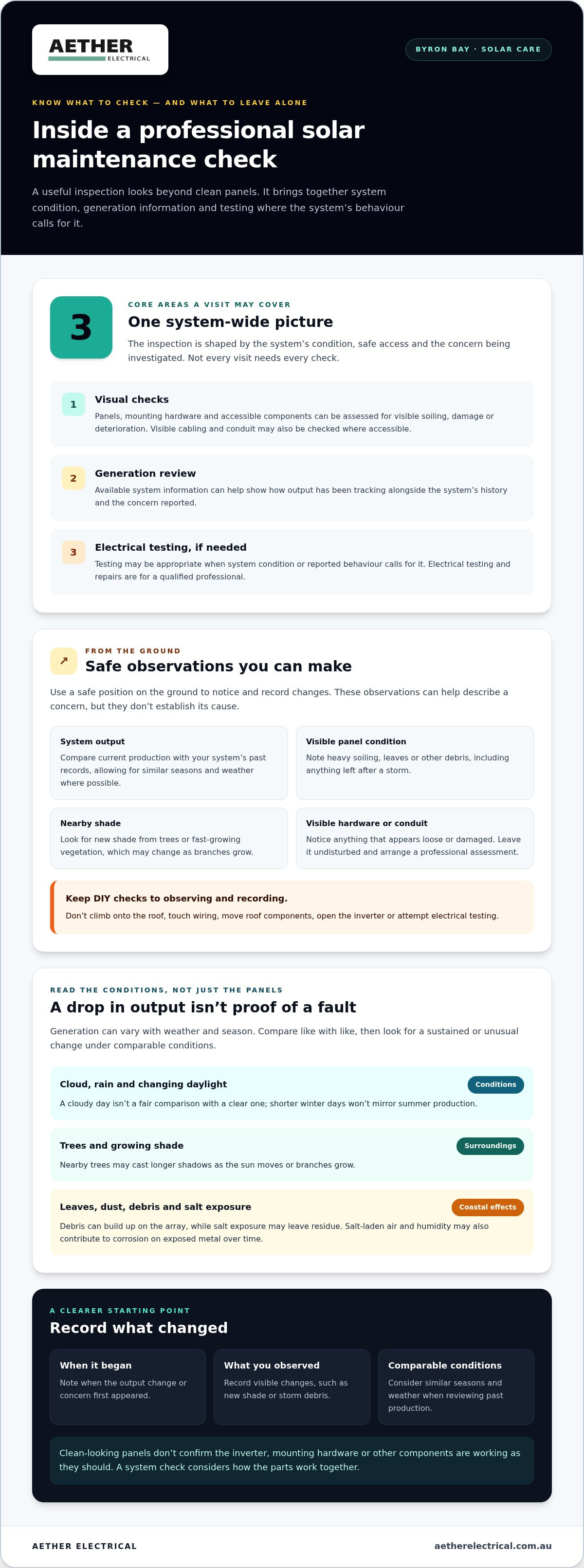
Think of the system in parts: the panels, mounting hardware, visible cabling and conduit, and the inverter. Each can show different signs of wear. From a safe position on the ground, look for heavy soiling, debris left after a storm, hardware that appears loose, or visible conduit that looks damaged. These observations can help you describe a concern, but they don’t establish its cause.
Don’t touch wiring, move roof components or climb onto the roof to investigate. If something looks damaged or out of place, leave it undisturbed and arrange a professional assessment. A photovoltaic system has connected components, so a useful check considers how the panels, inverter and supporting equipment work together, not just the surface of the array.
What can affect solar performance around Byron Bay?
Generation varies with weather and season. Cloud, rain and changing daylight affect how much sunlight reaches the panels. Nearby trees may cast longer shadows as the sun moves or branches grow. Leaves, dust and other debris can build up on the array, while salt exposure may leave residue. These are possible influences, not automatic signs of equipment failure.
Lower output alone doesn’t prove there’s a system fault. Compare current production with your system’s own past records, allowing for similar seasons and weather where possible. A cloudy day isn’t a fair comparison with a clear one, and shorter winter days won’t mirror summer production. Look for a sustained or unusual change under comparable conditions. Note when it began and any visible changes nearby, such as new shade or storm debris. A simple record gives a professional a clearer starting point if you need an inspection.
What a professional solar maintenance visit in Byron Bay can cover
A professional visit looks beyond whether the panels appear clean. It can bring together a visual assessment, a review of available generation information and, where needed, electrical testing. These checks help build a clearer picture of system condition and performance, and identify where further attention may be useful.
Professional solar maintenance is an inspection followed by action guided by the system’s condition. Cleaning may be one task if soiling is an issue, but it doesn’t replace checking the inverter, mounting hardware or other accessible components. The scope depends on what’s visible, safe access to the system and the concern being investigated. A generation drop, for example, may call for a different assessment from visible storm damage.
A visit may include:
- Visual checks of panels, mounting hardware and accessible components for visible soiling, damage or deterioration.
- Generation review using available system information to understand how output has been tracking.
- Electrical testing where the system’s condition or reported behaviour calls for it.
Not every visit needs every check. The aim is to match the inspection to the system and the reason for booking, rather than treating a panel wash as a complete service.
Panels, mounting hardware and visible components
An inspection may look for heavy soiling, visible panel damage and signs of deterioration around accessible mounting hardware, cabling or conduit. Roof access and work at height need suitable safety controls, so this isn’t a job to copy from the ground. A visual check can identify concerns, but it can’t reveal every concealed fault. If a component is hard to reach or needs closer investigation, the next step depends on safe access and the issue.
Cleaning can address dirt or debris on panel surfaces, but it won’t assess electrical connections or confirm the inverter’s condition. Keeping those tasks distinct helps avoid mistaking a clean array for a fully checked system.
Inverter checks and system performance
An electrician can review inverter indicators and available generation information, then consider them alongside the system’s history and the concern you’ve reported. A warning light or unfamiliar display message is useful information, not a diagnosis on its own. Note what you see and when it occurs, but don’t open the inverter or attempt electrical testing.
If repairs are being considered, the system’s age, the fault identified and replacement-part availability may affect the options. An assessment can clarify what needs attention without assuming a particular repair or outcome in advance.
If you’d like a system-wide assessment, solar maintenance and inspections from Aether Electrical can address condition, generation concerns and inverter issues across Byron Bay and the Northern Rivers.
DIY checks or professional servicing: what is safe for Byron Bay owners?
There’s a clear line between observing your solar system and working on it. You can check information shown through the inverter or its monitoring portal, and note changes from a safe spot on the ground. Electrical testing, repairs and roof work need a professional. A clean-looking array isn’t proof that the inverter, wiring or other components are operating correctly.
Use this guide to keep the boundary simple:
| Safe owner observations | Leave to an electrician |
|---|---|
| View the inverter display or monitoring portal as intended by its manufacturer. | Investigate inverter warnings, suspected faults or unusual system behaviour. |
| Record changes in generation, warning messages and visible debris from the ground. | Test electrical components or assess damaged cabling and suspected water ingress. |
| Keep system details and previous service records handy. | Open equipment covers, handle wiring, repair components or work on the roof. |
What homeowners can check without touching the system
Check the inverter display or monitoring portal using the manufacturer’s instructions. If output changes, note when you noticed it and what the system reports. From a safe location, look for debris or visible changes, but don’t reach, climb or use a tool to clear anything. Keep system details and previous service records accessible. These notes can help an electrician understand the concern without you needing to investigate it yourself.
When to leave the work to an electrician
Arrange a professional assessment for electrical faults, damaged visible cabling, inverter warnings or suspected water ingress. Don’t remove covers, handle wiring or climb onto solar panels. Roof access creates fall and equipment risks, while unsuitable brushes, pressure washers or cleaning products may damage components. If cleaning is needed, follow the manufacturer’s guidance and use suitable safety arrangements. Don’t assume a do-it-yourself wash is the safest or best next step.
Keep the goal modest: observe, record and report. A generation change is useful information, not a diagnosis. Dirt on a panel may warrant attention, but cleaning alone won’t check electrical connections or confirm inverter operation. The right response depends on what you’ve noticed and the system’s condition. For solar panel maintenance Byron Bay owners can approach with confidence, leave hands-on inspection and electrical work to a professional.
How to plan solar maintenance around your Byron Bay property
A practical maintenance plan starts with what you know about your system, what you can safely observe and whether performance has changed. There’s no single servicing interval that suits every property. System guidance, equipment condition and the concern you’re investigating are better starting points than a fixed calendar rule.
Use this simple sequence to decide what to do next:
- Gather the history. Find your installation details, equipment information and previous service records.
- Note what’s changed. Record visible changes from the ground, inverter alerts and unusual shifts in generation.
- Choose the right next step. Check the manufacturer’s guidance, then arrange a professional assessment if a concern persists or needs electrical investigation.
If you’re unsure what equipment is part of your setup, the solar panel installation buying guide can help you understand system components and the documentation to keep. Use your own system records for the specific make, model and installation details.
Build a simple maintenance record
Keep one folder, digital or paper, with the system make, installation details, manuals, invoices and warranty documents. Add service dates, inverter alerts and notes about generation changes, including when you first noticed them. A dated photo taken from ground level can record a visible change without putting you on the roof. Clear notes make it easier to explain what’s happened during an assessment.
Warranty terms vary between manufacturers and equipment, so check the documents for your specific panels, inverter and connected components. Don’t assume one warranty condition applies to every part of the system. Keep the relevant guidance with your records, especially if you’re planning cleaning or repairs.
Match the next step to the issue
Routine observation, a cleaning need and an electrical fault are different service questions. Visible debris may point to a cleaning concern, while a persistent inverter warning or sudden, unexplained generation change calls for professional assessment. Note what you’ve observed and when it began. Avoid trying to confirm the cause by opening equipment or accessing the roof.
If your solar system is connected to battery storage, include the battery and its related system information in your records. The solar battery price guide provides context on battery systems and their connected components.
For a condition-led assessment, you can arrange solar maintenance and inspection with Aether Electrical across Byron Bay and the Northern Rivers. Sharing your system history and the changes you’ve noticed helps focus the visit on your property’s needs.
Solar panel maintenance in Byron Bay with Aether Electrical
Aether Electrical provides solar maintenance, inspections and repairs for homes and businesses across Byron Bay and the Northern Rivers. The work starts with the system and the concern you’ve noticed. That might mean assessing visible condition, reviewing a generation concern or looking into an inverter issue. Aether Electrical also services properties across Ocean Shores, Tweed, Tweed Heads and the Gold Coast.
Solar panel maintenance Byron Bay properties need can vary with the equipment, its condition and the issue being investigated. A coastal home with visible debris may have a different concern from a business that has noticed a change in generation or an inverter warning. A practical inspection considers the system as a whole, then focuses on relevant components and next steps.
A local service for homes and businesses
Residential and commercial solar systems both benefit from a clear assessment of condition and performance. Local servicing across Byron Bay and the wider Northern Rivers gives property owners a practical way to investigate concerns with their panels, inverter and related system components. Whether you’ve spotted a visible change or have a question about system performance, the assessment can be shaped around the property and information available.
There’s no need to decide in advance that the issue is dirty panels, a fault or a particular repair. Share what you’ve observed. The service can assess the system concern and determine what may warrant further attention.
What to have ready before arranging a service
A few details make it easier to explain what’s happening. Before arranging a visit, gather what you can from a safe place:
- The property address and any access details relevant to the solar system.
- Any inverter display messages, noted as they appear.
- A brief description of recent performance changes and when you noticed them.
- Installation documents, equipment details and previous service records, if available.
You don’t need to diagnose the issue or inspect the roof yourself. Clear observations and system records give the electrician a useful starting point. If you don’t have every document to hand, share what you do know. Aether Electrical can assess the concern in context and discuss suitable next steps for your system.
For a calm, practical start, Arrange solar maintenance with Aether Electrical. Share what you’ve noticed to plan an assessment for your Byron Bay or Northern Rivers property.
Make your next solar check a considered one
Your solar system doesn’t need to become another item on a constant to-do list. Treat maintenance as a practical response to what you notice at your property. Changes to nearby trees, new roof work or a storm may give you a reason to take another look, but there’s no need to diagnose the cause yourself.
For solar panel maintenance Byron Bay homeowners can approach with less uncertainty, start with the details you have: what changed, when you noticed it and what the system is showing. A professional assessment can then be guided by your property and the concern at hand. That’s a straightforward way to choose a useful next step without guessing at a fix.
Aether Electrical provides solar maintenance, inspections and repairs across Byron Bay, Ocean Shores, Tweed, Tweed Heads, the Northern Rivers and the Gold Coast. If you’re ready to discuss a concern with your system, arrange solar maintenance with Aether Electrical.
Frequently Asked Questions
Does rain clean solar panels well enough in Byron Bay?
Rain can rinse loose dust, but it may leave stuck-on grime, bird droppings or residue behind. Whether cleaning is worthwhile depends on what you can safely observe and how the system is performing. For a practical solar panel maintenance Byron Bay plan, note whether soiling remains after rain and whether generation has changed. Don’t climb onto the roof to check. Follow the panel manufacturer’s cleaning advice or arrange safe professional help.
Can I use a pressure washer on solar panels?
Don’t assume a pressure washer is suitable. High-pressure water or an unsuitable cleaning method may damage panels, seals or nearby components. Check the instructions for your specific panels before arranging any cleaning, and keep clear of wiring and electrical equipment. If the array is hard to reach or heavily soiled, avoid improvising with a ladder or long-reach tool. Have the cleaning need assessed and handled with appropriate safety measures.
Should I switch off my solar system before cleaning the panels?
Don’t operate switches or isolate equipment unless you understand the instructions for your system and can do so safely. Shutdown steps vary between installations, and solar equipment can remain electrically hazardous. Check the manufacturer’s guidance, but leave electrical work or uncertainty to an electrician. For panel cleaning, don’t touch the inverter, switchboard or wiring. If safe access or the correct shutdown procedure isn’t clear, don’t start cleaning.
What should I do if my solar inverter display is blank?
Observe the display from a safe position and note whether it’s completely blank or showing any lights or messages. Don’t open the inverter or handle its switches and wiring. Check the manual for user-level guidance, then arrange a professional assessment if the display stays blank or you notice a change in generation. Record the inverter make and model, when the display changed, and any recent events that may help explain the timing.
Should solar panels be checked after a severe storm?
After severe weather, look from the ground for obvious debris or components that appear displaced. Don’t climb onto the roof or approach damaged equipment. If you notice a concern, record its location and any inverter message without touching the system. A professional inspection can assess visible condition and determine whether further electrical checks are appropriate. If you see fallen or exposed electrical cabling, keep clear and arrange professional help.
Can bushfire smoke or ash affect solar panels?
Yes, smoke may leave a film and ash can settle on panel surfaces. The effect on generation depends on how much residue reaches the array and the system’s condition. Don’t brush panels from a ladder or use cleaning products that aren’t approved for your equipment. Follow the manufacturer’s cleaning guidance and monitor output. If residue remains or performance changes unexpectedly, arrange safe cleaning or an assessment rather than trying to reach the roof yourself.
Can bird droppings reduce solar panel output?
Bird droppings can soil part of a panel and may affect how that section receives sunlight. Don’t scrape the surface or climb onto the roof to remove them. Check the manufacturer’s cleaning instructions and consider professional cleaning if the affected area is difficult to reach. If output still seems unusual after the visible soiling is addressed, share the timing and any monitoring information with an electrician so they can assess whether other factors may be involved.


