
A drop in solar output doesn’t always mean something’s broken, but it can be hard to tell normal variation from a fault. If you’re looking at commercial solar servicing Northern Rivers options, start by matching the service to your system, the concern you’ve noticed and how your business uses power.
A commercial service can assess panels, inverters, wiring, mounting and system performance. Some sites need planned maintenance; others need a focused investigation into an alert or change in output. Aether Electrical provides solar inspections, servicing and repairs for commercial clients across the Northern Rivers, as well as commercial electrical services across the Gold Coast and nearby areas.
This guide explains what a service can cover, which signs may call for fault investigation, and what information helps make a visit more efficient. You’ll also find a practical checklist for preparing your site and coordinating access. The aim is to help you understand what your system may need and choose a sensible next step.
Key Takeaways
- Inconsistent output or inverter alerts can indicate when your system needs an inspection, even if the panels look intact.
- Commercial solar servicing Northern Rivers businesses arrange should be tailored to the system and reported concerns. Not every visit needs the same checks.
- Choose planned maintenance for a proactive review, or fault investigation when you’ve noticed a specific issue.
- Gather system details and note changes in performance before arranging a visit. Coordinate safe access to relevant areas of your site.
- Aether Electrical provides commercial solar inspections, servicing and repairs across the Northern Rivers, with commercial electrical experience to help account for site needs.
Commercial solar servicing in the Northern Rivers: when does a business need it?
A commercial solar system can need attention even when every panel looks intact from the ground. An inverter alert, an unexpected shutdown or a change in monitoring readings can be a reason to investigate. These signs don’t confirm a fault, but they give you useful information to share before the issue affects your energy planning or site operations.
Commercial solar servicing is a practical assessment of a business’s solar system to understand its condition and identify maintenance or repair needs. The scope should suit the system, the reported concern and the site. That matters for businesses arranging commercial solar servicing in the Northern Rivers, where a clear review can help make system performance and maintenance needs easier to manage. An inspection can clarify what’s happening and what to do next without assuming a specific fault or promising a particular performance result.
What signs suggest a commercial solar system needs attention?
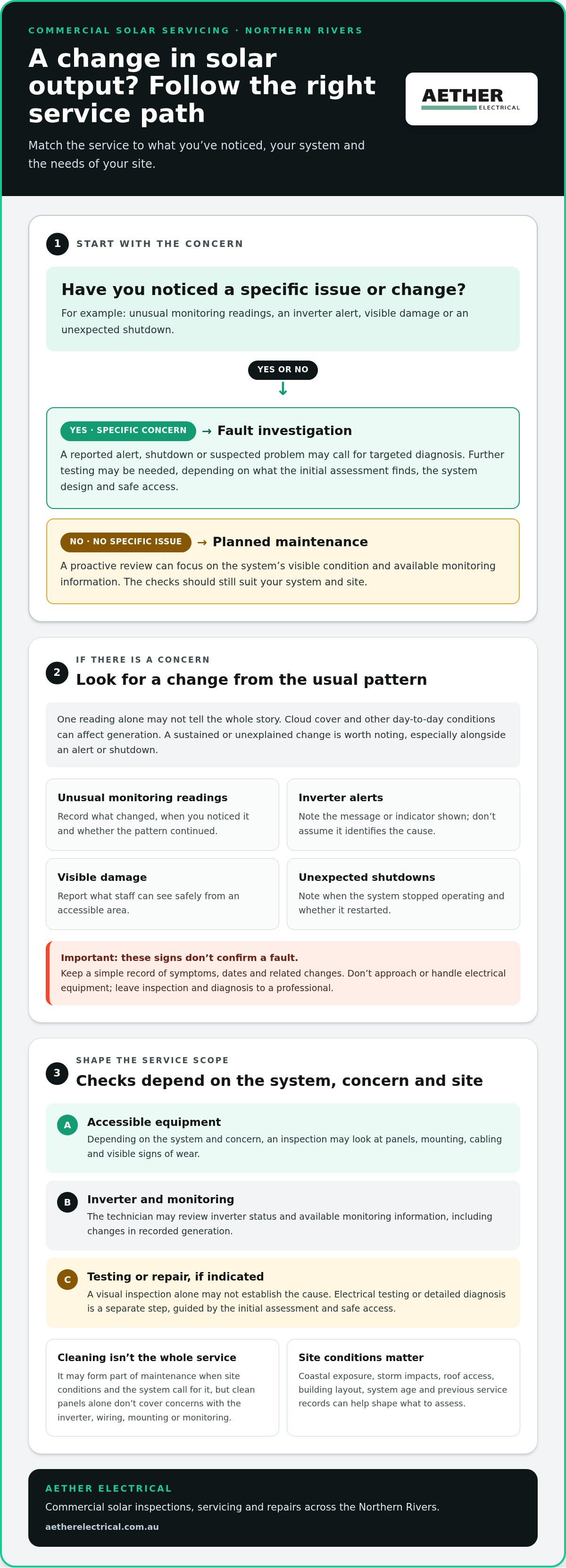
Look for changes from your system’s usual pattern rather than judging it from one reading. Cloud cover and other day-to-day conditions can affect generation. A sustained or unexplained change is worth noting, particularly if it appears alongside an inverter alert or shutdown. The Solar energy overview explains how sunlight is converted into electricity; an inspection can assess the condition of the equipment installed at your site.
- Unusual monitoring readings: record what changed, when you noticed it and whether the pattern continued.
- Inverter alerts: note the message or indicator shown, without assuming it identifies the cause.
- Visible damage: report anything staff can see safely from an accessible area, such as obvious damage to panels or equipment.
- Unexpected shutdowns: note when the system stopped operating and whether it restarted.
Ask site staff to keep a simple record of symptoms, dates and related changes they’ve noticed. This gives the technician a clearer starting point. Don’t approach or handle electrical equipment; leave inspection and diagnosis to a professional.
Why servicing matters for Northern Rivers businesses
For an office, retail premises or other commercial property, solar performance can inform energy planning and day-to-day operations. Understanding whether a system is operating as expected helps a business make better-informed decisions about energy use. Planned attention can also make maintenance easier to organise, rather than leaving site teams to interpret an alert or changing reading on their own.
Site conditions vary across the region. Coastal exposure may be relevant at one property, while storm impacts, roof access or building layout may shape an inspection at another. System age, previous service records and the specific concern also help determine what to assess. Aether Electrical provides commercial solar inspections, servicing and repairs across the Northern Rivers, including areas such as Tweed, Tweed Heads, Ocean Shores and Byron Bay, and serves commercial clients on the Gold Coast.
What does commercial solar servicing include?
A commercial solar service isn’t a fixed checklist applied the same way to every roof. It’s an assessment and maintenance visit shaped by the installed system, the reported concern and the site. A routine review may focus on visible condition and monitoring information. A reported fault can call for more targeted diagnosis.
A clear scope helps separate what a technician can observe from what needs further testing or repair. That gives you a more useful picture of the system’s condition and practical next steps. Aether Electrical provides commercial solar inspections, servicing and repairs across the Northern Rivers. For an overview of its solar servicing support, explore the service information on its website.
Inspection and system checks: what may be assessed?
Depending on the system and concern, an inspection may look at accessible panels, mounting, cabling and signs of visible wear. The technician may also review inverter status and available monitoring information, such as changes in recorded generation. These checks can identify areas that need closer attention, but a visual inspection alone doesn’t establish the cause of every issue.
Electrical testing or detailed fault diagnosis is a different step from looking over accessible components. Whether it’s needed depends on what the initial assessment shows, the system design and safe access to relevant equipment. A useful service explanation distinguishes observations from test results, then sets out recommended next steps in plain language.
Solar maintenance, cleaning and repairs are different tasks
Cleaning may form part of maintenance where site conditions and the system call for it, but clean panels alone don’t amount to a full service. A system can still have concerns involving its inverter, wiring, mounting or monitoring. Cleaning may not be necessary at every visit. The right work depends on what’s found and whether access can be arranged safely.
- Visual checks help identify visible changes or damage on accessible parts of the system.
- Monitoring review can put reported performance changes in context and guide further investigation.
- Fault diagnosis focuses on a specific alert, shutdown or suspected problem and may require additional testing.
- Repairs address an identified fault or damaged component. The recommended work depends on the findings and system design.
A service report should explain what was assessed, what was observed and which actions are recommended, without presenting a possible cause as a confirmed fault. For example, an inverter alert may prompt investigation, but the alert alone doesn’t establish which component needs work. Clear findings also help business owners plan maintenance and brief site staff.
The service scope should follow the evidence. Cleaning, testing, component replacement and repair are separate tasks, and not every visit calls for all of them. A tailored approach gives your business a clearer picture of what’s been checked and what deserves attention next.
Planned maintenance or solar repair: which service suits your business?
The right service depends on what’s happening at your site. If there’s no specific fault, planned maintenance can provide a useful review of system condition. If you’ve noticed an alert, shutdown or unusual change, fault investigation is the clearer starting point. Repair follows once the issue and appropriate work have been identified.
Use this comparison to match the service to your situation. Commercial solar servicing for Northern Rivers businesses can be scoped to suit the system and operating needs, rather than assuming every visit covers the same work.
| Service | Trigger | Typical focus | Have ready |
|---|---|---|---|
| Planned maintenance | No specific fault, or a scheduled review based on site needs | General system condition and agreed maintenance checks | System details, past service records and site priorities |
| Reported fault investigation | Persistent alert, unexpected shutdown or unusual monitoring change | Assessing the reported symptom and investigating its likely cause | Alert details, dates, monitoring records and staff observations |
| Repair | A fault or damaged component has been identified | Work to address the diagnosed issue, based on the findings | Previous diagnosis, service notes and relevant system information |
When is planned commercial solar maintenance a practical choice?
Planned maintenance can suit a business that wants a clearer view of system condition before a known concern disrupts operations. Consider the system’s age, previous faults, how much monitoring information is available and how much the site relies on solar during operating hours. These details help shape a useful scope. There’s no universal interval that suits every system, so timing should reflect its condition, history and business priorities.
Routine servicing isn’t automatically necessary at the same frequency for every business. If the system is operating as expected, the value of a visit depends on what you want assessed and what its service history suggests. A focused scope keeps the review relevant instead of turning maintenance into a one-size-fits-all checklist.
When should a business request fault investigation or repair?
Request an investigation if alerts persist, the system shuts down unexpectedly or monitoring shows an abnormal change that can’t be explained by ordinary conditions. Diagnosis helps identify the likely issue; repair scope can then be based on those findings. A symptom alone doesn’t confirm which part needs work, so avoid assuming a particular component must be replaced.
Separate performance questions from immediate safety concerns. If staff notice a condition that appears unsafe, keep people clear of the affected area and follow your site’s safety procedures. Don’t approach or handle electrical equipment. For routine concerns, share the recorded symptoms and system history so the service can be directed appropriately.
Maintenance can identify issues and clarify next steps, but it can’t guarantee a particular level of output or prevent every future fault. The practical goal is a better-informed decision: review the system when planned, investigate a reported change and arrange repairs once the cause and required work are understood.
How to prepare your Northern Rivers site for commercial solar servicing
A little preparation helps make a service visit more focused and easier to coordinate. Gather the information your site already has, note what staff have observed, then plan access around normal operations. For commercial solar servicing in the Northern Rivers, clear details about the system and site help establish a useful scope before the visit.
Use this checklist to get started:
- Gather system details. Find available records showing the system and inverter make or model, along with manuals or previous service notes.
- Save monitoring information. Screenshots of unusual readings or alerts can help show what changed and when.
- Record symptoms. Ask the site contact to note when an alert, shutdown or other concern first appeared, and whether it has continued or changed.
- Describe visible concerns. Photos taken from a safe, accessible location can help explain what staff have noticed. They don’t replace an on-site inspection.
- Plan access. Identify relevant equipment areas and arrange safe access with the appropriate site contact. Staff shouldn’t climb onto roofs or handle electrical equipment.
What information helps scope a service visit?
System and inverter details, monitoring screenshots and available service history help build a clearer picture before the visit. Keep notes specific: include the alert wording, the date symptoms began and any changes staff have observed. If a photo helps show visible damage, take it only from a safe position. These details guide the initial scope; the technician assesses the system on site.
How can servicing be coordinated around business operations?
Choose one site contact to coordinate access and share practical requirements in advance. Include trading hours, restricted areas, tenant arrangements and any site induction requirements. If equipment areas are locked or managed by another tenant, plan how access will be arranged. Let affected staff know about the visit so they can keep access clear without unnecessarily interrupting normal work.
Safe access is a coordination task, not a job for unqualified staff. Arrange access to the relevant areas, but leave inspection and work on solar or electrical equipment to the technician. Sharing particular operating constraints early helps the service plan reflect how your business runs.
With system records, symptom notes and access arrangements ready, it’s easier to start with a useful picture of the issue and the site. Read about commercial solar servicing from Aether Electrical, which supports commercial solar servicing across the Northern Rivers.
Arrange commercial solar servicing with Aether Electrical in the Northern Rivers
Aether Electrical provides commercial solar servicing, inspections and repairs for businesses across the Northern Rivers. Its commercial electrical experience helps keep the practical details of a working site in view, from access to equipment areas through to how a service visit fits around daily operations. Aether Electrical also serves clients across the Gold Coast, Tweed and Tweed Heads.
You don’t need to diagnose the issue before making an enquiry. A clear description of what your team has noticed gives the conversation a useful starting point. The service scope can then respond to the system, the reported concern and the property, rather than assuming every business needs the same checks or work.
What businesses can expect from a tailored service approach
Commercial solar servicing for Northern Rivers businesses should reflect the site and the system. Aether Electrical provides solar inspections, servicing and repairs alongside commercial electrical services. This combination supports a practical view of the work in a business setting, where equipment access, tenant arrangements and operating needs can all affect how a visit is planned.
Clear communication matters at each stage. The technician can explain what the inspection has identified, distinguish observations from confirmed issues, and outline recommended next actions in straightforward language. If further work is advised, the findings help clarify why it may be needed. The aim is to give you a useful understanding of the system’s condition, not assumptions about the cause or promises about future output.
Take the next step with a local commercial solar team
Business owners and property managers can make an enquiry with a few practical details ready. Share the site location, a short description of the system concern and any information that could affect access. For example, note whether the property has tenants, restricted areas, set trading hours or a site contact who coordinates contractor visits.
You can also mention what your business needs to plan around. A retail site may need access coordinated to avoid busy periods; an office or managed property may need a building contact to arrange entry to equipment areas. Sharing these details early helps shape the conversation around your site and avoid unnecessary back-and-forth.
- System concern: describe the alert, change or service request in plain terms.
- Site location: provide the business or property address in the Northern Rivers.
- Access needs: note relevant contacts, tenant arrangements and any site requirements.
Aether Electrical can help you work out a practical next step for your commercial solar system. Talk to Aether Electrical about commercial solar servicing.
Make your next solar service decision with confidence
A clear view of your system’s condition gives your business a sounder basis for planning. Use assessment findings to decide what deserves attention and when, rather than letting uncertainty shape energy decisions. That keeps the next step grounded in your site’s needs, not guesswork.
Aether Electrical provides commercial solar inspections, servicing and repairs across the Northern Rivers, with commercial electrical services for businesses on the Gold Coast, in Tweed and Tweed Heads, and around Ocean Shores and Byron Bay. The focus is on understanding the system and identifying a sensible path forward.
You don’t need every technical detail worked out before starting a conversation. Share what you’ve noticed and what matters for your site. Talk to Aether Electrical about commercial solar servicing to discuss the next step for your business.
Frequently Asked Questions
How often should a commercial solar system be serviced?
There’s no universal service interval that suits every commercial system. Use its documentation and service history to guide a review schedule, then reconsider it after a fault, repair, building work near the array or a change in site operations. For businesses in the Northern Rivers, Tweed or Byron Bay, a maintenance plan should reflect the system’s age, condition and operating priorities rather than follow an arbitrary calendar rule.
Is solar panel cleaning the same as commercial solar servicing?
No. Cleaning addresses dirt or debris on panels, while a service may assess other parts of the system and its operation. Clean panels alone won’t reveal an inverter issue or wiring concern. Cleaning may be relevant where soiling is present, but it isn’t automatically needed at every visit. Don’t climb onto a roof or handle equipment to clean panels yourself; arrange safe, suitable access for the work.
Can a commercial solar system be serviced while the business is operating?
It may be possible, depending on the work scope, equipment access and site conditions. A visual review may affect operations differently from work that requires access to equipment or a temporary interruption. For a busy shop in Tweed Heads or a tenanted office in Ocean Shores, let the site contact coordinate entry and notify affected staff or tenants. Plan access restrictions before the visit.
What should I do if my commercial solar inverter shows an alert?
Record the exact alert and when it appeared, then share that information with a solar service professional. Don’t open the inverter, touch wiring or repeatedly reset equipment to clear the message. If you notice smoke, a burning smell or another immediate safety concern, keep people away from the affected area and follow your site’s safety procedures. An alert is useful evidence, but it doesn’t identify the cause by itself.
Does commercial solar servicing guarantee higher energy output?
No. Servicing can assess system condition and identify possible issues, but it can’t guarantee a particular energy output or prevent every fault. Generation can vary with conditions such as cloud cover, shading and the system’s operating state. Use monitoring records to compare performance over time, and treat an inspection as a way to understand findings and decide on next steps, not as a promise of a specific result.
What records should a business keep for its solar system?
Keep a central file with system and inverter details, available manuals, commissioning documents, monitoring reports and records of inspections, faults and repairs. Note dates and outcomes, and retain relevant correspondence about changes to the system or property that could affect it. A property manager in Byron Bay, for example, can use this history to brief new site staff and give a technician useful context without relying on memory.


