
What if using solar power well is less about generating more and more about matching generation to when your home needs electricity? It’s natural to wonder where the power goes after it leaves the roof, especially when clouds, shade or evening demand affect how much is available. Understanding how solar panels and home electricity work together makes it easier to plan around your system.
Solar panels generate electricity from sunlight, and an inverter converts that power into a form your home can use. Your home uses solar energy as it’s generated. If there’s more than you need at that moment, the surplus may be sent to the grid or stored in a battery, depending on your setup. When solar generation falls short, electricity can come from the grid or stored energy.
This guide explains how that flow works, what influences output and how household routines affect the amount of solar power you use directly. You’ll also find practical ways to shift flexible electricity use into sunnier hours, plus guidance on when a system service or battery storage may be worth discussing. Solar output varies, but understanding the timing helps you make better use of what your system produces.
Key Takeaways
- Follow the path from sunlight through your inverter to the appliances using electricity at home.
- Understand how solar generation changes through the day and why timing matters when matching it with household use.
- Consider how roof orientation, shade, available space, system design and daily habits affect your solar setup.
- Review when you use electricity before changing routines or exploring extra equipment.
- Learn when an assessment or system service could help you make informed choices about solar panels and home energy use.
How solar panels work with your home’s electricity
Rooftop solar panels generate electricity from sunlight for use in your home. They don’t provide a constant supply: output changes with sunlight, shade and the way the system is designed.
Understanding the connection between solar panels and home electricity makes the system easier to follow. Power is generated on the roof, converted for household use, then directed to appliances and other electrical equipment. If your system produces more than the home is using at that moment, the surplus may flow to the grid or be stored in a battery, if one is installed.
What happens to sunlight on a solar panel?
Solar panels use photovoltaic cells to turn sunlight into electrical energy. Put simply, a solar panel converts sunlight into electricity through photovoltaic cells. The amount generated varies with the available sunlight, so a bright, unshaded period can produce more than a cloudy or shaded one. Panels capture available light. They don’t store it or guarantee the same output all day.
The panels are one part of a rooftop system, alongside equipment that manages the electricity they produce. For a broader overview of system components, see this guide to rooftop solar power systems.
How does solar electricity reach household appliances?
Electricity generated by panels needs to be converted into a form household appliances can use. The inverter does this, allowing solar generation to supply appliances while the system is producing power. A washing machine running during the day, for example, may use available solar generation as it operates.
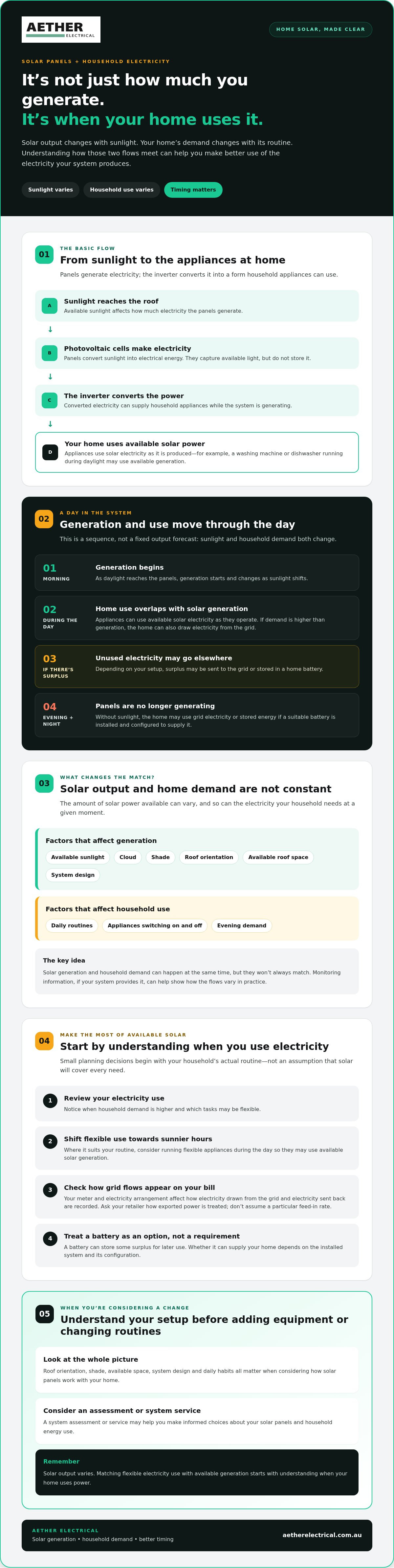
Here’s the basic flow:
- Panels generate electricity from the sunlight reaching the roof.
- The inverter converts it into a form household appliances can use.
- The home uses the available power. If demand is higher than solar generation, electricity can also come from the grid.
- Surplus may flow elsewhere. Electricity not being used in the home may be sent to the grid or stored in a battery, depending on the setup.
Your electricity meter is part of this picture. Depending on the meter and your arrangement, it may record electricity drawn from the grid and electricity sent back to it. Check your bill or ask your electricity retailer how those flows appear and how exported power is treated. The key point is that solar generation and household demand can happen at the same time, but they won’t always match.
How solar panels power a home from morning to night
Solar generation changes through the day, while household electricity use follows your routine. The two won’t always line up. Understanding how power moves from morning to evening can help you identify flexible tasks that could use available solar generation, without assuming it will cover every need.
What happens when your home uses solar power during the day?
While the panels are generating, electricity can supply appliances running in the home. For example, a dishwasher operating during daylight may use available solar power as it’s produced. The balance shifts throughout the day: sunlight affects generation, while appliances switching on and off change household demand.
Think in terms of overlap. If your home is using less electricity than the system is generating, there may be surplus. If demand is higher than generation, the home can draw additional electricity from the grid. Monitoring information, if your system provides it, can show how these flows vary in practice.
The daily flow is straightforward:
- 1. Morning: As daylight reaches the panels, generation begins and changes as sunlight shifts.
- 2. During the day: The home uses available solar electricity as appliances operate. If household demand exceeds generation, electricity can also come from the grid.
- 3. When generation exceeds use: Surplus may be exported to the grid or stored in a home battery, depending on the system configuration.
- 4. Evening and night: Without sunlight, panels aren’t generating. The home may use grid electricity or stored energy if a suitable battery is installed and configured to supply it.
Where does unused solar electricity go?
In a grid connected setup, electricity the home isn’t using may flow to the electricity network. Your meter and electricity plan affect how exports are recorded and credited. Check your bill or ask your retailer about your arrangement rather than assuming a particular feed-in rate.
A home battery can store some surplus generation for later use. It’s an option, not a requirement. Whether stored power can supply your home depends on the installed system and its configuration. Reviewing your household’s electricity use and existing setup can help you decide what to ask before considering storage.
For advice about a household solar system in Tweed and the surrounding region, talk with Aether Electrical about solar installation and servicing.
What affects how well solar panels work with your home?
Solar performance depends on how the roof, system design and household electricity use work together. No single factor gives the full picture. A roof may have suitable space but still be affected by shade. A system may generate power at times when household demand is low. The useful question is how your property’s conditions match your daily routine.
How do roof direction, shade and local conditions matter?
Roof direction and angle affect how sunlight reaches panels during the day. Trees, nearby buildings and other obstructions can cast shade and limit the sunlight available to the panel area. Roof space and layout also influence where panels can be placed and how the system is designed.
Homes across the Gold Coast, Tweed, Tweed Heads and the Northern Rivers, including Ocean Shores and Byron Bay, have different roof layouts and site conditions. The suburb alone can’t predict a home’s solar output. A site specific assessment can consider the roof, shading and proposed system together, rather than relying on a broad regional estimate.
Does your household use electricity when panels are generating?
Compare your daytime routine with the times your household uses the most electricity. If suitable appliances can run during daylight, they may use solar generation as it’s produced. If demand is mainly in the evening, your usage may overlap less with generation. Shifting flexible tasks can increase direct use of available solar power, but it won’t suit every routine. A battery is another option to discuss, not a must have for every household.
Use these questions to assess how solar panels and home energy needs fit together:
| Factor | Practical question |
|---|---|
| Roof direction and angle | Which roof areas receive sunlight at different times of day? |
| Shade | Do trees or nearby structures shade the potential panel area? |
| Roof space | Is there suitable, unobstructed space for a practical panel layout? |
| System design | How does the proposed system account for the roof and household needs? |
| Energy habits | Which suitable appliances could run while the panels are generating? |
These checks can help you prepare for a conversation with a local solar specialist. They can assess the property and household usage together, then explain which system considerations are relevant to your home. That gives you a more useful starting point than assuming every roof or household will perform in the same way.
How to make better use of solar power at home
Start with your household’s routine, not a new gadget. Check when you use electricity over several days to see whether flexible tasks could better match solar generation. This also gives you more useful information to discuss before changing your system or considering extra equipment.
Which everyday habits can align with solar generation?
Where your routine allows, try running suitable flexible appliances during daylight hours. For example, you might run a dishwasher or washing machine while you’re at home and your panels are generating. There’s no single schedule that suits every household, and shifting use won’t guarantee a particular bill reduction. The aim is simply to make better use of available solar power.
If your system provides monitoring information, use it to see when it’s generating and how that compares with household use. Look for patterns over time rather than judging performance from one cloudy day. This can help you decide whether a small routine change is practical or whether generation and demand rarely overlap in your household.
What should you check before changing your setup?
Use this sequence to make your next step clearer:
- Review your electricity use. Check your bill, meter information or available monitoring to understand when demand tends to be higher.
- Look at the roof from the ground. Note visible shade and consider whether nearby trees or buildings may affect the panel area. Don’t climb onto the roof to inspect it.
- Gather your system details. If you already have solar, note the information available about its panels, inverter and any battery storage.
- Consider the household fit. Think about which flexible appliances could run during daylight and what you use after sunset.
- Discuss questions with a qualified professional. Roof suitability, system performance and electrical changes need advice specific to your home.
A local specialist can help assess how your roof, existing equipment and daily routines fit together. That conversation may clarify whether a system service, design change or battery storage is worth exploring. None is automatically necessary. Ask a professional about work specific to your property.
If you’d like to talk through solar panels and home energy use, contact Aether Electrical about your home’s solar setup.
How to take the next step with solar panels and your home
You don’t need to know exactly how much electricity your system should produce before asking for advice. Start by noting your household’s routine, any concerns about the roof and the information you already have. Recommendations should fit the property and the people using it, rather than rely on a generic estimate.
What information helps a solar conversation get started?
Before speaking with a solar professional, jot down details that can help explain your situation:
- Household use: Note when electricity demand is usually highest and which appliances could run during daylight hours.
- Roof concerns: Mention visible shade, limited roof space or anything else that may affect where panels could go.
- Existing equipment: If you already have solar, collect available information about the panels, inverter and any battery. A recent electricity bill or monitoring details may also help.
- Your questions: List what you want to understand, such as how generation is being used, whether the system may need servicing or whether battery storage is worth exploring.
Use available records rather than guessing at system performance. If you’re unsure what a reading means, bring it up as a question. An appropriate professional can consider the roof, existing setup and household needs together before recommending a next step.
When might local solar or battery support be useful?
A solar assessment may help if you’re planning a new system, want to understand whether your property is suitable or need advice about an existing setup. A system service may be worth discussing if you have questions about its condition or operation. Neither is automatically needed for every home.
Battery storage is another option if you’re interested in using some solar generation later. Whether it suits your household depends on your existing equipment, energy habits and priorities. A professional can explain what installation would involve for your system, without assuming storage is the right choice.
Aether Electrical provides residential solar installation and servicing, as well as battery storage installation, across the Gold Coast, Tweed and Northern Rivers, including Tweed Heads, Ocean Shores and Byron Bay. Bring practical questions, information about your existing system and an idea of how your household uses electricity. The conversation can start there, with advice shaped around your home rather than an assumed output or one size fits all setup.
Discuss your home solar options with Aether Electrical.
Make your solar setup work for your household
Getting more from solar starts with understanding the fit between generation and everyday electricity use. Panels produce power when sunlight is available, but roof conditions, shade, system design and household routines all influence how much your home can use directly. Reviewing when you use electricity is a practical first step before changing habits or considering extra equipment.
There’s no single setup that suits every property. Your roof, existing system and energy needs all matter. A local assessment or system service can help answer specific questions, while battery storage may be worth discussing if you want to use some solar energy later. It’s an option, not a must have for every home.
Aether Electrical provides residential solar installation, servicing and repairs, along with battery storage installation for homes and businesses across the Gold Coast, Tweed, Tweed Heads and the Northern Rivers, including Ocean Shores and Byron Bay. To explore how solar panels and home energy use could work together at your place, talk through your home’s solar options with Aether Electrical.
Frequently Asked Questions
How do solar panels work with electricity in a house?
Solar panels generate electricity from sunlight, and an inverter converts it into power household appliances can use. Your home uses available solar generation as it’s produced. If the panels aren’t generating enough to meet demand, electricity can also come from the grid. If generation exceeds household use, surplus may be exported or stored, depending on the system. That’s the basic connection between solar panels and home electricity.
Can solar panels power a home at night?
Panels don’t generate electricity at night because there’s no sunlight reaching them. A home can still use solar energy after dark if a battery is installed, has stored energy and is configured to supply the home. Otherwise, electricity generally comes from the grid. How much stored energy is available depends on the system and previous use, so a battery doesn’t automatically cover every household need through the night.
Do solar panels still work on cloudy days?
Yes, panels can still generate electricity on cloudy days, but output may be lower because less sunlight reaches them. The amount varies with cloud cover, shade, roof conditions and system design. A cloudy day doesn’t necessarily mean generation stops, but it’s sensible to expect output to change with the conditions. Use your system’s monitoring, if available, to understand its actual performance rather than relying on a general estimate.
What happens to extra electricity generated by home solar panels?
If your panels generate more electricity than your home is using, the surplus may be sent to the grid or stored in a battery, depending on your system. Grid exports may appear on your electricity meter, and how they’re credited depends on your electricity plan. Check your bill or ask your retailer how exported power is recorded and treated. If you have a battery, its setup determines how surplus energy is stored and used.
Do you need a battery with solar panels at home?
No, a battery isn’t essential for every home with solar panels. Without one, your home can use solar power while it’s being generated, and any surplus may be exported to the grid. A battery can store some excess generation for later use, but whether it makes sense depends on your household’s electricity habits, existing equipment and priorities. Review when you use power before deciding whether storage is worth discussing with a professional.
Can solar panels power an entire home?
Solar panels may meet some or all of a home’s electricity demand at certain times, but that depends on generation and household use at that moment. Roof conditions, shade, system design and appliance demand all affect the balance. If demand is greater than solar generation, electricity can also come from the grid or, where installed and available, a battery. A professional assessment can consider your property and household needs without assuming a particular outcome.
Why might a home’s solar panels produce less electricity than expected?
Lower than expected output can have several causes, including reduced sunlight, shade, roof orientation, system design or an issue with existing equipment. Expectations may also be based on estimates that don’t reflect actual roof and site conditions. Check available monitoring information over time and note any changes or system alerts. If the concern persists, a qualified solar professional can assess the setup. Aether Electrical provides solar servicing and repairs across the Gold Coast, Tweed, Tweed Heads and the Northern Rivers, including Ocean Shores and Byron Bay.


