
What if the warning sign isn’t a failed panel, but a small fault quietly reducing your system’s output? A solar health check Gold Coast homeowners arrange can help identify what has changed before a minor concern becomes harder to understand. If generation has dipped, your bill has shifted or inverter messages are unclear, it’s reasonable to ask whether the system is keeping up.
It can be difficult to tell which findings need action and which can simply be monitored. This guide explains what a useful professional inspection may cover, including panels, the inverter, isolators and visible wiring. A careful check looks beyond whether the system switches on and considers signs of wear, damage or reduced performance. You’ll learn how to make sense of findings, recognise safety concerns that need prompt attention and understand possible follow-up servicing. You’ll also find a practical checklist for choosing a qualified local provider.
Key Takeaways
- A system that appears active may still be underperforming. Note alerts, output changes and visible signs that could warrant a closer look.
- Match a solar health check Gold Coast homeowners arrange to the system, the symptoms reported and what can be accessed safely.
- Clear findings should explain what was observed, why it matters and whether the next step is action or monitoring.
- Gather inverter alerts, monitoring records and system documents to help make the inspection more useful.
- Use the findings to decide whether solar servicing or repair is appropriate, and ask for the issue to be explained before approving work.
Solar Health Check Gold Coast: Signs Your System May Need an Inspection
Your solar display can look normal without showing whether the whole system is performing as expected. The inverter may be on while output has changed, or a recurring alert may point to an issue that needs a closer look. A solar health check Gold Coast homeowners arrange can help distinguish a visible clue from a fault that needs professional assessment.
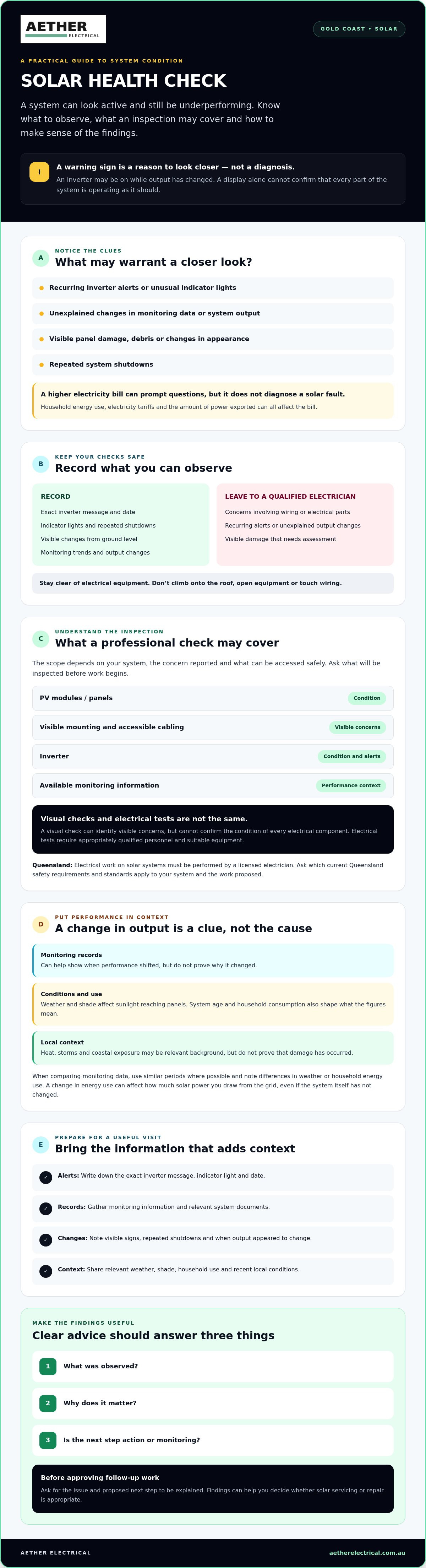
Start with what you can observe: inverter alerts or unusual indicator lights, unexplained changes in monitoring data, visible panel damage or repeated shutdowns. A higher electricity bill can prompt questions, but it doesn’t diagnose a solar fault by itself. Household energy use, electricity tariffs and the amount of power exported can all affect the bill.
What solar warning signs can you safely check yourself?
Keep your checks simple and stay clear of electrical equipment. Record the exact inverter message, indicator light and date. From ground level, note obvious panel damage, debris or changes in appearance. Don’t climb onto the roof, open equipment or touch wiring. If you use monitoring data, compare similar periods and note differences in weather or household energy use.
A photovoltaic system includes connected parts such as panels, an inverter and mounting. This photovoltaic system overview provides useful background on how those components work together, but it can’t confirm whether your own system is operating correctly.
Quick checklist: record versus refer
- Record: Alert messages, dates, visible changes, repeated shutdowns and monitoring trends.
- Arrange qualified assessment: Recurring alerts, unexplained output changes, visible damage or concerns involving wiring or other electrical parts.
When is a Gold Coast solar inspection worth arranging?
Arrange an inspection if alerts keep returning, output changes without a clear explanation or you notice visible damage. A functioning display is only one observation. It doesn’t confirm that every part is operating as it should, and some faults won’t be clear from the screen alone.
Local conditions can provide useful context. Heat, storms and coastal exposure may be relevant when describing what your system has experienced, but they don’t prove damage has occurred. Share any recent events and the signs you’ve recorded with the electrician. A clear account helps guide the inspection and makes it easier to understand what needs attention, what can be monitored and what follow-up work may be appropriate.
What a Professional Solar Health Check on the Gold Coast Should Cover
A useful inspection is shaped by the system, the concern you’ve reported and what can be accessed safely. The technician should explain the proposed scope before work begins. A visual check may cover accessible panels, visible mounting, cabling and the inverter’s condition, but don’t assume every check includes the same tests. Ask what will be inspected and what would require separate follow-up.
Which parts of a home solar system may be inspected?
The inspection may consider the PV modules, visible mounting, accessible cabling, inverter and available monitoring information. The inverter changes the panels’ output into electricity the home can use. A visual check can identify visible concerns, but it can’t confirm the condition of every electrical component. Electrical tests are different: they require appropriately qualified personnel and suitable equipment. In Queensland, electrical work on solar systems must be performed by a licensed electrician.
Applicable requirements can depend on the work and system. Ask the electrician which current Queensland safety requirements and standards apply to your situation. The Australian Government’s Australian installation and safety standards reference is a useful starting point, but it doesn’t replace advice about your specific system.
What should the technician explain about system performance?
A solar health check is an inspection of a system’s condition and operation, followed by clear advice on any findings. Ask whether the technician can review your system’s available monitoring records and explain any changes they notice. Output records can help show when performance shifted, but they don’t prove the cause on their own.
Comparisons need context. Weather and shade affect how much sunlight reaches the panels; system age and household consumption also shape what the figures mean. A change in energy use may affect how much solar power you draw from the grid, even if the system itself hasn’t changed. Share relevant records and ask which conclusions are observations, which are confirmed findings and what further checks may be needed.
Scope matters. Before booking a solar health check Gold Coast homeowners can ask whether the proposed visit includes a visual inspection, a review of monitoring data, electrical testing or only some of these. Aether Electrical provides solar inspections, servicing and repairs. Review its solar inspection and servicing information, then confirm the scope available for your system and location.
How to Assess Solar Health Check Findings and Choose a Local Electrician
A useful report separates what was observed from what it might mean and what to do next. A change in output or an inverter alert can justify a closer look, but neither proves a particular component has failed. The inspection should clarify the system’s condition, not assume replacement is needed.
Use this guide to understand possible next steps. It isn’t a remote diagnosis. Your electrician should consider the system and inspection findings before recommending action.
| Observation | Possible significance | Recommended next step |
|---|---|---|
| Recurring inverter alert | A persistent issue may need investigation; the message alone doesn’t confirm the cause. | Record the alert and ask the electrician to assess it. Don’t open the inverter. |
| Output trend changes | Could reflect a system issue or differences in weather, shade or household use. | Share monitoring records and ask what comparisons are meaningful. |
| Visible damage or a safety concern | May require prompt professional assessment. A visual sign alone can’t establish the fault. | Keep clear of the affected area and contact a qualified professional for advice. |
Which findings need follow-up, and which can be monitored?
Safety concerns and active or recurring faults call for prompt professional advice. Don’t touch damaged components or wiring while waiting for guidance. Less urgent observations may be recorded and monitored if the technician recommends it. Ask what changes to watch for and when to seek another assessment. A single output dip, without context, isn’t proof of system failure.
What should you ask before booking a solar inspection?
Look for a provider with relevant solar servicing experience, a clear inspection scope and reporting you can understand. Before booking a solar health check Gold Coast homeowners can ask:
- Which areas will the inspection cover, and what tests are included?
- What requires separate work or safe access arrangements?
- Will findings and recommended actions be provided clearly?
- How will any additional repair work be explained and approved before it proceeds?
A sound recommendation should connect the finding to the proposed action. Ask what was observed, how it was assessed and whether monitoring or further testing is an option. If replacement is suggested, ask why repair or continued monitoring wouldn’t be suitable. Clear answers help you make an informed decision without feeling rushed.
Solar Health Check Checklist: Prepare for an Accurate Visit
A little preparation can help make a solar inspection more focused. You don’t need to diagnose the issue yourself. Share what you’ve noticed, provide useful records and stay clear of anything that requires roof access or electrical work.
Before the appointment: gather useful details
Write down when the concern began and how often it happens. Note any recent changes around the property, such as new shade, building work or storm activity. If your system uses an app or online portal, have the relevant monitoring records available. System paperwork, such as installation or servicing documents, can also help if you have it. Ask the provider what information is useful for your situation.
- Save inverter alerts or messages, including dates.
- Note when you’ve seen changes in system operation or output.
- Gather monitoring records and available system documents.
- Tell the provider about access limits or anything you’re concerned about.
Stay on the ground. Don’t climb onto the roof, open the inverter or touch wiring to prepare for the visit. If you have a separate concern about household wiring or electrical fittings, the Gold Coast home electrical services guide may help you identify what information to share with an electrician.
During the visit: clarify the scope and findings
Inspection scope varies with the system, the reported concern and safe access. Before work starts, confirm what the visit covers and whether any checks would require separate work. You can also ask what access is needed from you. Don’t assume every provider follows the same sequence or includes the same tests.
Ask for a plain-English explanation of the findings. What was observed? What needs attention first? Which items can be monitored, and what would prompt another assessment? If additional repairs are recommended, ask for the issue and proposed work to be explained before deciding whether to proceed.
After the visit: keep a useful record
Keep any written findings, recommendations and relevant monitoring records together. Note which actions you approve or defer, and what the technician advised you to watch. If a concern returns, you’ll have a clearer point of comparison than memory alone.
Preparing for a solar health check Gold Coast homeowners can arrange doesn’t need to be complicated. If you’re considering an inspection, contact Aether Electrical about a solar inspection and confirm the available scope for your system and location.
Book a Gold Coast Solar Health Check and Plan Your Next Step
Recurring inverter alerts, unexplained changes in performance or visible damage are sensible reasons to seek professional advice. So is a lingering question after you’ve checked the monitoring information. A solar health check Gold Coast homeowners arrange can help clarify the system’s condition and what, if anything, needs to happen next.
There’s no need to assume an inspection means replacing equipment. If you haven’t noticed a problem or confirmed a fault, don’t feel pressured to act on speculation. The aim is a clearer picture, not a rushed decision.
How to decide whether to book now
Safety concerns, visible damage and persistent system faults deserve prompt professional advice. Don’t inspect electrical equipment yourself or climb onto the roof. If performance still seems unusual after reviewing your records, an inspection can help assess the concern. Share what you’ve observed, but leave diagnosis to a professional who can assess the system.
Keep the details simple and specific. Note whether an alert recurs, when output began to change or what damage you can see from a safe position. These observations help explain why you’re enquiring without treating a symptom as proof of a particular fault.
What to expect when contacting Aether Electrical
Aether Electrical provides solar inspections, servicing and repairs for residential and commercial clients across the Gold Coast and Northern Rivers, including Tweed, Tweed Heads, Ocean Shores and Byron Bay. If an inspection identifies an issue, appropriate servicing or repair can be considered as a follow-up. Confirm the exact inspection scope, availability for your location and any further work directly.
When you get in touch, include:
- Your suburb or location.
- What you know about the system, such as its age or any available system documents.
- The reason for the inspection, including changes in operation or visible concerns.
- Any inverter messages, with the wording and date if available.
That gives the conversation a clear starting point. You can ask what the proposed visit covers, how findings will be explained and how additional work would be discussed before you decide to proceed.
If you’re ready to discuss a local inspection, arrange a solar health check enquiry. Share your location and concern, then confirm the next step directly with Aether Electrical.
Take the Next Step with Confidence
A solar system can look active while still raising questions. Keep a record of recurring alerts, changes in monitoring data or visible concerns, then use those details to guide a professional assessment. A clear explanation of what was observed and what action is recommended helps you decide what needs attention and what can be monitored.
If you’re considering a solar health check Gold Coast homeowners can arrange, Aether Electrical provides solar inspections, servicing and repairs across the Gold Coast and Northern Rivers, including Tweed, Tweed Heads, Ocean Shores and Byron Bay. Share your location and the reason for your enquiry, then confirm the available inspection scope and any follow-up options directly.
Arrange a solar health check enquiry and take a calm, informed step towards understanding your system. You don’t need to work out the cause alone.
Frequently Asked Questions
Can a solar system look like it is working but still need a health check?
Yes, a solar system can appear active while its overall performance remains uncertain. A display or indicator reports what it can show, but it doesn’t confirm the condition of every component or explain a change in output. Review monitoring records alongside changes in weather or household use, then note recurring messages or shutdowns. A professional inspection can assess the system and explain whether further action is needed.
What does a solar health check include?
It varies by system, reported concern and safe access, so there isn’t one fixed checklist. A provider may review accessible components, inverter information, visible cabling and system operation, but confirm the exact scope before booking. Ask whether electrical testing or repairs are included or would be separate. Aether Electrical provides solar inspections, servicing and repairs across the Gold Coast and Northern Rivers. Confirm availability in your location and the proposed scope directly.
How often should solar panels be checked in Queensland?
There’s no single inspection interval that suits every solar system. Timing can depend on the equipment, its condition and manufacturer guidance. Check the documents supplied with your system and ask your installer or servicing electrician what schedule is suitable. Don’t wait for a routine date if you notice recurring inverter alerts, visible damage or an unexplained output change. Those signs are good reasons to seek professional advice.
How much does a solar health check cost on the Gold Coast?
The cost depends on your system, access and the proposed inspection scope. Separate testing or repairs may also affect the amount quoted. For a solar health check Gold Coast homeowners should ask for a clear description of what the service covers, what costs extra and how further work will be quoted. Make sure any recommended repairs are explained and agreed with you before they proceed.
Can I check my solar panels myself?
You can safely review monitoring information, record inverter messages and look for obvious changes from ground level. Don’t climb onto the roof, remove covers, touch wiring or open electrical equipment. These actions can put you at risk and may damage the system. If you spot visible damage or receive a persistent alert, note what you observed and contact a qualified solar service provider for advice.
What should I do if my solar inverter shows a fault?
Write down the message or indicator and when it appeared. Check the manufacturer’s user guidance for safe, basic information, but don’t open the inverter or attempt electrical repairs. If the alert continues, the system repeatedly stops or you notice visible damage, contact a solar service provider. Share the exact message and any relevant monitoring records so they can understand your concern and discuss an appropriate next step.
Will a solar health check mean I need to replace my panels?
No, an inspection doesn’t automatically mean your panels or other equipment need replacing. Its purpose is to assess the system and explain any findings. If replacement is recommended, ask what was observed, why replacement is proposed and whether repair or monitoring could be appropriate instead. Take time to understand the options before approving work. A clear explanation helps you decide what makes sense for your system.


