
Across the Australian market, residential solar installation offers typically range from A$5,000 to A$9,800, with a median of about A$6,300. That’s a useful starting point, but the solar panel installation cost for your home depends on more than system size alone. Rooftop layout and equipment choices can change the final figure.
It’s reasonable to want a clear comparison before committing to a solar panel installation cost. Two systems with similar capacity can still cost different amounts once you account for the roof, components and installation requirements.
This guide explains how residential solar costs per watt are calculated and what that figure tells you when comparing system sizes. You’ll also see how roof conditions and project requirements affect installation costs, making it easier to assess the numbers.
Key Takeaways
- Compare systems by size and location to understand why installed prices can differ across Australia.
- Roof shape, access, shading and equipment choices can all affect the work involved and the final quote.
- Factor in the federal STC discount when comparing upfront costs, and note its scheduled phase-out in 2030.
- Use the installed cost per watt to compare system value, while remembering that the figure depends on the system and what the installation includes.
What about solar panel costs in the future?
There isn’t one upfront figure that suits every home on the Gold Coast or in the Northern Rivers. A 5 kW system and a 6.6 kW system use different amounts of equipment, while roof access and electrical work affect installation. The final price also depends on the panels and inverter selected. Local conditions and the home’s layout shape the work involved.
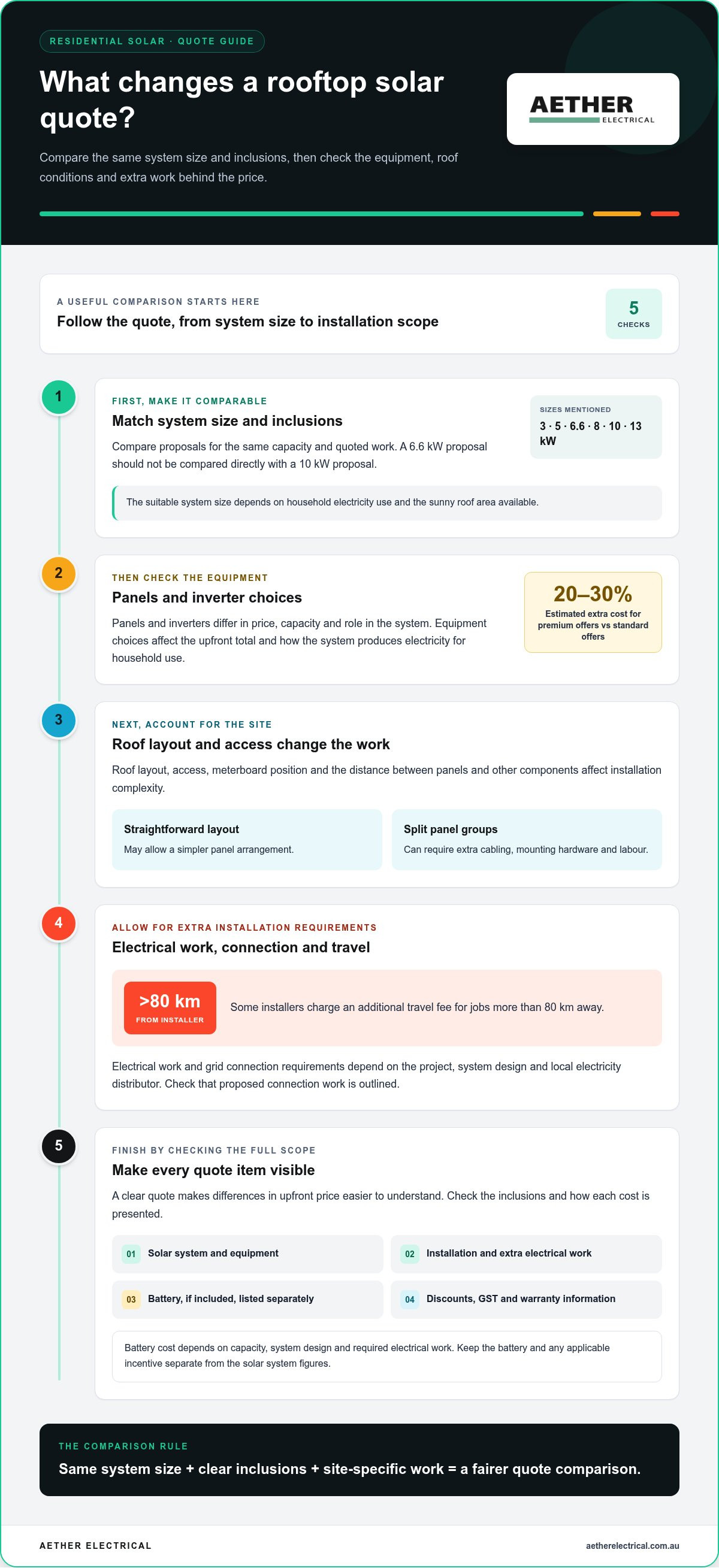
Compare quotes for the same system size and inclusions. A 6.6 kW proposal shouldn’t be compared directly with a 10 kW proposal, even if both serve homes nearby. Roof layout, access, components and electrical work can change the scope. The solar panel installation cost depends on those project details, so compare the full quoted work rather than capacity alone.
Typical residential system sizes include 3 kW, 5 kW, 6.6 kW, 8 kW, 10 kW and 13 kW. The suitable size depends on household electricity use and the sunny roof area available. A 5 kW system’s upfront cost should be considered alongside its components and installation scope. On the Gold Coast and across the Northern Rivers, the roof and household’s energy needs help shape the right design.
Payback depends on how much solar electricity a household uses as it is generated, as well as local weather, maintenance and future electricity prices. Households across the Gold Coast and Northern Rivers, including Tweed, Tweed Heads, Ocean Shores and Byron Bay, can start by reviewing their usage patterns and roof conditions. Higher daytime electricity use can mean using more solar power at home instead of drawing it from the grid.
A battery increases the upfront cost. The amount depends on its capacity, the system design and the electrical work required. A quote should list the solar system, battery, installation and any additional electrical work as clear, separate inclusions. Established trade professionals like Inlightec Electrical Solutions highlight that assessing switchboard capacity and existing domestic circuits early prevents unexpected costs when adding major electrical hardware.
Grid connection requirements depend on the local electricity distributor and system design. A solar quote should outline proposed connection work and specify the system, equipment and installation scope, as well as applicable discounts, GST and warranty information. These details help you compare proposals on equal terms.
Factors that affect rooftop solar installation costs
Equipment choices are only part of the equation. Roof layout, access and electrical work can all affect the installation at homes across the Gold Coast and Northern Rivers.
Panel and inverter choices
Panels and inverters differ in price, capacity and role within a solar system. Premium system offers are estimated to cost 20-30% more than standard offers. These choices affect the upfront total and how the system produces electricity for household use.
Other installation price factors
Site conditions affect the labour and additional electrical work involved. A straightforward roof layout may allow a simpler panel arrangement, while split groups of panels can require extra hardware and labour.
- Some installers charge an additional travel fee for jobs more than 80 km away.
Roof access, meterboard position and the distance between panels and other components all affect installation complexity. For example, a split array may need extra cabling and mounting hardware, adding work beyond installing the panels and inverter.
Compare quotes by checking which components and site work they include. A clear scope helps explain differences in the upfront figure and makes it easier to assess likely savings and payback. For a closer look at a home’s electrical setup, explore solar installation planning.
How Much Does Solar by itself Cost?
Australian government incentives can reduce the upfront cost of an eligible solar system. The federal Small-scale Technology Certificates (STC) scheme creates a discount that is commonly applied to the system price at the point of sale. The final amount depends on the system and its location, so households on the Gold Coast and in the Northern Rivers should compare the discount shown in their own quote.
STCs are calculated using factors including system size and the expected generation associated with its location. As an example, a 6.6 kW system in a high-sun-exposure area has an example rebate of A$2,300, based on approximately 80 STCs. This illustrates how the certificate discount can reduce the amount payable upfront, rather than appearing as a credit on an electricity bill.
The Australian Government Department of Climate Change, Energy, the Environment and states that the federal STC program for solar rebates is scheduled to phase out completely in 2030. In 2026, an example rebate reduces the point-of-sale price of a 10 kW system by around A$2,500. The STC discount available changes over time as the program phases out.
State and territory schemes may help eligible households reduce solar costs, but offers vary by location and program and may apply to solar installations or battery storage. Some Australian households may also have access to local government rebates or loans to reduce a battery’s upfront cost. These incentives are separate from the federal STC scheme.
For a 5 kW system, compare the quoted amount after STCs with any stated pre-discount amount. Check that the system size and certificate allowance are clear. If a battery is included, make sure its cost and any applicable incentive are shown separately from the solar system.
A clear quote should explain the system, any discount applied and the resulting amount. For households in Tweed, Tweed Heads, Ocean Shores and Byron Bay, comparing these details helps clarify how rebates affect the proposed installation without confusing incentives with the equipment or work included.
Residential solar cost per watt
Cost per watt is a common measure for comparing residential solar systems of different capacities. It is a useful benchmark, but not a complete assessment of a household’s solar quote.
To calculate it, divide the installed system price by its rated capacity in watts. A 6.6 kW system has a rated capacity of 6,600 watts, so its total installed price is divided by 6,600. The result is the cost per watt. Keep the same calculation for each quote, and compare systems with similar inclusions.
That distinction matters. One quote might include electrical upgrades or a more capable inverter, while another might not. A lower per-watt figure could reflect a larger system, different components or a narrower installation scope. Check the panel and inverter details, installation work, GST and STC discount before treating the average as a like-for-like comparison.
System size also affects the comparison. Some installation costs are shared across the project, so a larger system can spread those costs over more watts. But capacity alone does not show how much electricity a home will use or how much solar energy it can consume as it is generated. Roof conditions and household usage still shape the value, an approach demonstrated by residential solar and storage providers such as heliocoreinc.com when tailoring systems to property needs.
For a practical comparison, place each quote’s total price, rated capacity and calculated cost per watt side by side. Then review the included components and expected output. The Clean Energy Council’s cited guidance gives Sydney generation at 3.9 kWh per day per kW of system size, illustrating why location also matters when assessing production. A per-watt average helps compare price; it doesn’t measure savings or payback on its own.
For help assessing a system design and installation scope, discuss your solar installation.
Aether Electrical: Domestic Electrical Services
Aether Electrical helps homeowners turn solar cost comparisons into a practical installation plan. Its Solar Installation & Servicing supports households planning a new rooftop system or needing maintenance or repairs to an existing one. The electrical work is planned around the home and its energy needs.
If you’re considering storing surplus solar energy, Battery Storage Installation can be part of the wider plan. If you’re preparing for an electric vehicle, EV charger installation can also be considered alongside your household electrical requirements. Each service addresses a different part of how a home uses power.
For solar installation or servicing across the Gold Coast and Northern Rivers, contact Aether Electrical to discuss what your home needs.
Plan the next step for your home
Your next step is to connect the numbers with how your household uses power. Consider when electricity demand is highest, whether you may add a battery later, and how your roof can accommodate the system. That context turns a broad estimate of solar panel installation cost into a more practical plan for your property.
Aether Electrical offers Domestic Electrical Services, Solar Installation & Servicing, and Battery Storage Installation. These services bring rooftop solar and household electrical needs into one conversation, whether you’re planning a new system or considering storage.
Share what you’re looking to achieve and discuss the electrical work that may suit your home. Contact Aether Electrical about solar to talk through your next step. A clear plan makes it easier to move forward with confidence.
Frequently Asked Questions
How Much Do Panels Actually Cost?
That’s the panel component only, not the complete installed system. The inverter, mounting equipment, electrical work and installation also contribute to the total. Compare panel specifications and the full quote scope before judging an option by its per-panel price.
How Much Money Will Solar Panels Save?
Savings depend on how much solar electricity your household uses while it’s being produced. A 6.6 kW system in Sydney can save homeowners over A$2,500 per year when they use around 70% of its power as generated. That example shows why daytime routines matter: running suitable appliances during sunny hours can increase the value of the power your system produces.
The difference could reflect a larger system, different panels or an inverter, additional electrical work, or a broader installation scope. The price difference alone doesn’t tell you which. Compare the proposed capacity, equipment details and inclusions line by line. For example, check whether the higher quote includes meterboard work or a more capable inverter rather than assuming it offers better value.
So What’s the Difference Between Cheap and Expensive Panels?
Panel prices can reflect brand and wattage, but long-term performance is another consideration. Budget solar panels might lose around 10% efficiency over 25 years, while top-tier panels usually lose around 5% over the same period. These are market estimates, not a guarantee for a particular panel. Look at the product details and warranty information alongside the upfront price.
So, is it worth spending more?
Spending more can make sense if the added features suit your household’s energy use and roof. Start by checking what the higher-priced option includes, such as greater panel capacity or an inverter better suited to the design. Then consider when your home uses electricity. If most demand falls outside solar production hours, higher equipment spending alone won’t ensure greater savings.
What about even cheaper systems?
A lower-priced system may suit a home with modest electricity use, but check its capacity and included work before deciding. Make sure the panel and inverter details, installation scope and warranty information are clear. A low headline figure is difficult to assess if essential components or electrical work are excluded. Compare the complete system, not just its starting price.


