
Solar savings depend on how much of your business’s electricity use coincides with solar generation. Company solar power can reduce grid electricity use, while a battery can store surplus energy for later. The right system size depends on your site’s usage patterns, available roof space and when your business needs power.
It’s reasonable to want a clear picture of potential savings before comparing systems. The figures can be difficult to judge when one business uses most of its power during the day and another needs it after hours. This guide explains how system choice affects savings, when battery storage may suit, and what customer reviews can reveal about solar companies.
You’ll also see what to weigh when comparing proposals, from system design to installation and servicing. The aim is to help you make a clearer decision with less guesswork.
Key Takeaways
- Match system size and setup to your business’s electricity use, roof space and operating hours.
- Consider battery storage when you want to use more of your solar generation after daylight hours.
- Warehouses, offices and shops have different energy patterns, so system design should suit the site.
- Read customer reviews for useful details about communication, installation and aftercare, not just star ratings.
What type of solar PV system should I install?
Choose a system around your site’s electricity use, available roof space and need for power after dark. Residential, commercial, hybrid and off-grid systems suit different energy needs and connection requirements.
Residential, hybrid and off-grid systems
A residential system is designed around household usage, roof orientation and shade. Commercial solar must also account for operating hours and business electricity demand. Solar Accreditation Australia replaced the Clean Energy Council as Australia’s solar installer accreditation body in February 2024. Review installer credentials and workmanship warranty terms, including what work they cover.
Hybrid systems combine solar with batteries, storing surplus generation for later use. Off-grid systems operate without a grid connection, so storage needs to match the site’s demand. A home using electricity after sunset, for example, may value batteries differently from a shop that uses most of its power during daylight.
Installation design and timing
Residential design starts with electricity use, roof condition, orientation and shading. Installers use these details to plan panel placement and inverter capacity. Commercial design also accounts for operating hours and changing loads. On the Gold Coast and across the Northern Rivers, roof access, shade and daily usage all help shape the installation and maintenance plan.
Commercial grid connection generally involves an application to the local network distributor, an assessment of the proposed system, installation, commissioning and approval to connect or export. Requirements depend on the site and system. Switching on a commercial solar installation usually takes 2-3 weeks from signing the quote, with design, approvals, installation and commissioning among the steps.
Ask installers about their experience with similar sites and how they manage connection applications. A warehouse with daytime machinery, for example, needs a design that reflects its operating pattern. Compare workmanship warranty coverage and the proposed maintenance approach as well as system design. These details give businesses in the Gold Coast, Tweed, Tweed Heads and Northern Rivers a practical basis for comparing solar proposals.
Commercial solar and battery systems
System value depends on how your business uses electricity, when demand occurs and how much solar generation it can use on site. Compare equipment, applicable incentives and contract terms alongside the proposed design.
Panels, inverters and battery systems
Solar panels generate electricity, while an inverter converts it for business use. A company solar power system can also include batteries to store surplus generation for later, which may suit sites with evening demand. Heat pumps can shift suitable water heating to sunny hours, while a virtual power plant can coordinate connected batteries under its program terms.
Compare warranty coverage as well as equipment. Tier-1 panels carry 25-year product warranties, installed batteries have 10-year manufacturer warranties, and some solar installations state a 10-year inverter warranty. Read the exclusions and claim process for each component.
Small-scale Technology Certificates may reduce upfront costs for eligible solar systems. Their value depends on system details and eligibility. The federal Cheaper Home Batteries Program applies to eligible home batteries, so it should not be treated as a commercial battery rebate.
System size and cost
Assess system size using interval electricity data, daytime demand, roof area and operating hours. A company solar power proposal should reflect how much generation your business can use directly. Sites with late demand may benefit from storage, while businesses using power during daylight may prioritise direct consumption.
The system price depends on capacity, equipment, site conditions and installation requirements, and is given after a quote request. Compare proposals using their generation and export assumptions, not capacity alone.
Batteries can suit businesses that use stored energy later or want to manage demand peaks. A power purchase agreement sets the terms for buying generated electricity, so weigh its rates, duration and responsibilities against system ownership.
Solar output varies with site conditions, and batteries add equipment and warranty considerations. Roof limits, export constraints and downtime can also affect performance. A solar system design should account for these trade-offs.
Commercial solar for warehouses, offices and shops
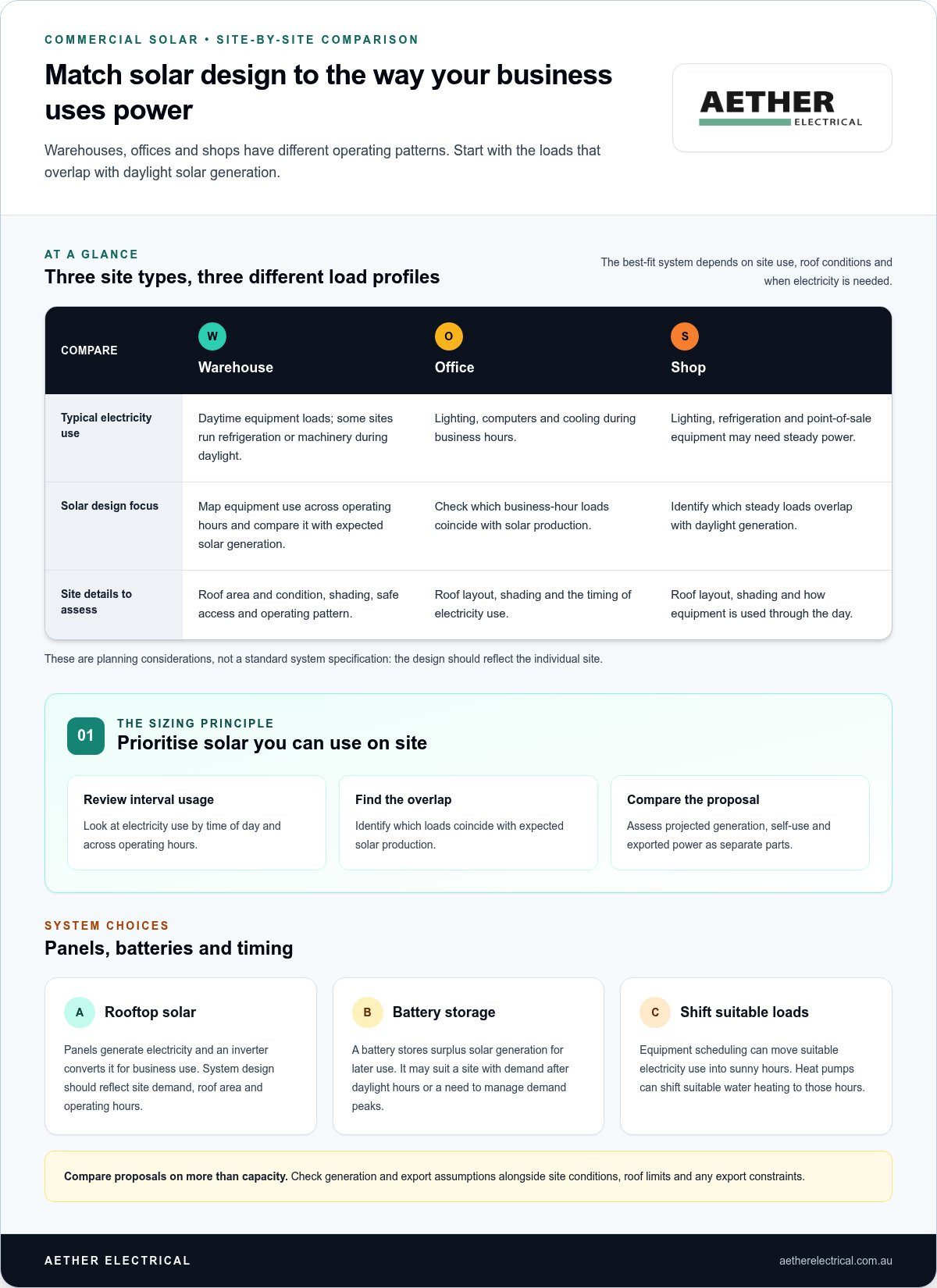
Commercial solar works best when the design matches the site’s electricity use. A warehouse, office and retail shop can have different operating hours, roof layouts and energy priorities, so a standard system won’t suit every business.
Warehouses often have broad roof areas and daytime equipment loads. Map electricity use across operating hours, then compare it with expected solar generation. A business running refrigeration or machinery during daylight, for example, may use more solar power directly. Roof condition, shading and safe access also shape the design and installation plan.
Offices commonly use power for lighting, computers and cooling during business hours. Shops may need steady electricity for lighting, refrigeration and point-of-sale equipment. Review interval usage data by time of day and identify which loads overlap with solar production. This keeps the focus on practical savings, rather than simply adding panels.
Commercial solar solutions can include rooftop panels, batteries or both. A battery can store surplus daytime generation for later use, while equipment scheduling can shift suitable electricity use into sunny hours. The right solution supports the site’s operating pattern and business needs. Compare projected generation, self-use and exported power as separate parts of each proposal.
A commercial solar park is a larger, ground-mounted array rather than panels installed on a warehouse roof. It may suit projects with available land or businesses exploring electricity from a larger solar development. This differs from owning a rooftop system, so examine the supply terms, contract duration and how electricity reaches the site.
Eligible solar systems may qualify for federal Small-scale Technology Certificates, commonly called STCs. Their value depends on system eligibility and details, so treat any rebate as a factor in the proposal, not a guaranteed saving. Before deciding, compare the system’s output assumptions, equipment, connection needs and ongoing servicing requirements. Lower-cost equipment may come with different warranty coverage or performance terms, so compare the full proposal with your site’s needs.
Customer reviews of solar companies
Reviews can show how a solar company handles work beyond the estimate. For a commercial project, look for specific comments about design, communication, installation and aftercare rather than relying on star ratings alone.
Start with recent, detailed reviews on platforms such as Google. Useful feedback describes the property, work completed and customer experience. A warehouse owner’s account, for example, may be more relevant to a commercial project than a residential installation review. Homeowners’ comments can still offer insight into scheduling and how clearly the team communicates.
Look for patterns across multiple reviews, not just one glowing or critical post. Check whether customers mention:
- Whether the installed system matched the agreed design and estimate.
- How clearly the team explained panels, inverters and batteries.
- How the company handled changes, delays or concerns.
- Whether follow-up service addressed faults or questions.
Read critical reviews carefully, too. Note the specific issue and the company’s response. A clear, practical reply can show how concerns are handled, while repeated comments about the same problem deserve attention. Consider whether the issue relates to the company’s work or factors such as site access and project changes.
Match reviews to your project. A Gold Coast office with daytime electricity use has different needs from a Tweed or Tweed Heads warehouse, or a home in Ocean Shores, Byron Bay or elsewhere in the Northern Rivers. Prioritise feedback about similar sites and solar systems. Premium equipment alone doesn’t demonstrate good service; reviews describing the full installation journey offer more useful context.
Use reviews alongside the written proposal. Compare system design, estimated generation, equipment details, warranty terms and servicing arrangements. This gives you a stronger basis for weighing customer experience against the technical scope, rather than choosing on ratings alone.
For a project-specific discussion, talk through your solar installation and the site’s requirements.
Aether Electrical: Domestic Electrical Services
Aether Electrical provides solar installation and servicing for businesses planning a system or maintaining existing equipment. If your site’s energy use changes after installation, battery storage may help you use more of your solar generation later. Aether Electrical also installs EV chargers, which can be considered alongside workplace energy needs.
Bring your usage patterns, site details and priorities into the discussion. These help shape a practical approach to solar and battery requirements, rather than treating every business alike. For homes, Aether Electrical also provides domestic electrical services, including solar and battery work.
To discuss solar installation, servicing or battery storage, contact Aether Electrical.
Take the next step with confidence
Your company’s solar power plan should support the way your site operates, not become another project to manage. Set out your next decision, whether that’s reviewing a proposal, planning an installation or considering how storage could fit. A clear priority keeps discussions focused on what matters to your business.
Aether Electrical offers Solar Installation & Servicing and Battery Storage Installation, alongside Domestic Electrical Services. Bring your site’s energy priorities and questions to the conversation. This gives the next steps a practical focus grounded in your property and operating needs. Start with the issue that matters most, then build the decision from there.
To discuss commercial solar with Aether Electrical, get in touch about your site. A considered first conversation can help you move forward with a clearer plan. Your next step can be straightforward.
Frequently Asked Questions
How much can I save with solar energy?
Your savings come from electricity you generate and use instead of buying from the grid. Start with a recent bill and identify daytime consumption, retail rates and export credits. A business running equipment during sunny hours, for example, can use more generated power directly. Electricity exported to the grid earns a feed-in credit, which is usually worth less than the grid purchases it displaces.
How much can Australian businesses save with solar power?
There isn’t one savings figure that applies to every Australian business. A useful estimate compares the site’s half-hourly usage with expected solar generation, including weekends and seasonal changes. A café open mainly during daylight may use generation differently from a business operating overnight. The share consumed on site, retail tariff and feed-in credit all shape the annual result.
What are the best commercial solar panel and inverter brands in Australia?
The best choice is the panel and inverter combination that suits the site’s roof, electricity demand and system design. Compare product specifications, warranty conditions, compatibility and servicing access rather than relying on brand reputation alone. Ask how the proposed equipment matches expected output and operating conditions. A premium label by itself doesn’t show whether the design suits your business.
What Australian government rebates and incentives are available for business solar?
Eligible solar installations may receive value through federal Small-scale Technology Certificates, often described as the STC solar rebate. The amount depends on system eligibility and details. The Cheaper Home Batteries Program launched on 1 July 2025 and runs through to 2030. According to the Australian Government Department of Climate Change, Energy, the Environment and, it provides an estimated 30% discount on eligible home batteries, not a general commercial battery incentive.
How do businesses compare solar installation quotes and payback periods?
Compare proposals using the same assumptions: system capacity, expected generation, on-site use, exported electricity and retail rates. Check that each quote includes the same installation scope, equipment and grid connection work. A simple payback estimate divides the system’s net upfront cost by expected annual bill savings. Review the assumptions behind those savings, because different estimates for exports and usage can change the result.
What maintenance, warranties, and insurance do business solar systems require?
Plan ongoing maintenance around the site’s roof access, shading and usage. Compare warranty coverage, exclusions and claim processes: Tier-1 panels carry 25-year product warranties, installed batteries have 10-year manufacturer warranties, and some installations state a 10-year inverter warranty.


