
The cost of a hybrid solar system in Byron Bay depends on the system design and property. Aether Electrical provides a free design and quote for solar and battery projects. A hybrid system combines solar panels and battery storage, allowing excess daytime power to be stored for later use. Backup during a blackout depends on the system design.
Look beyond the installation figure when comparing systems. Panel direction affects when solar power is generated, while battery use and ongoing servicing can influence how the system performs over time.
This guide explains the main factors behind system costs and potential savings, including how north- or west-facing panels can suit different household routines. You’ll also learn what regular maintenance involves, what to watch for if a system needs attention, and when professional solar servicing can help keep things running smoothly.
Key Takeaways
- Compare system quotes by looking at panel capacity, battery size, roof layout and electrical work, not just the headline cost.
- Match panel direction to your household’s energy habits: north-facing panels capture strong sunlight, while west-facing panels can better suit afternoon use.
- Estimate bill savings by considering when you use power, how much solar energy you consume at home and what surplus electricity earns as a feed-in credit.
- Understand how a hybrid system stores solar power for later use, and learn what servicing can help keep the panels, inverter and battery working effectively.
How much do solar systems cost in Byron Bay?
Hybrid system costs depend on battery capacity, inverter compatibility, roof layout and installation work. Compare the equipment and how it suits your energy use, not just the quoted total.
Hybrid Battery Costs
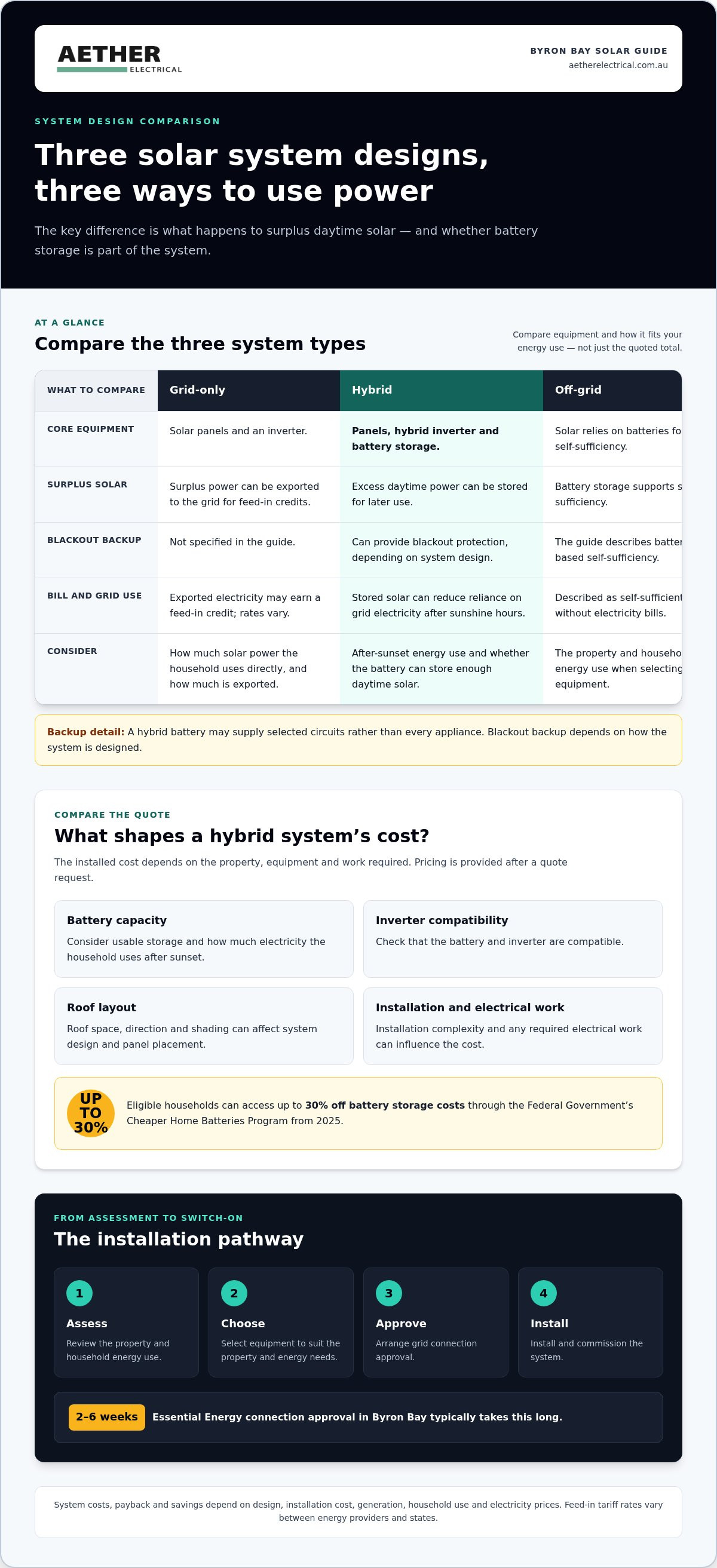
A hybrid battery's installed cost in Australia in 2026 depends on usable storage capacity, inverter compatibility, installation complexity and electrical work. Pricing is provided after a quote request from Aether Electrical. For a hybrid solar system in Byron Bay, consider how much energy your household uses after sunset and whether a battery can store enough daytime solar power to cover that use.
Incentives and Feed-in Tariffs
Eligible households can access up to 30% off battery storage costs through the Federal Government's Cheaper Home Batteries Program from 2025, according to the Australian Government Department of Climate Change, Energy, the Environment and Water. Feed-in tariffs credit surplus solar electricity exported to the grid. Rates vary between energy providers and states, so self-using stored energy can be worth comparing with exporting it.
Solar-Only and Battery Payback
Payback depends on installation cost, solar generation, household use and electricity prices. Solar-only payback estimates can vary with installation costs, generation and household use. A new 10 kW solar system paired with a 16 kWh battery has an estimated payback of 6.6 years. These examples show why comparing system size and storage together matters.
Hybrid, Grid-Only and Off-Grid Systems
Grid-only solar uses panels and an inverter, with surplus power exported for feed-in credits. A hybrid system adds battery storage and can provide blackout protection. Off-grid solar relies on batteries for self-sufficiency without electricity bills. Installation typically involves assessing the property and energy use, choosing equipment, arranging grid connection approval, then installing and commissioning the system. In Byron Bay, Essential Energy connection approval typically takes 2-6 weeks.
What direction should my solar panels face in Byron Bay?
In Byron Bay, north-facing solar panels capture strong sunlight, particularly during winter. West-facing panels may better match homes that use more electricity in the afternoon. The right orientation depends on roof space, shade and when you use power, not sunshine alone.
A north-facing 5 kW system is estimated to generate 16 kWh per day. One Byron Bay installation on Brownell Drive uses a north-facing frame tilted at 22 degrees. Treat this as an example, not a universal design: roof angle and shading affect panel placement. For a home or business, match system size to daytime demand, evening use and any planned solar battery.
Installation is also an investment in equipment and ongoing support. Read each warranty separately: panel and inverter product coverage can differ from installation workmanship coverage. Check what the warranty covers, how claims are handled, and which maintenance requirements apply. Tier 1 panels are described as having a system lifespan of more than 25 years, but lifespan and warranty terms are not the same thing.
Installer accreditation is another consideration. Solar Accreditation Australia accreditation is identified as necessary for installers to qualify for rebates and incentives. You can also check whether a retailer participates in the Clean Energy Council’s Approved Solar Retailer program. Ask for a clear scope covering system sizing, panel direction, battery charging and technical support.
Blackout backup depends on how the system is designed; it may supply selected circuits rather than every appliance. Battery fire risk and poor performance can be reduced through suitable equipment, correct installation and attention to manufacturer instructions. A typical home with a 10 kW system and 10 kWh battery takes most installers about a day to install. Systems with battery storage have an estimated 2-4-week lead time after order confirmation in Byron Bay. A consultation can map roof space and energy use before design; explore solar installation and servicing for support with the project.
Byron Bay electricity prices and solar bill savings
Byron Bay electricity savings depend on solar generation, household use and the tariff. Essential Energy covers the area: automatic approval applies to systems up to 5 kW in urban areas or 3 kW in rural areas. Listed limits for single-phase homes are 5 kW for inverter size and exports; three-phase homes have a 30 kW maximum inverter size.
Local Tariffs and Feed-in Rates
A feed-in tariff credits surplus electricity exported to the grid. Rates vary between energy providers and states, so compare the credit with the retail electricity cost you avoid by using solar power at home.
Solar Resources and Electricity Prices
A 5 kW residential system in Byron Bay is estimated to generate 8,000 kWh annually. Electricity savings depend partly on how much generated energy homeowners use directly. A 10 kW system is estimated to generate 16,080 kWh per year. Battery storage can hold excess energy for later use, reducing reliance on grid electricity after sunshine hours.
Solar estimates can rely on different assumptions, so treat them as estimates rather than guaranteed bill reductions. Your tariff, the timing of your electricity use and the amount exported all affect the result.
Commercial solar systems in Byron Bay are available from 10 kW to 100 kW or more. A Brokenhead Company electrical upgrade enabled three commercial kitchens to operate. For connection planning, flexible exports of up to 10 kW per phase are being introduced; non-flexible exports remain fixed at 5 kW or lower, depending on local capacity.
What is a hybrid solar system and how does it work?
A hybrid solar system combines rooftop panels, a hybrid inverter and battery storage. The panels generate electricity during the day, and the inverter directs it to household use, battery charging or the grid. Stored power can supply the home at night. In Byron Bay, blackout backup depends on system design and the circuits it supports.
The daily flow is straightforward. Solar power runs appliances first; surplus energy charges the battery or is exported to the grid. When panels aren’t generating enough, the system can draw on stored energy, then grid electricity if needed. A Byron Bay example combines 5 kWh of solar panels with a hybrid inverter managing a lithium battery. The inverter coordinates those energy flows.
Monitoring helps explain how the setup performs in a real home. In one monitored example, solar supplied the home from 6.30 am until 4.30 pm. The battery then supplied power from about 4.30 pm until around 11.00 pm. That pattern shows how storage can shift daytime generation into evening use, rather than relying only on exported solar credits.
Battery capacity, household demand and backup settings shape how the system works. A battery sized around evening use can reduce grid purchases after sunset, while a larger battery may store more energy for later. Backup depends on the system configuration and available charge. Before setting priorities, consider which appliances matter during an outage, such as lights, refrigeration or internet equipment.
For a hybrid solar system in Byron Bay, consider how solar generation, battery charging and grid connection work together across a typical day. A clear design should explain what the battery can supply, how the inverter manages power, and what happens during an outage. Plan hybrid solar installation around your household’s energy use and backup needs.
Aether Electrical: Domestic Electrical Services
Aether Electrical can help when you’re planning solar and battery storage, or need existing equipment serviced. Its Solar Installation & Servicing and Battery Storage Installation offerings support homeowners weighing panel generation, stored power and household energy needs. If electrical work is part of the project, Domestic Electrical Services can address those requirements alongside the solar setup. Aether Electrical also installs EV chargers, useful when planning home charging alongside solar use. The right next step depends on whether you’re starting from scratch, adding storage or looking for servicing and repairs. Share what you want your system to do, such as using more solar power after sunset or supporting selected household circuits during an outage. To discuss your solar or electrical project, contact Aether Electrical or visit aetherelectrical.com.au.
Make your next solar decision with confidence
Start by turning your priorities into a practical system brief. Note which appliances matter during an outage, when your household uses the most electricity, and whether you’re planning additions such as an electric vehicle. These details can help shape a hybrid solar system in Byron Bay around your household, rather than a one-size-fits-all setup.
Aether Electrical can help with Solar Installation & Servicing, Battery Storage Installation and related Domestic Electrical Services. Bring your questions about system design, battery use or existing solar equipment to the conversation. You’ll have a clearer starting point for deciding what suits your home.
Contact Aether Electrical about solar to discuss your project. A well-planned next step can make the move to solar feel straightforward and manageable.
Frequently Asked Questions
How much power does solar produce in Byron Bay?
A 6.6 kW solar system in Byron Bay is estimated to generate 10,484 kWh annually. Actual output changes with panel direction, roof shading and seasonal sunlight. Generation also differs from the electricity your household can use directly: appliances running during the day consume solar power first, while surplus can be exported or stored. Consider your daily usage pattern alongside the system’s estimated output.
Do I need a battery with my system?
No, a battery isn’t essential for a grid-connected solar system. It may suit households that use more electricity after sunset or want stored solar power available during an outage. Without storage, daytime surplus can be exported for feed-in credits, while evening demand draws from the grid. Compare your evening consumption and backup priorities to decide whether battery storage suits your needs.
How do I find a solar installer in Byron Bay?
Look for an installer accredited by Solar Accreditation Australia, which is identified as necessary for qualifying for rebates and incentives. You can also consider whether a retailer participates in the Clean Energy Council’s Approved Solar Retailer program. Compare written proposals for panel placement, system size, inverter and battery choices, warranty terms, grid-connection arrangements and servicing. A clear scope makes different system designs easier to assess.
How does the battery rebate work?
Eligible households can access up to 30% off battery storage costs through the Federal Government’s Cheaper Home Batteries Program from 2025, according to the Australian Government Department of Climate Change, Energy, the Environment and Water. The federal battery rebate usually amounts to A$244 per kWh of usable storage after administrative costs. The value depends on eligible usable capacity, so compare the rebate applied with the battery’s quoted system cost.
How much does solar cost to install in this region?
The installation price depends on the system design and property. Aether Electrical offers a free design and quote for solar and battery projects. Key cost factors include panel capacity, battery storage, inverter requirements, roof access and electrical work. For a useful comparison, check that each proposal covers the same equipment and installation scope. Since adding storage changes the system specification, compare solar-only and solar-plus-battery proposals separately.
What is the typical return on investment (ROI) for a solar power system in this area?
The payback period for a solar system can vary depending on the system cost, household electricity use and resulting savings. Payback compares the upfront system cost with the value of reduced grid purchases and exported electricity credits over time. How much solar power you use at home matters: the article’s savings estimates use a 70% self-consumption rate. Your usage schedule, electricity tariff and system output all shape the financial return.


