
Solar power can generate electricity even when the sky is cloudy, though clear, sunny conditions generally produce more. Rooftop panels generate direct-current electricity, which an inverter converts into alternating-current electricity for household use. That’s how rooftop solar for homes turns sunlight into usable power. A battery can store solar energy for later, including at night.
It’s natural to wonder how much panels could reduce your grid electricity use and what size system your roof can support. The right fit depends on when your household uses electricity, how much sunny roof space is available, and whether storing power matters to you.
This guide explains how the main components work together, what to consider when choosing a system size, and how to assess a solar installer. You’ll also see why using electricity while panels are generating can make rooftop solar more useful at home.
Key Takeaways
- Use the guide of around 4 kWh of daily output per kilowatt of solar capacity to start assessing system size against your household’s needs.
- Know what to look for from a solar retailer and installer, including accreditation and licence details on installation day.
- Consider when your household uses power, especially during the day, to make better use of the electricity your panels generate.
- See how using solar power at home, exporting surplus and adding storage can affect the value you get from your system.
Choosing a solar system size
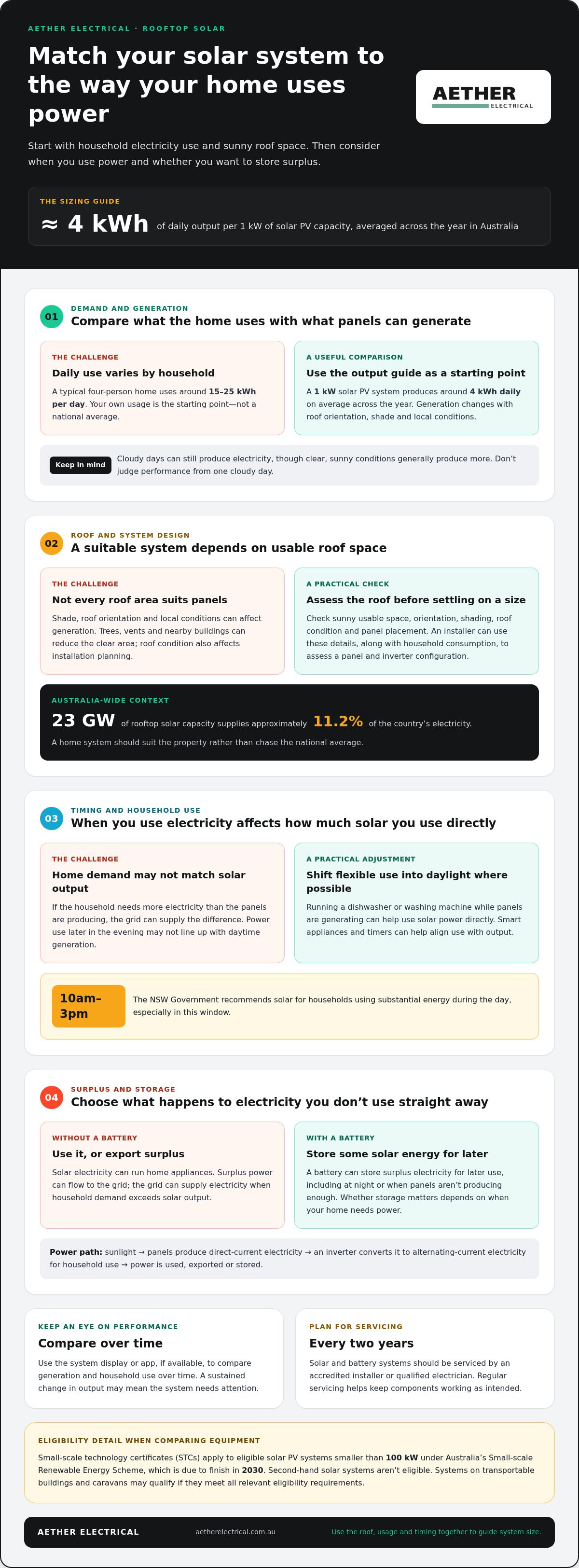
Start with your household’s electricity use, then compare it with the roof area available for panels. In Australia, a 1 kW solar PV system produces around 4 kWh daily, averaged across the year. A typical four-person home uses around 15 to 25 kWh per day. These figures help frame your needs, but generation varies with roof orientation, shade and local conditions. Usage times matter too. A home using more electricity while panels are generating can use more solar power directly. Consider whether a battery may help store surplus electricity for later.
Australia’s rooftop solar capacity is 23 gigawatts, supplying approximately 11.2 per cent of the country’s electricity. A home system contributes to that wider supply, but its size should suit the property rather than chase a national average. Check the sunny roof space, household consumption and when appliances run. An installer can use those details to assess a suitable panel and inverter configuration.
Small-scale technology certificates (STCs) apply to eligible solar PV systems smaller than 100 kW under Australia’s Small-scale Renewable Energy Scheme, which is due to finish in 2030. Second-hand solar systems aren’t eligible for STCs. Systems installed on transportable buildings and caravans may qualify if they meet all relevant eligibility requirements. These distinctions matter when comparing a new installation with reused equipment.
After installation, monitor solar and battery performance through the system’s display or app, if available. Compare generation and household use over time rather than judging performance from one cloudy day. A sustained change in output may mean the system needs attention. Solar and battery systems should be serviced every two years by an accredited installer or qualified electrician. For broader domestic electrical maintenance and safety checks, licensed trade contractors like jkcanning.com.au can help ensure household wiring remains safe and compliant. Regular servicing helps keep components working as intended and gives you a clearer picture of the system’s condition.
Selecting a solar retailer and installer
A sound decision starts with comparing equipment, assessing the roof and understanding the connection process. Looking at established practices from specialists like MarGav Solar shows how detailed consultancy and bespoke design ensure a system matches a building’s specific energy profile. Keep quotes and approval details together so you can compare proposals covering the same work.
Comparing panels and inverters
Compare panels and inverters by their stated output, performance information, warranty terms and compatibility as a system. These details help you judge whether the equipment suits your roof and household use. Ask for the panel and inverter models to be named in the written quote, then compare like with like. Check how the proposed inverter accounts for roof sections with different orientations or shade, as these conditions can affect system design.
Approvals and grid connections
Approval and grid connection requirements depend on your state and local electricity network. The process can affect export settings, so establish which connection steps apply to your address before installation. Ask for the approval status and any export limit to be explained in writing. Rules differ across Australia, so don’t assume a connection arrangement used in one state applies elsewhere.
Roof suitability and retailer risks
A roof assessment considers sunny usable space, orientation, shading, roof condition and panel placement. Trees, vents or nearby buildings can reduce the clear area, while the roof’s condition may affect installation planning. To avoid misleading offers, compare itemised written quotes, named equipment and warranty terms. Be wary of pressure to sign immediately or claims that leave key system details unclear. Keep copies of messages and documents.
Before booking, confirm the quote covers the agreed panels, inverter, installation work and connection steps. Clear access to the roof and switchboard, and move outdoor items that could obstruct the work. A home solar installation can take up to three days, depending on system size. On the day of installation, ask the installer to show accreditation and licence details. After handover, keep the system documents and monitoring instructions. If an issue arises, record the problem and contact the retailer in writing, keeping a copy of the response. For help with system installation, solar installation and servicing can be a practical next step.
How does solar power work?
Solar panels turn sunlight into electricity that your household can use, export or store. When you generate and use electricity affects how much power you draw from the grid.
How solar panels generate electricity
Solar panels generate direct-current electricity from sunlight, and an inverter converts it into alternating-current electricity for household use. This makes the panels’ output compatible with everyday appliances. Panels can still generate power on cloudy days, but clear days generally produce more. Understanding this helps explain why output changes with the weather and why household demand may not always match generation.
Using, exporting and storing solar power
Solar electricity can run home appliances, while surplus power can flow to the grid or into a battery. A battery stores solar energy for later use, including at night or when panels aren’t producing enough. Without storage, the grid can supply electricity when household demand exceeds solar output. The balance between using, exporting and storing power depends on when your home needs electricity.
Shift flexible electricity use into daylight hours where practical. For example, run a dishwasher or washing machine while panels are generating, rather than later in the evening. Smart appliances and timers can help align use with solar output. The NSW Government recommends solar for households using substantial energy during the day, especially between 10am and 3pm. That window can make daytime routines a useful part of getting more value from solar generation.
Using solar power directly can reduce the electricity your household buys from its retailer. Surplus generation can be exported to the grid, while a battery can store some for later. Your electricity bill reflects power drawn from the grid, solar used at home and any export credit from your retailer. Review these bill components alongside household usage to understand how the system is performing.
Benefits of rooftop solar
For households weighing rooftop solar for homes, the value is not only about generating electricity. That national average isn’t a forecast for an individual property. The result depends on how much power a household uses directly, its electricity plan and daily routines. A home that runs cooling or other appliances during daylight can make better use of its own generation.
Bill trends also show how solar and storage can soften exposure to electricity costs. Those figures describe average increases over that period, not a guaranteed saving for a particular household. They illustrate how generating and storing electricity can reduce reliance on grid power.
There’s an environmental benefit too. The NSW Government estimates household solar can reduce emissions by 6 tonnes per year. For people considering rooftop solar for homes, a battery may help use stored energy after sunset, but it comes with a high upfront cost and can have a longer payback period than solar PV. The decision turns on evening electricity use and how much value you place on using your own stored power.
The practical takeaway is to match the system’s benefits to your household’s habits. Consider which appliances run during the day, how much power you use after dark and whether your priorities may change. These details help set realistic expectations and clarify the system’s role, beyond simply adding panels to the roof.
For help assessing the fit of solar at home, explore solar installation and servicing.
Aether Electrical: Domestic Electrical Services
Aether Electrical helps homeowners plan and install solar systems through Solar Installation & Servicing. Turn to the team when you’re considering an installation, need servicing or want to explore how battery storage could suit your household’s electricity use. Aether Electrical also provides Domestic Electrical Services and EV charger installation for electrical needs beyond solar.
If your home already has panels, solar servicing can help address system concerns. For a new setup, installation brings the panels and electrical components together to suit your property. Battery Storage Installation can offer another way to use solar electricity beyond daylight hours.
To discuss your home’s solar or electrical needs, contact Aether Electrical.
Make your next solar decision with confidence
Your home’s energy needs can change. New appliances, a different work schedule or plans for an electric vehicle may shift when you use electricity. Keep future needs in mind as you decide what you want your system to do. A clear picture of your priorities helps shape a practical conversation about rooftop solar for homes.
Before moving ahead, note what matters most to your household: using more generated power directly, adding storage or planning for changing electrical needs. You don’t need to work out every technical detail alone. An electrical specialist can help connect your priorities to the work involved, while keeping your home’s day-to-day use in view.
Aether Electrical provides Domestic Electrical Services, Solar Installation & Servicing, and Battery Storage Installation. If you’re ready to discuss what could suit your home, talk with Aether Electrical about rooftop solar. Take the next step at your own pace, with your household’s needs in view.
Frequently Asked Questions
How much does residential rooftop solar cost in Australia in 2026?
There isn’t one standard price for every Australian home. The total depends on system capacity, panel and inverter choices, roof access, electrical work and whether you add a battery. The price depends on the case and is given after a quote request. Compare quotes with the same equipment and installation scope so you can see what each proposal includes.
What size solar system does an average Australian home need?
There’s no single system size that suits every household. Australia’s average rooftop solar installation now exceeds 10 kW, but that describes installations, not a recommended size for your home. A household with an electric vehicle or daytime cooling may have a different demand profile from a home that’s empty during daylight. Match capacity to your electricity use and usable roof space.
What rebates and incentives are available for home solar in Australia?
Eligible solar PV systems smaller than 100 kW can receive small-scale technology certificates under Australia’s Small-scale Renewable Energy Scheme, which is due to finish in 2030. Second-hand systems aren’t eligible. Eligibility rules also allow some systems on transportable buildings and caravans, provided they meet relevant requirements. Treat certificates as a separate consideration from any state or retailer offer, and check the terms that apply to your installation.
How do Australian solar feed-in tariffs vary by state and retailer?
Feed-in tariffs differ between electricity plans and retailers, so the rate on one household’s bill may not match another’s. Check your plan’s export credit and how it appears on your bill. A higher tariff is only one part of the comparison; also consider how much solar electricity your household uses directly.
How much can rooftop solar save on Australian electricity bills?
Savings depend on how much solar power your household uses instead of buying grid electricity, as well as the export credit on its plan. A household that uses more power while panels are producing may reduce grid purchases more directly. To understand your bill, compare electricity use and charges across billing periods, noting changes in routines, weather and appliance use.
How do rooftop solar panels work with batteries and grid electricity?
During the day, solar can supply household appliances first; surplus may charge a battery or be exported. After sunset, stored power can run appliances, while the grid supplies electricity if demand exceeds solar and battery output. For example, a home might use solar for daytime cooking, store some excess for evening use, then draw from the grid if stored energy runs low.


