

The right bathroom fan is sized by the room, not just the ceiling opening. It should change the room’s air at least 8 times per hour, so choosing a suitable unit matters for effective bathroom exhaust fan installation on the Gold Coast.
Steam on the mirror and damp patches are signs that moisture needs a better way out. A bathroom exhaust fan can help clear humid air, but only if its capacity and ducting suit the room.
This guide explains how to choose a fan, what affects installation or replacement costs, and how effective ventilation helps limit condensation and moisture damage. You’ll also learn how installations can differ across Gold Coast homes, from a straightforward replacement to a new fan that needs wiring and ducting. The goal is to understand what your bathroom needs before deciding on the next step.
Key Takeaways
- Choose a fan based on your bathroom’s size and ventilation needs, not just the existing ceiling opening.
- Installation costs depend on the work involved, including whether existing wiring and ducting can be used.
- Properly directed exhaust helps move damp air outside instead of into the roof space.
- Access, mounting options and the home’s existing setup can all shape the right solution across Gold Coast suburbs.
How much does exhaust fan installation cost on the Gold Coast?
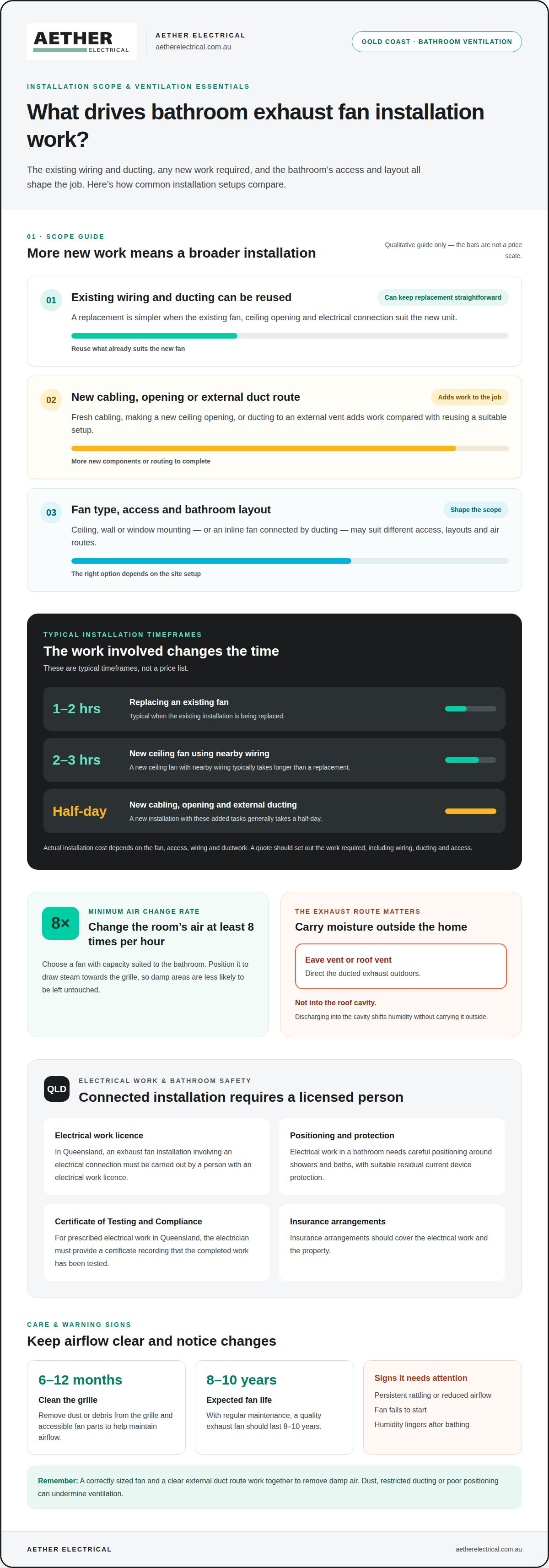
Installation costs depend on the work involved, not just the fan. Existing wiring and ducting can make a replacement straightforward, while new cabling, a ceiling opening or a route to an external vent adds work. Fan type, access and bathroom layout also affect the scope. A quote should set out the work required, including wiring, ducting and access.
Queensland rules are clear: exhaust fan installation involving an electrical connection must be carried out by a person with an electrical work licence under the Electrical Safety Act 2002, according to Queensland Government, Office of the Queensland Parliamentary Counsel. Electrical work in a bathroom also needs careful positioning around showers and baths, with suitable residual current device protection.
Ceiling-mounted fans suit bathrooms with accessible roof space and a practical duct route. Wall- or window-mounted fans can work where roof access is limited. An inline fan sits away from the room, connected to the bathroom grille by ducting. The right option depends on access, layout and the route for extracted air.
Common problems include poor fan positioning, blocked or ineffective ducting, and unsafe wiring near wet areas. A fan that discharges into the roof cavity moves humidity without carrying it outside. Incorrect electrical connections create safety risks, so a qualified electrician should handle installation or repairs involving wiring.
For prescribed electrical work in Queensland, the electrician must provide a Certificate of Testing and Compliance. It records that the completed electrical work has been tested. The electrician’s electrical work licence is essential for connected installation. Insurance arrangements should also cover the electrical work and property.
When choosing a licensed electrician on the Gold Coast, check that they hold a Queensland electrical work licence and can explain the proposed installation. Ask where the fan will go, where the ducting will discharge, and how the electrical connection will be protected. Clear answers help you understand the work before it starts.
Bathroom fan installation and replacement
A replacement can be simple if the existing fan, opening and electrical connection suit the new unit. If the fan is noisy, weak or no longer clears steam, the fault may be in the motor, grille or ducting. Repair may address a failed part; replacement may make more sense when the unit has reached the end of its useful life or still performs poorly after repair.
In Queensland, replacing an existing exhaust fan typically takes 1-2 hours. A new ceiling fan using nearby wiring typically takes 2-3 hours. Fresh cabling, a new ceiling opening and ducting to an external vent generally make a new installation a half-day job. These are typical timeframes, not a price list. The installation cost depends on the fan, access, wiring and ductwork, and is given after a quote request.
With regular maintenance, a quality exhaust fan should last 8-10 years. A persistent rattling sound, reduced airflow, a fan that fails to start, or lingering humidity can signal that it needs attention. Dust can also restrict airflow, so cleaning the grille and accessible fan parts helps keep exhaust fans working efficiently. Electrical repairs and replacements should be handled by a qualified electrician.
Replacement is also a chance to reconsider the room’s setup. A fan-and-light combination brings lighting and extraction together, while a three-in-one unit adds heating. The right fit depends on the bathroom layout, existing opening and air volume the fan needs to move. A correctly sized fan removes damp air rather than simply making noise above the shower.
For homes across Australia, a clear assessment can separate a repair from a full replacement. The work includes identifying the fault, removing the old unit, fitting a suitable fan and checking its operation. For help planning an electrical fan replacement, arrange a fan installation assessment.
Preventing condensation, mould and water damage
For humid coastal bathrooms, choose a fan sized to clear the room’s air and ducted outside. The setup should carry moisture beyond the home, not into the ceiling cavity.
Moisture and Condensation Prevention
Steam condenses when warm, moist bathroom air meets cooler surfaces, leaving mirrors, walls and ceilings damp. A fan should change the room’s air at least 8 times per hour to help remove that moisture. Its capacity needs to suit the room, and its position should draw steam towards the grille. A poorly located fan may leave damp areas untouched.
Ducting matters as much as airflow. On the Gold Coast, bathroom exhaust should discharge through an eave or roof vent, not into the roof cavity. This carries extracted air outside instead of shifting moisture elsewhere in the home. Correct installation supports comfort and helps limit condensation on nearby surfaces.
Mould and Humidity Control
Lingering humidity can encourage mould and mildew on grout, paint, ceilings and stored belongings. Run the fan during bathing and let it clear humid air afterwards. A correctly sized unit helps remove steam and odours, but it can’t compensate for ducting that ends inside the roof space. Persistent damp patches can signal that the ventilation needs attention.
Everyday use of bathrooms and kitchens releases moisture into Gold Coast homes. Uncontrolled humidity can contribute to condensation, mould growth and damage to walls or ceilings. An effective exhaust system draws damp air through a grille and channels it outside. This tackles moisture at its source instead of relying on open doors to clear steam.
Regular care helps maintain airflow. Clean the fan grille and remove dust or debris every 6-12 months. If a fan becomes noisy or airflow drops, the cause may be a dirty grille, a fault or restricted ducting. A licensed electrician can assess electrical issues and confirm the fan is properly located and operating as intended. Good workmanship includes a clear external discharge path.
Exhaust fan installation across Gold Coast suburbs
Bathroom layouts and roof access vary across Gold Coast homes. A ceiling fan may suit a bathroom with clear roof access, while a wall- or window-mounted unit can work where the roof space is difficult to reach. The suburb alone doesn’t determine the setup. The room, existing wiring and ducting route shape the installation.
For example, a bathroom with an existing fan opening may need a replacement unit and a check of its duct route. A renovation with no fan may need a new opening, electrical connection and ducting to an outside vent. In a townhouse or apartment, access and the practical route for extracted air can affect the work. Each site needs a solution suited to its layout.
Moisture isn’t limited to bathrooms. A kitchen fan can help remove cooking odours, steam and smoke, while laundry ventilation can clear damp air. These rooms have different extraction needs, so one fan doesn’t suit every space. A useful assessment identifies the room, checks the existing installation and considers where the extracted air will discharge.
Before a quote is prepared, the scope should make the key work clear: fan location, any new wiring, ducting requirements, and whether an existing unit needs repair or replacement. These details explain why installations can involve different work, even within the same Gold Coast suburb. A ceiling fan is a separate job from a bathroom exhaust fan, despite the similar name.
A clear next step is to arrange an electrical assessment for the bathroom or other room needing ventilation. The installation plan can then reflect the site’s access, wiring and duct route, rather than relying on a generic setup. Arrange a Gold Coast fan installation assessment to discuss the work required for your home.
Aether Electrical
Aether Electrical is a practical next step when your bathroom fan needs replacing, the wiring needs attention, or ventilation isn’t clearing damp air. A site assessment can account for the room layout, existing electrical setup and route for extracted air, helping shape a suitable installation plan.
Clear advice helps when you’re weighing repair against replacement or planning ventilation during a renovation. Aether Electrical also provides solar installation and servicing, battery storage installation and EV charger installation for other household electrical needs.
For help with your bathroom fan installation, contact Aether Electrical.
Plan your next step with confidence
Bathroom exhaust fan installation on the Gold Coast is a home-specific job. The next step is to match the symptoms you’ve noticed with the right scope of work. A noisy fan, lingering dampness or a renovation can each point to a different need. Sharing what’s happening in the room helps clarify the setup, access and electrical work required.
Aether Electrical provides Domestic Electrical Services for residential electrical needs. Its wider work also includes Solar Installation & Servicing and Battery Storage Installation. For a bathroom fan, the focus is on understanding the room and the work required, so you can move forward with a clear plan rather than guess at a solution.
Bring your questions about the fan, the room and the next step. Contact Aether Electrical to discuss your fan, and take the first step towards a more comfortable bathroom.
Frequently Asked Questions
What size exhaust fan do I need for my bathroom?
Choose a fan that can replace the bathroom’s air at least 8 times per hour. Room volume matters, so ceiling height affects the required capacity as well as floor area. A compact ensuite and a larger family bathroom won’t necessarily need the same fan. Consider the position of the shower and the grille, since the fan needs to draw humid air from where it builds up.
What do fan installers do?
A fan installation starts with assessing the room, existing fittings and route for extracted air, then planning the fan position and work. For a replacement, the old unit is removed and a suitable new one fitted. A new installation may need an opening, wiring and ducting. After fitting, the electrician checks that the fan operates and extracted air reaches an external vent rather than staying in the ceiling space.
What does bathroom exhaust fan installation cost on the Gold Coast?
The cost depends on the installation scope, including whether the bathroom already has suitable wiring, an opening and ducting. A like-for-like replacement differs from a new fan that needs cabling and a route to an external vent. Ceiling access and the chosen fan also affect the work. A useful quote sets out what’s included, so you can see the fan, electrical work and ducting requirements.
How much does it cost to replace a bathroom exhaust fan in Australia?
Replacement costs depend on whether the new unit fits the existing opening and electrical connection. Changes to the fan type, wiring or duct route can add work beyond removing the old unit and fitting another. For example, replacing a basic fan with a fan-and-light combination may involve different fitting requirements. The quote should reflect the bathroom setup and any additional electrical or ventilation work.
Which bathroom exhaust fan size and airflow rating suit different bathroom sizes?
Match airflow to the room’s volume, not floor area alone. The target is for the fan to change the bathroom’s air at least 8 times per hour. A higher ceiling increases room volume, which affects the capacity needed. For example, two bathrooms with the same floor area may need different fan capacities if their ceiling heights differ. The fan’s position and duct route also influence extraction.
What are the Queensland electrical and building requirements for bathroom exhaust fan installation?
In Queensland, an electrical connection must be installed by a person with an electrical work licence under the Electrical Safety Act 2002, according to Queensland Government, Office of the Queensland Parliamentary Counsel. Wet-area ventilation must align with the National Construction Code. Fan fittings must be positioned appropriately around showers and baths, with residual current device protection. For prescribed electrical work, the electrician provides a Certificate of Testing and Compliance.


