

Coastal conditions don’t rule out solar; they make careful design essential. The best solar system for coastal conditions in Byron Bay uses panels with IEC 61701 Grade 6 salt-mist resistance, corrosion-conscious mounting hardware and weatherproofing, plus an inverter sheltered from salt air or built to resist corrosion. Those details help match the system to its seaside setting.
Before choosing a solar system in Byron Bay, consider salt exposure, heat and ongoing upkeep. Your roof, daytime electricity use and plans for battery storage matter too: a panel rating alone cannot show whether a system suits your home. This guide explains how coastal conditions affect solar design, performance and maintenance, and outlines the practical choices for local homes.
Key Takeaways
- For coastal roofs, prioritise salt-mist-resistant panels and corrosion-conscious mounting, weatherproofing and inverter placement.
- Compare solar and battery payback against when your household uses electricity, especially after 5 pm.
- Use your household’s electricity use and roof orientation to guide system size and panel placement.
- Plan for regular panel cleaning and keep an eye on system condition to help limit the effects of sea grime.
Do solar panels work well in coastal conditions?
Solar panels can perform well in Byron Bay when the system is designed for salt air, heat and moisture. The best solar system for coastal conditions in Byron Bay is one planned around the property, with suitable equipment, careful installation and appropriate protection from the elements. Aether Electrical offers solar and battery design, installation and servicing, with a free design and quote for projects.
Salt-Mist Resistance and Corrosion Protection
Start by comparing panels’ salt-mist resistance. IEC 61701 Grade 6 is the recommended level for coastal conditions, giving homeowners a clear rating to look for. The best solar system for coastal conditions in Byron Bay also needs mounting hardware selected with salt exposure in mind.
Material contact matters. When aluminium panel frames touch steel mounting hardware in coastal conditions, galvanic corrosion can affect the frame. Review how the design handles contact between these materials across the roof. Salt deposits can also collect on exposed surfaces, so include visible panel edges and mounting points in routine inspections.
Cleaning helps remove sea grime that can build up and affect panel output. Tailor maintenance to the roof’s exposure and the equipment installed, rather than assuming every coastal property faces the same conditions.
Coastal Heat and Weatherproofing
Heat can reduce panel output. For hot climates, the recommended temperature coefficient is between −0.29% and −0.31%. Panels can lose power when the roof exceeds 55 °C, so compare heat performance as well as salt-mist resistance when choosing equipment.
Weatherproofing also depends on inverter placement. In coastal areas, an inverter should be sheltered, ideally inside a garage, or be corrosion-resistant. Consider how cables and connection points will be protected from moisture during installation.
On flat roofs, a slight tilt helps prevent water pooling. Check that the panel layout allows drainage and avoids areas where water can sit. These details help a coastal system handle salt, heat and rain while supporting electricity production.
Solar and battery payback periods
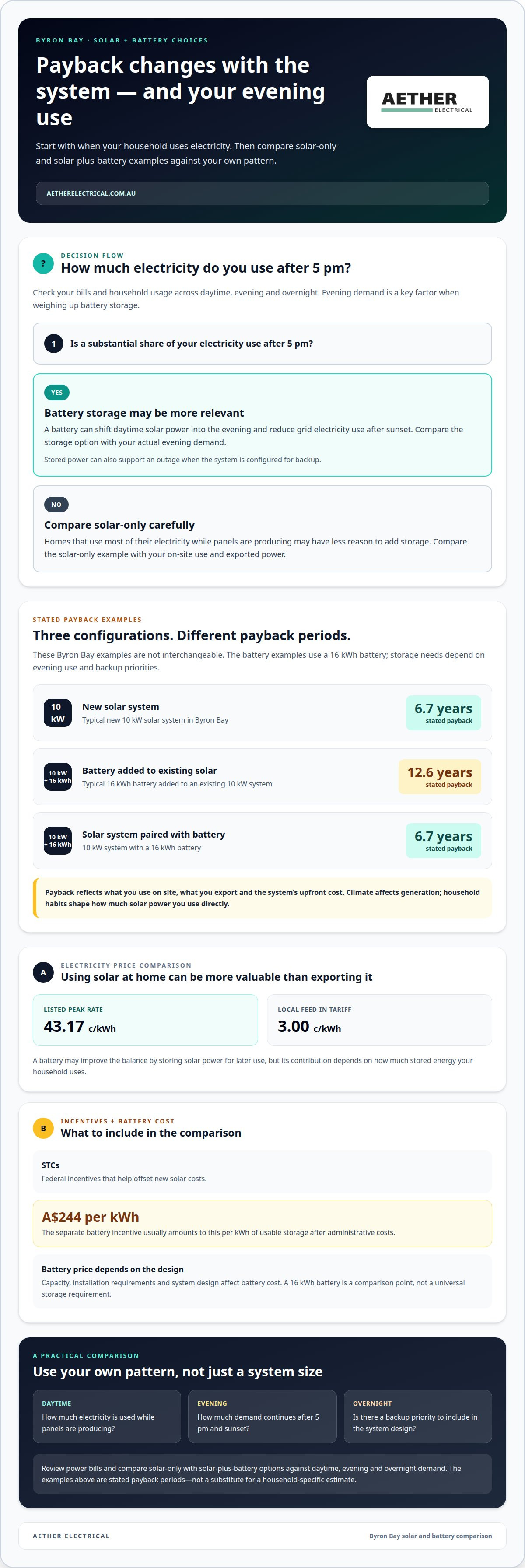
A 16 kWh battery is a useful Byron Bay comparison point, but storage needs depend on evening use and backup priorities. Battery cost depends on capacity, installation requirements and system design; it’s provided after a quote request. Two federal incentives apply: STCs help offset new solar costs, and a separate battery incentive usually amounts to A$244 per kWh of usable storage after administrative costs.
Payback reflects what you use on site, what you export and the system’s upfront cost. A typical new 10 kW solar system in Byron Bay has a stated payback period of 6.7 years. Adding a typical 16 kWh battery to an existing 10 kW system has a stated payback period of 12.6 years. A 10 kW system paired with a 16 kWh battery also has a stated payback period of 6.7 years.
Those examples aren’t interchangeable. A battery can shift daytime solar power into the evening, reducing grid electricity use when household demand continues after sunset. It can also provide stored power during an outage when the system is configured for backup. Households using substantial electricity after 5 pm have more reason to consider storage than homes that use most power while solar panels are producing.
Compare your electricity plan with your usage pattern. Byron Bay’s listed peak rate is 43.17 c/kWh, while the local feed-in tariff is 3.00 c/kWh. Using solar power at home can therefore be more valuable than exporting surplus electricity. A solar battery may improve that balance, but its contribution depends on how much stored energy you use.
For a useful estimate, review your power bills and note daytime, evening and overnight demand. Compare solar-only and solar-plus-battery options against those patterns, including any backup needs. Climate affects generation, while household habits shape how much solar power you use directly. Both influence payback.
A tailored solar and battery installation can bring system size, storage and household demand into one design.
Solar system design for Byron Bay coastal conditions
Start with household consumption, roof orientation and the property’s exposure to coastal conditions. Then match the system size, inverter and mounting design to those factors.
System Size and Configuration
Use electricity consumption across the previous 12 months to guide system size. A 3-5 kW system can suit smaller homes or limited roof space, while 6.6 kW is a common mid-range option. Higher use, air-conditioning or a pool may point towards 8-10 kW. Byron Bay receives an average of 4.4 kWh of solar energy per square metre daily.
A north-facing 5 kW system is estimated to produce 16 kWh daily; a 10 kW system, 32 kWh. Off-grid design also needs storage matched to household use, because generation and demand don’t always line up.
Panels and Inverters for Coastal Performance
Panel brands differ in output and durability, so compare salt-mist resistance alongside temperature performance. For hot climates, the recommended temperature coefficient is between −0.29% and −0.31%. Inverter placement and capacity matter too: match the inverter to the panel configuration and household needs, with coastal exposure factored into its position or corrosion resistance.
Rather than relying on a generic installer ranking, look for a design that addresses Byron Bay’s coastal conditions. The proposal should explain how it accounts for salt exposure, equipment placement and system configuration.
Installation Approvals and Property Constraints
Essential Energy covers Byron Bay. Systems up to 5 kW in urban areas or 3 kW in rural areas qualify for automatic approval. The listed maximum export for single-phase homes is 5 kW; flexible exports of up to 10 kW per phase are being introduced. Three-phase homes have a listed maximum inverter size of 30 kW.
Heritage and bushfire-prone properties can have additional placement and access constraints. Consider roof layout, visible panel positions and safe installation access during planning, as these details can shape the final configuration.
Storms, Wind, Salt Spray and Shading
Storm exposure, wind and salt spray all influence mounting and equipment choices. A site-specific layout should account for roof shape, exposed edges and nearby trees. Shading can reduce the sunlight reaching panels, so map shadows across the roof before deciding where panels should go.
After installation, check for salt deposits, debris and changes in shade. These observations can help identify conditions that may affect performance or maintenance needs over time.
Solar system lifespan and maintenance
In Australia’s coastal conditions, thoughtful upkeep helps protect a solar system over time. Check the panels, mounting hardware and system performance as separate parts.
System Lifespan
Modern solar panels are designed to last 25 years or more. Assess the residential system as a whole, not just the panels. The inverter, mounting hardware and electrical connections also affect performance over time. A listed ideal panel warranty range for coastal conditions is 25-40 years. Compare what each warranty covers, including product defects and output, and keep the paperwork from solar panel installation.
Maintenance and Cleaning
Sea grime can build up on panels and affect output, so regular cleaning is advised. From a safe position, look for visible deposits, leaves or other debris. If panels appear dirty, arrange suitable cleaning rather than climbing onto the roof. Salt can also collect around mounting points, so include them in visual checks. Follow the system’s maintenance plan and warranty conditions.
After cleaning, compare the system’s energy readings with its usual pattern. Changes can have several causes, including weather, new shading or a fault. Note what changed and when, so a maintenance inspection has a clear starting point rather than relying on memory.
System Monitoring
Review generation readings regularly and compare periods with similar weather. A cloudy day will produce a different result from a clear one, so look for sustained changes rather than reacting to a single reading. If output drops, check for new shade, visible grime or an inverter warning. Record the date and what you observe.
Keep monitoring records, warranty documents and government incentive paperwork together. This makes it easier to track the system’s history and support a maintenance review. An inspection can assess the panels, inverter and connections as one setup. A suitable maintenance plan should explain what is checked and how issues are handled.
Arrange solar system servicing to review performance and maintenance needs.
Aether Electrical: Domestic Electrical Services
Aether Electrical is a practical next step for Byron Bay homeowners planning coastal solar or reviewing an existing system. Its Solar Installation & Servicing covers system design, installation and ongoing servicing, with a free design and quote for solar and battery projects. For households looking to use more solar power after sunset, Battery Storage Installation can add storage to the plan.
When you’re ready to move from comparing options to planning electrical work, Aether Electrical can help. Domestic Electrical Services cover related household electrical needs, and EV charger installation can be considered alongside solar as your home’s electricity needs change.
For help planning solar or electrical work at your home in Byron Bay, contact Aether Electrical through aetherelectrical.com.au.
Make your next solar decision with confidence
Turn your priorities into a clear plan for your home. Decide what matters most: protecting equipment from coastal exposure, matching electricity use to solar generation, or preparing for future household changes. That direction helps keep design choices practical and focused.
Before moving ahead, gather details about your home: roof layout, recent power bills and any planned electrical upgrades. These provide a useful starting point without committing you to a particular system. The best solar system for coastal conditions in Byron Bay is designed around your property, electricity use and coastal setting, not chosen from a generic package.
Aether Electrical can help you take that next step with solar planning and electrical work. Contact Aether Electrical about solar to discuss a design that suits your home. A well-considered plan makes the move to solar feel straightforward, and gives you a sound basis for what comes next.
Frequently Asked Questions
How much do solar systems cost in Byron Bay?
Solar system costs in Byron Bay depend on system size, roof access, switchboard changes and whether battery storage is included. A project-specific quote lets you compare the complete installation, rather than panel-only figures. Aether Electrical offers a free design and quote for solar and battery projects, with recommended equipment details and a price-versus-cost explanation for the proposed setup.
How much power does solar produce in Byron Bay?
As a broad Australian estimate, each kilowatt of panels generates about 4 kWh daily on average. Actual production in Byron Bay varies with roof direction, shade, weather and seasonal sunlight. Compare a system’s generation estimate with your household’s daily electricity use. For example, note whether your consumption is highest during daylight hours or later, when panels aren’t producing.
Do I need a battery with my system?
A battery isn’t essential for every solar home. It may suit households that want to store surplus daytime generation, use more solar electricity after dark, or prepare selected circuits for backup during an outage. A battery does not automatically power every circuit when the grid fails: the system configuration and selected backup circuits determine what remains available.
How do I find a solar installer in Byron Bay?
Aether Electrical provides Solar Installation & Servicing for Byron Bay and the Northern Rivers. Solar and battery projects include a free design and quote, with recommended panels, inverter and battery detailed for the proposed setup. Share your roof layout and recent electricity use through the company’s contact page to begin a project-specific discussion.
How do I know which installer to trust?
Look for a clear written proposal that connects the system design to your roof and electricity use. It should identify the equipment, installation scope, warranty terms and maintenance arrangements in plain language. Check that the expected generation assumptions are explained too. When these details are easy to understand, you have a sound basis for assessing the work.
Which solar panels and mounting systems best withstand salt air and coastal corrosion near Byron Bay?
Look for panels with a stated coastal salt-mist resistance rating, and assess the mounting hardware as part of the same assembly. Compare how the frame, fasteners and rails are specified for coastal exposure, rather than judging panels by brand alone. Review warranty exclusions for salt-air damage, and keep the equipment details with your installation records for future maintenance.


