
A solar fault doesn’t automatically mean you need a new system. When troubleshooting solar system faults on the Gold Coast, the first step is to find out what has failed: repair may suit a fixable fault, while replacement may be worth considering if equipment is badly damaged, parts are unavailable or the system no longer meets your electricity needs. Solar components can remain energised even when switched off, so leave electrical checks to a qualified professional.
An unexpected bill or inverter warning can be unsettling, but neither reveals on its own whether the panels, inverter, wiring or another component is at fault. A proper diagnosis distinguishes a straightforward issue from one that needs repair.
This guide explains how technicians assess faults, which signs to look for and how to weigh repair against replacement. You’ll also learn why an offline monitoring app doesn’t always mean the system has stopped producing power, and what to expect from a thorough solar inspection.
Key Takeaways
- Weigh the system’s damage, parts availability and your household’s electricity needs before deciding whether repair or replacement makes sense.
- An inverter switched off doesn’t mean every solar component is safe to touch. Leave switchboard output checks and electrical fault-finding to a qualified professional.
- Cracks and panel delamination can affect performance. After severe weather, avoid accessing damaged panels and arrange a professional inspection.
- Diagnosis can involve comparing system output, checking inverter messages and testing electrical components to pinpoint the fault before repair work begins.
Should You Repair or Replace Your Solar System?
Repair makes sense when testing identifies a fixable fault and suitable parts are available. Consider replacement if equipment is significantly damaged or no longer meets your electricity needs.
Emergency Solar Repairs
After a storm or sudden failure, keep clear of cracked panels, exposed wiring, loose equipment and burning smells. Don’t climb onto the roof or touch damaged components. Arrange a professional assessment before repairs begin so electrical risks can be evaluated. If there’s immediate danger, keep people away from the area and contact emergency services.
Repair or Replace?
Troubleshooting solar system faults on the Gold Coast starts with finding the failed component, not assuming the whole system needs replacing. Lower output can also reflect seasonal sunlight, new shading or a change in household use. Ask for the fault and proposed repair to be explained, including whether the system will meet your needs once fixed. Consider equipment condition, parts availability and electricity requirements before deciding on replacement.
Repairs for Systems from Other Providers
A system installed by another provider can still be assessed by reviewing its equipment, symptoms and installation records. Gather the inverter model, any warning message, past service notes and warranty documents. If AGL arranged the installation, check the paperwork for system and warranty details. The installer’s name doesn’t identify the current fault; testing can locate whether it involves the panels, inverter, wiring or another component. This is a practical starting point for troubleshooting solar system faults across the Gold Coast.
Repair Costs, Parts and Warranties
Repair costs depend on the fault, access, testing and parts required. If a component is unavailable, repair may be less practical than replacement. Keep service records and invoices, as documented servicing can support product or performance warranty claims. Electrical repairs should be handled by an appropriately licensed and qualified professional. For solar fault troubleshooting around the Gold Coast, don’t open equipment or attempt electrical repairs yourself.
Are solar panels live when the inverter is switched off?
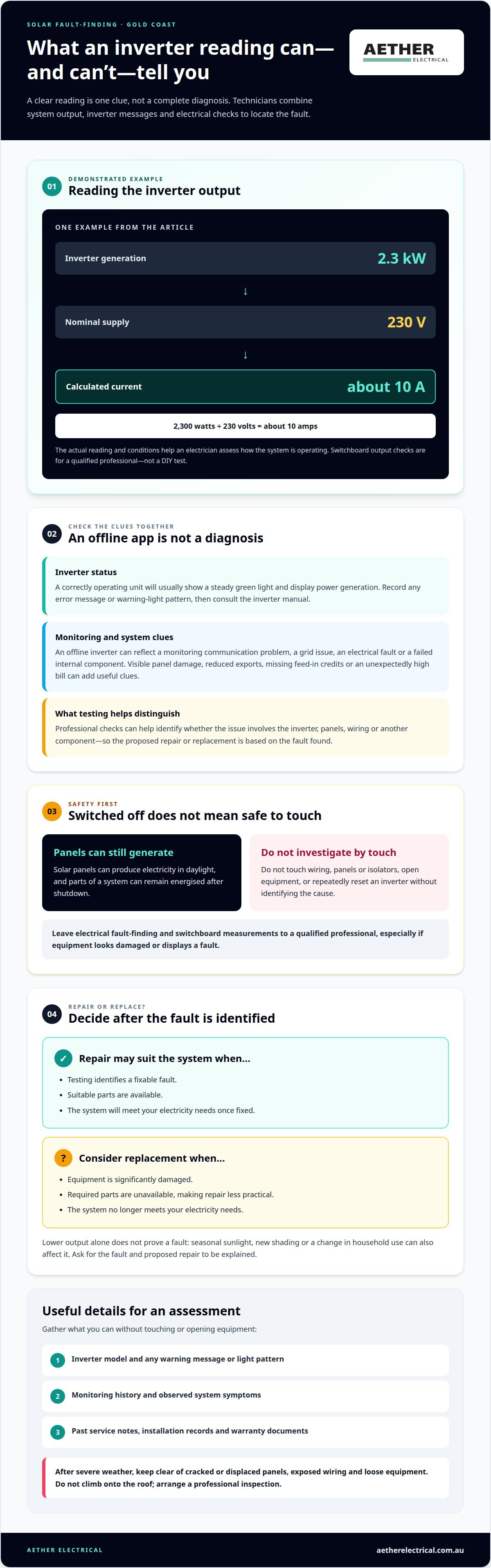
Yes. Solar panels can produce electricity in daylight, and parts of a system can remain energised after shutdown. An inverter appearing offline in a monitoring app doesn’t prove generation has stopped. Don’t touch wiring, panels or isolators to investigate. Leave electrical checks to a qualified professional, especially if equipment looks damaged or displays a fault.
The inverter is a useful place to check system status. A unit operating correctly will usually show a steady green light and display power generation. If it shows an error message or warning light, record the message or light pattern and consult the inverter manual. Don’t repeatedly reset it without identifying the cause, as this can shorten its life and reduce feed-in income.
AC output checks at the switchboard help identify whether power is flowing from the inverter. These are measurements for an electrician, not a DIY test: switchboards contain live electrical parts. In one demonstrated example, the inverter showed 2.3 kilowatts of generation. Dividing 2,300 watts by a nominal 230-volt supply gives about 10 amps. The actual reading and conditions help the electrician assess operation.
An offline inverter can reflect a monitoring communication problem, grid issue, electrical fault or failed internal component. Visible panel damage, reduced exports, missing feed-in credits or an unexpectedly high bill can add useful clues. Share the inverter’s message and monitoring history during fault assessment. Testing can distinguish an inverter malfunction from panel damage or wiring trouble, guiding repair or replacement. For practical solar servicing, arrange professional checks rather than opening equipment or testing the switchboard yourself.
Can damaged solar panels be repaired?
Some panel faults can be repaired, but depending on the damage and manufacturer guidance, a damaged panel may need replacement. On the Gold Coast, storms, coastal salt and moisture, and extreme heat can all affect solar equipment.
Moisture and UV-Related Panel Delamination
Moisture or UV exposure can separate a panel’s layers, a fault known as delamination. Look for visible lifting, bubbling or changes to the panel surface, but don’t climb onto the roof to inspect it. Delamination can affect performance, so a professional inspection can determine whether the panel remains suitable for use. The extent of separation and manufacturer guidance help establish the next step.
Visible and Storm-Related Panel Damage
Hail, wind and flying debris can crack panels or cause microcracks in their cells. Some damage is difficult to see from the ground, yet microcracks can reduce panel efficiency. After severe weather, keep clear of cracked, displaced or visibly damaged panels and arrange a professional inspection. A solar technician can assess the damage and compare the affected panel’s performance with the rest of the system. Replacement may be needed, depending on the damage and manufacturer guidance.
Damage to Panels, Wiring and Connectors
Storm damage can affect more than panel glass. Loose connections, corroded terminals or damaged cable insulation can interrupt solar power flow and reduce system performance. Gold Coast properties near the coast or canals face greater exposure to salt and moisture, so their systems may need more frequent checks. Extreme temperatures can also speed up the gradual decline in panel efficiency.
During an inspection, a technician can assess panels, frames, wiring and connectors to determine whether the fault is isolated or affects several components. Moisture entering damaged cables, connectors or isolators can lower insulation resistance and cause an inverter to shut down for safety. Don’t touch exposed wiring or try to remove a panel. For homes and businesses, the fault’s location, equipment condition and manufacturer guidance shape the repair decision.
Solar system fault-finding and diagnostics
Common faults include underperforming panels, inverter failures and battery capacity loss. A reliable diagnosis follows a clear sequence, reviewing system performance before testing the equipment responsible.
Safe Checks for Panels Producing No Power
From the ground, note whether the roof area is clear and whether an obvious obstruction has appeared since the system last performed normally. Record when and under what conditions you notice reduced output, then share those observations with the technician. Don’t climb onto the roof or open electrical equipment. A written record helps distinguish a lasting change from a brief variation.
On the Gold Coast, arranging an inspection before summer and storm season can help identify issues ahead of periods of high system use. Keep the inverter and roof areas accessible for the technician, and have system documents ready.
Checks Before Booking a Solar Repair
Before booking, gather installation details, previous service records and information about recent roof work. Tell the technician whether the system includes a battery, as its condition can affect stored and available energy. For a commercial site, include operating patterns and periods of high demand. These details help tailor the assessment to how the property uses solar power.
A thorough service can include visual checks of panels, frames, rails and roof fixings, as well as inspection of roof penetrations and sealing. IV curve tracing assesses electrical performance across a panel or string’s operating range and can help locate underperforming equipment. The technician can relate test results to the system’s production history and identify where further investigation is needed. This grounds repair decisions in evidence rather than a single symptom.
Arrange professional solar fault-finding to have the system assessed and its next steps explained.
Aether Electrical: Domestic Electrical Services
Aether Electrical provides Solar Installation & Servicing and Domestic Electrical Services for property owners dealing with solar faults. Turn to the team when warning messages, reduced output or damaged equipment need professional assessment. Fault-finding can help identify whether the issue involves panels, the inverter, wiring or battery, and clarify the next repair step.
If the fault needs broader electrical attention, Domestic Electrical Services can address related household work. Aether Electrical also installs battery storage and EV chargers, which can support plans to update a property’s energy setup. The right next step depends on the fault and equipment involved.
Contact Aether Electrical to discuss your solar system.
Make your next solar decision with confidence
A fault can also be a useful opportunity to reassess how your household uses power. Once the cause is clear, decide whether to restore the current setup, plan a replacement or account for future energy needs. That way, your next step reflects the equipment’s condition, not guesswork.
For troubleshooting solar system faults on the Gold Coast, clear test results turn an uncertain warning into a practical decision. Keep the technician’s findings with your system records. They’ll provide a useful reference if performance changes or you review your home’s electrical setup later.
Aether Electrical can help assess solar faults and discuss the appropriate next step for your system. If you’re ready to move from warning signs to a clear plan, contact Aether Electrical about a solar fault. A considered diagnosis is a sensible first move, and you can take it one step at a time.
Frequently Asked Questions
Why has my solar inverter stopped working?
An inverter may stop operating because of an electrical fault, a grid issue or an internal component failure. Alternatively, the inverter may be working while a monitoring communication problem makes it appear offline. Compare the inverter display with the monitoring app and note any warning or change in reported generation. This helps distinguish a power-conversion issue from a problem with system data.
Can an inverter show power that is not reaching the switchboard?
Yes. An inverter display can show generation without proving that power is flowing correctly through the system to the switchboard. An electrician can compare inverter output with switchboard measurements and inspect the connecting electrical path. A mismatch may indicate a wiring or connection fault. Don’t open the switchboard or take live readings yourself; these checks involve electrical equipment.
How can an electrician tell whether a solar panel string is faulty?
An electrician can compare voltage and current readings from each string under similar sunlight conditions. A string that differs from its counterpart may need closer inspection, although shade or uneven sunlight can also affect readings. Further checks, such as insulation-resistance testing, help narrow down whether the cause is a panel, cable or connection. Comparing readings with system records adds useful context.
How do I know if my solar system is having issues?
Look for a combination of changes rather than relying on one alert. Compare monitoring history with your latest bill and feed-in credits, then note any inverter warnings or battery changes. A higher bill alone can also reflect changed household use or electricity tariffs. Recording when the change began and what else changed gives the technician useful context.
Quick Answer: How Is a Solar System Fault Diagnosed?
Technicians diagnose solar faults by combining system information with electrical tests. They review inverter messages and production history, then test relevant circuits and components to locate the issue. If output has fallen, they compare performance under similar sunlight conditions. This helps distinguish an equipment fault from seasonal variation, shade or a monitoring problem before considering repairs.
How do I check a solar inverter fault light or error code?
Read the inverter display from a safe position and record the full error code or light pattern. Check the manual for that model’s explanation, and note when the warning appeared and whether generation changed. Don’t open the inverter or repeatedly reset it to clear the alert. A clear record helps a technician interpret the fault and select relevant tests.


