
Clean panels matter, but they’re only one part of a reliable solar maintenance schedule for the Northern Rivers. Plan for regular panel cleaning, a solar system service every 2 years, and a spring battery check covering capacity, corrosion and terminals. Dirt and debris can reduce generation, while inspections help spot electrical issues and seasonal shading.
It makes sense to focus on clean panels: grime is easy to see, while faults, connection issues and changing shade can be less obvious. Solar output also changes with the weather and seasons, so compare performance with conditions rather than judging it by one cloudy day. A regular solar maintenance schedule for Northern Rivers properties keeps these checks on track without guesswork.
This guide explains when to clean panels, what to check during seasonal inspections and what spring battery servicing involves. You’ll also learn which changes in system performance may signal a problem and when to arrange professional attention.
Key Takeaways
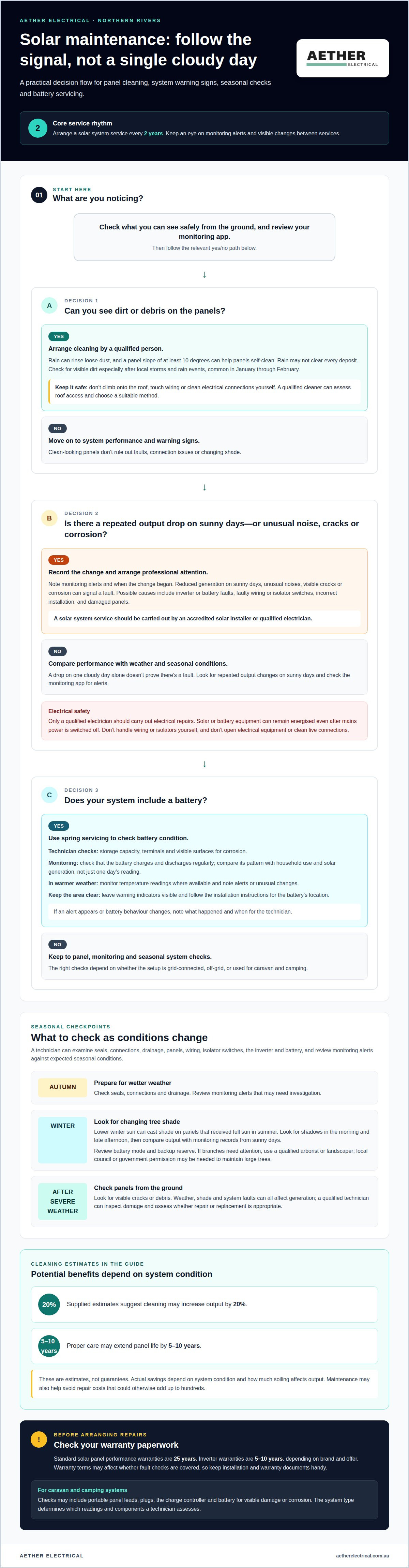
- Arrange a solar system service every 2 years, and watch for reduced output, unusual noises, visible cracks or corrosion.
- Check panels for dirt and debris, which can reduce generation, and leave cleaning to a qualified person.
- Use spring servicing to review battery capacity, corrosion and terminals, and check its monitoring system for regular charging and discharging.
- Plan seasonal checks around local conditions, including autumn drainage and connection checks and winter shade from trees.
Solar system inspections and electrical connection cleaning
A useful inspection checks performance, visible components and electrical connections, not just panel surfaces. The right checks depend on whether the setup is grid-connected, battery-backed, off-grid or used for caravan and camping.
Diagnostic health checks
A diagnostic health check compares solar output with monitoring data and recent weather. Generation changes with the seasons, so a drop on a cloudy day alone doesn’t prove there’s a fault. Check the monitoring app for alerts and note repeated output changes on sunny days. For a battery-backed system, review whether the battery charges and discharges regularly.
Caravan and camping setups need checks suited to their components. Look over portable panel leads, plugs, charge controller and battery for visible damage or corrosion. Don’t open electrical equipment or clean live connections yourself. The system type determines which readings and components a technician assesses.
Warning signs needing professional maintenance
Reduced generation on sunny days, unusual noises, visible cracks or corrosion can signal a fault. Possible causes include inverter or battery faults, faulty wiring or isolator switches, incorrect installation, and damaged panels. Record monitoring alerts and when the change began. A solar system service should be carried out by an accredited solar installer or qualified electrician.
Only a qualified electrician should carry out electrical repairs. A solar or battery system can remain energised even after mains power is switched off, so don’t handle wiring or isolators yourself.
Annual inspection checks
During an inspection, a qualified technician can examine system seals, connections and drainage, as well as panels, wiring, isolator switches, the inverter and battery. They can review monitoring alerts and compare output with expected seasonal conditions. Connection cleaning belongs in this professional electrical check, not a DIY task. These checks can identify visible deterioration and investigate faults affecting generation.
In autumn, check seals, connections and drainage ahead of wetter weather. The monitoring app can also reveal alerts that need investigation.
Winter shading and system checks
In the Northern Rivers, lower winter sun can cast tree shade on panels that received full sun in summer. Look for shadows across the array in the morning and late afternoon, then compare output with monitoring records from sunny days. Shade varies throughout the day and year, so note when it appears before assessing its effect.
Review battery mode and backup reserve before winter. If branches need attention, use a qualified arborist or landscaper. Local council or government permission may be needed to maintain large trees.
Solar panel cleaning
Rain can rinse loose dust from panels, but it won’t clear every deposit. Most panels sit at a slope of at least 10 degrees, which helps them self-clean when it rains. Check for visible dirt or debris from the ground, especially after local storms and rain events, which are common in January through February.
Watch for changes in the monitoring app and look for obvious debris from a safe position. Have a qualified person clean solar panels to reduce the risk of injury or panel damage. Don’t climb onto the roof, touch wiring or try to clean electrical connections. A qualified cleaner can assess roof access and choose a suitable method for your array.
Regular cleaning can support generation because dirt and debris can reduce electricity production. The supplied estimates suggest cleaning may increase output by 20%, while proper care may extend panel life by 5-10 years. Maintenance can also help avoid repair costs that may otherwise add up to hundreds. Actual savings depend on system condition and how much soiling affects its output.
After severe weather, check panels from the ground for visible cracks or debris. Don’t assume a panel needs replacing just because output changes: weather, shade and system faults can also affect generation. A qualified technician can inspect damage and assess whether repair or replacement is appropriate.
Check your warranty paperwork before arranging repairs. Standard solar panel performance warranties are 25 years, while inverter warranties are 5-10 years depending on brand and offer. Warranty terms may affect whether fault checks are covered, so check the paperwork before arranging an inspection. Keep your installation and warranty documents handy.
For help arranging a qualified clean or broader solar system servicing, consider professional support rather than working on the roof yourself.
Spring inspection and battery servicing
Spring is a practical time to have a home battery checked before warmer weather returns. During servicing, a technician can review storage capacity and inspect terminals and visible surfaces for corrosion. These checks can identify changes that may affect how the battery stores solar electricity. Keep the area around the battery clear so its condition and warning indicators remain visible.
Use the battery monitoring system to check whether it charges and discharges regularly. Compare its pattern with household use and solar generation, rather than relying on a single day’s reading. If the app shows an alert or the battery’s behaviour changes, note what happened and when. That record gives the technician a clearer starting point for diagnosis.
Battery temperature also deserves attention during summer. Monitor the system’s temperature readings, where available, and note any alerts or unusual changes. Keep the area around the battery unobstructed and follow the installation instructions for its location. A technician can assess the battery and its ventilation during servicing, without you handling electrical parts.
Home battery storage holds electricity generated by rooftop panels for later use. A solar-only system, by contrast, sends generated electricity to household use or the grid without storing it in a battery. During a spring check, review the monitoring display alongside changes in household energy use. This helps show whether the battery is operating as expected for the installed system.
Battery maintenance is not a DIY electrical task. Don’t remove covers, clean terminals or attempt repairs; a solar and battery system can remain energised when mains power is off. Keep the installation paperwork and any monitoring alerts together for the technician. In Australian homes, this simple record helps connect the battery’s service history with changes in system efficiency, without guesswork.
Solar maintenance services in Northern Rivers
A solar system service every 2 years gives a technician time to assess the whole setup, not just the panels. In the Northern Rivers, a service can cover solar power generation, the inverter, wiring, isolators, mounting and battery components. The system type matters: grid-connected solar, battery storage and off-grid systems each have different parts to inspect.
Start with a clear description of the issue. Note monitoring alerts, changes in output, unusual sounds or visible damage, then share when each began. An accredited solar installer or qualified electrician can use those details to guide diagnostic checks. They can investigate possible inverter or battery faults, wiring problems, isolator issues or damaged panels.
A solar maintenance schedule for Northern Rivers homes should account for both system condition and local surroundings. Winter tree shade can reduce generation without indicating a panel fault. A technician can assess components alongside monitoring data and visible conditions. If cleaning or repairs are needed, professional servicing avoids unsafe roof access and contact with energised electrical parts.
Choose the inspection scope based on the system and reason for the visit. A routine inspection differs from fault-finding after an alert, storm damage or a sustained drop in sunny-day output. Share details such as the system type, battery setup and any recent installation or repair work. This context helps focus the inspection.
Use your solar maintenance schedule in the Northern Rivers to plan routine attention, and arrange an inspection when monitoring shows persistent changes or visible damage needs assessment. For professional support with solar system servicing, book an inspection suited to your setup. A clear service record helps track findings over time.
Aether Electrical: Domestic Electrical Services
Aether Electrical provides solar installation and servicing, battery storage installation and domestic electrical services for property owners with solar systems. Arrange a professional inspection when output changes, an alert appears or seasonal servicing is due. The team also installs battery storage and EV chargers as part of your home’s electrical setup.
Share the issue you’ve noticed and any relevant monitoring alerts or service history. This gives the team useful context about your solar and electrical needs. For help with solar servicing or domestic electrical work, contact Aether Electrical to discuss the next step.
Make maintenance part of your home routine
A solar maintenance schedule for Northern Rivers homes works best when it fits how you use your property. Set a reminder alongside other seasonal home tasks, then keep monitoring alerts, service notes and changes in household energy use together. This record can make future decisions clearer as your household’s needs or electrical setup change.
Use your next service to discuss what’s changed, not just what needs attention today. A new battery, home renovation or change in energy habits can affect how your system supports the household. A clear conversation helps align maintenance with your priorities and avoid guesswork.
If you’re ready to plan the next step, contact Aether Electrical about solar maintenance. A practical routine starts with a simple conversation, and helps you feel more prepared for the seasons ahead.
Frequently Asked Questions
What are the benefits of regular solar panel cleaning?
Clean panels allow more sunlight to reach the cells, helping reduce avoidable generation losses from dust, leaves and bird droppings. Remove loose debris from accessible ground-level areas and note any grime that remains after rain. Persistent soiling can affect electricity production, so compare monitoring records before and after cleaning to see whether output changes.
What does solar panel maintenance entail?
Solar panel maintenance combines visual checks, performance reviews and professional electrical assessment. Look for debris or visible damage from a safe position, then note monitoring alerts and unusual output patterns. A technician can assess the inverter, wiring, isolators, mounting and battery components, where fitted. Keep service records with installation paperwork so future inspections can compare findings with the system’s earlier condition.
How often should solar panels be cleaned in the Northern Rivers NSW?
Clean panels when visible dirt or debris builds up and rain no longer clears the surface effectively. The timing depends on local conditions, such as nearby trees, dust and bird activity. Check from the ground after heavy debris or storms. Arrange qualified cleaning for roof panels rather than climbing up or handling electrical components.
What maintenance schedule is recommended for residential solar panels and inverters in Australia?
Australian solar systems could be serviced every 2 years. Use that service to review panels, the inverter and associated electrical components together, rather than treating the inverter as a separate appliance. Between services, keep an eye on monitoring alerts and visible changes. A seasonal note of shade, debris or output patterns can help make the next inspection more focused.
How often should a solar inverter be inspected or replaced?
Include the inverter in a solar system service every 2 years, and arrange assessment sooner if it displays an alert, stops operating or coincides with a sustained drop in generation. Replacement depends on diagnosis, not a calendar date alone. A technician can assess whether the fault lies in the inverter or another component before recommending repair or replacement.
How do storms, salt air, humidity and vegetation affect solar systems in the Northern Rivers?
Storms can leave debris or cause visible damage, while salt deposits and humid conditions can contribute to corrosion on exposed components. Nearby vegetation may cast shade as the sun’s position changes, reducing panel exposure. After severe weather, look from the ground for displaced debris or visible damage. Note monitoring alerts and new shade patterns for a technician to assess.


