
What if a minor electrical fault stopped your business from trading? A lighting issue, unreliable power or a switchboard fault can disrupt a normal day. Planned commercial electrical maintenance helps you identify concerns early and decide what needs attention before a small problem causes avoidable interruptions.
It’s not always obvious what to check, how often to schedule maintenance or what to record. The right routine depends on your site, equipment and operating hours. A practical checklist helps you set clear next steps without turning maintenance into a technical puzzle.
This guide covers key areas to review, from lighting and power distribution to switchboards, testing and maintenance records. You’ll learn how to shape a checklist around your premises, recognise warning signs and know when to involve a licensed electrician. For businesses across the Gold Coast, Tweed Heads and the Northern Rivers, including Ocean Shores and Byron Bay, a planned, documented approach makes electrical systems easier to manage and day-to-day operations easier to support.
Key Takeaways
- Build commercial electrical maintenance around your site’s equipment, operating hours and the impact of a fault.
- Use visual checks of switchboards, lighting and power circuits to flag issues for investigation, not to replace electrical testing.
- Rank assets by their importance and the consequences of failure to distinguish warning signs from routine checks and planned upgrades.
- Give your team a simple way to record observations, actions and follow-up, while leaving electrical work to a licensed electrician.
- Planned servicing, testing and fault identification can help keep commercial lighting, power distribution and switchboards in good working order.
Why commercial electrical maintenance matters for Gold Coast and Northern Rivers businesses
Reliable power keeps a business moving. Staff need working lights and equipment, while customers expect a shop, office or venue to operate as usual. When a fault interrupts power, even routine work can become difficult. A Gold Coast office might lose access to desks and essential equipment. In a Tweed Heads shop or a Northern Rivers commercial premises, lighting or power problems can complicate serving customers and keeping daily operations on track.
Planned commercial electrical maintenance gives you a clearer picture of your systems before a fault becomes obvious. It creates an opportunity to identify concerns, arrange testing and plan repairs around the needs of your site. Maintenance can’t prevent every breakdown, but it can make electrical upkeep less reactive and help reduce avoidable disruption.
What counts as commercial electrical maintenance?
Commercial electrical maintenance is the planned checking, testing and servicing of a site’s electrical systems. It may include looking for developing faults, testing relevant systems, and repairing or replacing components where needed. Common assets include commercial lighting, power distribution and switchboards.
Maintenance is different from installing new electrical systems, completing a fit-out or attending to a one-off fault. Those jobs may be part of a site’s electrical needs, but planned servicing focuses on the condition of existing systems and the attention they may need. An Electrical contractor is a useful reference for understanding the role of a contractor in electrical work. Your maintenance plan still needs to reflect the specific site and its systems.
For example, a small office may need lighting and power distribution kept under review. A retail premises may need maintenance planned around trading hours and connected equipment. The checklist should fit the building, rather than simply follow a generic template.
What can happen when maintenance is overlooked?
Electrical issues don’t always begin with a complete loss of power. A flickering light, a circuit that trips or equipment that behaves inconsistently can all be reasons to investigate. A tidy-looking switchboard or a lack of visible symptoms doesn’t confirm that every underlying issue has been found. Visual observations are useful prompts, not a substitute for appropriate electrical testing.
When a problem surfaces during normal operations, staff may need to pause work, equipment may become unavailable and repairs can be inconvenient to organise. A fault in an office can affect the work happening around it. In a shop, it may interfere with lighting or essential equipment. The impact depends on the system involved and how the business uses it.
Planned checks help businesses understand the condition of their electrical systems before an obvious fault becomes an operational interruption. They also provide a considered way to identify priorities, record findings and plan follow-up work. That’s a practical starting point for keeping commercial premises across the Gold Coast, Tweed and Northern Rivers in good working order, without assuming every fault can be predicted or prevented.
What a commercial electrical maintenance programme should check
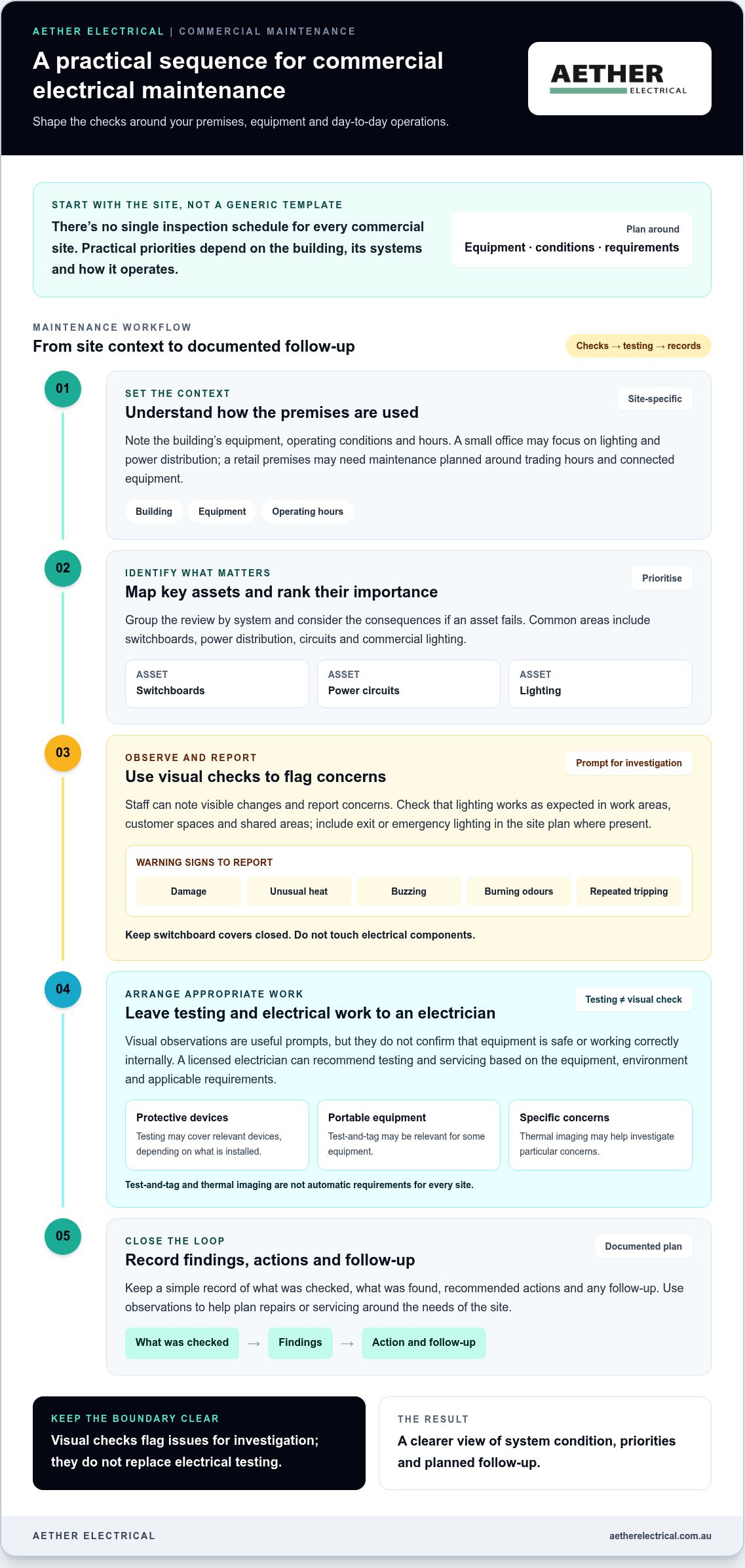
A useful programme groups checks by system, then matches the work to the building’s equipment, operating conditions and applicable requirements. This gives an office manager, shop owner or facilities team a clear view of what’s being reviewed and what needs follow-up. There’s no single inspection schedule for every commercial site. Requirements and practical priorities vary, so an electrician should determine appropriate testing and servicing for the premises.
Switchboards, circuits and commercial lighting
Start with the main electrical assets: switchboards, power circuits and lighting. Staff can note visible changes and report concerns, but should leave covers closed and avoid touching electrical components. Look out for signs that warrant investigation, such as damage, unusual heat, buzzing, burning odours or circuits that trip repeatedly.
A maintenance review can consider whether switchboards appear to be in suitable condition, circuit labels are clear and access is available for safe servicing. Check that lighting works as expected in work areas, customer spaces and shared areas. If the premises have exit or emergency lighting, include its condition and appropriate checks in the site plan.
These observations help build a picture, but they don’t confirm that equipment is safe or working correctly internally. The OSHA Electrical Safety Standards page discusses electrical hazards in the United States, so treat it as general background rather than Australian guidance. Local requirements and your site’s needs should guide the maintenance programme.
Testing, connected equipment and records
Testing may cover relevant protective devices and electrical equipment, depending on what’s installed and how the site is used. An electrician can recommend appropriate checks after considering the equipment, environment and applicable requirements. A kitchen, workshop or customer-facing office may have different equipment and risks from a quiet back-office space.
Test-and-tag may be relevant for some portable equipment. Thermal imaging may also help investigate particular switchboard or equipment concerns. Neither is an automatic requirement for every site. Record what was checked, the findings, any recommended action and who is responsible for follow-up. Keep these details with other useful site records so changes and recurring issues are easier to track.
- Visual review: Note visible damage, unusual sounds, odours, heat or repeated interruptions.
- Electrician-led testing: Assess and test systems or equipment as appropriate for the site.
- Follow-up: Record findings, actions and outstanding items for the next review.
A routine visual check can flag a concern; electrician-led testing assesses electrical performance. Aether Electrical provides planned commercial maintenance, system testing and fault identification across the Gold Coast and Northern Rivers. If you’re setting up a programme for your premises, you can discuss your site’s maintenance needs.
How to prioritise commercial electrical maintenance across your site
A practical priority system helps you decide what needs attention first, what belongs in the maintenance plan and what could be a future upgrade. For commercial electrical maintenance, rank each asset by two factors: its importance to daily operations and the consequences if it fails. This simple approach turns a long equipment list into a manageable set of actions.
Consider how the site operates, not just what equipment it contains. A power circuit supporting essential business systems may matter more than one serving a rarely used room. Trading hours, staff and customer access, equipment reliance and the difficulty of arranging safe access can all affect the order of work. Set priorities according to your site’s needs.
Which electrical assets should a business prioritise?
Begin with assets where failure could affect occupant safety or interrupt essential operations. Depending on the premises, these may include switchboards, critical power circuits, key lighting and heavily used equipment. A shop may rely on particular circuits to serve customers, while an office may depend on power for everyday work. Rank assets according to their actual role, not a generic template.
When does an observation need prompt attention?
Burning smells, visible damage, unusual noise and recurring circuit trips are warning signs, not routine checklist items. Staff should stop using visibly damaged equipment, keep clear of hazards and report them through site procedures. Serious electrical hazards need prompt assessment by a licensed electrician. Don’t attempt to open or repair electrical equipment during a visual check.
Use the matrix below to separate immediate concerns from planned work. The suggested response is a starting point, not a substitute for assessing the specific hazard or applicable requirements.
| Priority | Example | Suggested response | Record to keep |
|---|---|---|---|
| Prompt assessment | Burning odour, visible damage, unusual noise or repeated trips | Follow site procedures, keep people clear and arrange prompt electrician assessment | What was observed, where and when, plus actions taken |
| Planned work | An asset is important to operations, or an upgrade has been identified | Discuss timing, access and operational impact with the electrician | Asset, reason for the work, agreed next step and responsible person |
| Scheduled review | Routine checks or servicing identified for a site system | Include the task in the site’s maintenance plan at a suitable interval | Check completed, findings and any follow-up required |
Review priorities when the use of a space changes, new equipment is added or an issue recurs. Record decisions as well as faults. This creates a useful record of what was assessed, what was deferred and why, making the next maintenance discussion more focused.
A practical commercial electrical maintenance checklist for your team
A repeatable checklist turns observations into clear follow-up. Adapt it to your premises, equipment and operating needs. Staff can review records and note visible concerns, while electrical testing, repairs and work inside switchboards belong with a licensed electrician.
Before and during a routine site walk-through
- Review the history. Check previous service records, open actions, reported faults and any equipment or layout changes. Note recurring issues so they don’t get lost between visits.
- Confirm the scope. Use an asset list or site plan to identify the areas and equipment included in the walk-through. Consider access needs and operating activities that could affect the review.
- Observe, don’t repair. Ask staff to report equipment that isn’t operating as expected. From a safe position, look for visible damage, blocked access or other concerns. Don’t open switchboards, remove covers or attempt electrical repairs.
- Capture the details. Record the asset or location, what was observed, when it was noticed and any immediate site action. “Lights flicker in the rear work area” is more useful than “lighting issue”.
- Escalate concerns. Follow site procedures for hazards. Keep people away from visibly damaged equipment and arrange assessment by a licensed electrician when electrical work or testing is needed.
After checks: document and follow up
Keep one maintenance register that links each observation to an action and an owner. This helps the team see what’s complete, what remains open and what needs an electrician’s assessment. Record testing, repairs and component replacements against the relevant asset, along with findings and recommended next steps.
| Asset or location | Observation or work completed | Date | Action owner | Status |
|---|---|---|---|---|
| Example: rear work-area lighting | Staff reported intermittent operation | Record date observed | Assign a responsible person | Open, in progress or complete |
Use straightforward language and update the status as work progresses. If an electrician tests a system or replaces a component, note the asset, work performed and any recommended follow-up. That record gives the next review a useful starting point and makes recurring issues easier to recognise.
If your premises have solar, include relevant system information in the site records and consider how it relates to the wider electrical setup. This Gold Coast solar installation guide covers installation considerations alongside your site’s electrical needs.
A consistent checklist is easier to use when it fits the building and the way your team works. Explore commercial electrical services for Gold Coast businesses for support with your premises.
How Aether Electrical supports commercial maintenance on the Gold Coast and Northern Rivers
Aether Electrical provides planned and preventative commercial electrical maintenance across the Gold Coast and Northern Rivers. The work can include system testing, fault identification, and component repairs or replacements, planned around the electrical systems and operating needs of each site.
This support connects directly with a site checklist. Findings about commercial lighting, power distribution and switchboards can be reviewed and turned into practical next steps. A flickering light, recurring circuit interruption or switchboard concern can be recorded, assessed and followed up rather than left as a note without a clear owner.
What to expect from a site-specific maintenance conversation
A useful conversation starts with the property and how it operates. Reviewing the electrical systems, reported issues and existing records helps clarify which assets matter most to daily activity. A shop’s operating patterns may differ from those of an office or another commercial premises, so the maintenance approach should reflect the site’s conditions and business activity.
Bring your checklist, maintenance register and relevant service history. These give the discussion a practical starting point: what staff have observed, which items have been addressed and where further assessment may be useful. The plan can then be tailored to the property, rather than assuming every site needs the same work or schedule.
Turn your checklist into a manageable maintenance plan
Keep site observations, existing records and electrician recommendations together in one register. This gives staff a shared reference and helps the business track actions from initial report through to completion. Make responsibilities clear: staff report unusual conditions, an electrician carries out appropriate professional servicing and testing, and a nominated person follows up open actions.
For example, if staff report unreliable lighting in a work area, record the location and observation, assign a follow-up owner and note the electrician’s findings or repair against that asset. Use the same approach for switchboards and power distribution. A concise record makes it easier to spot unresolved items and prepare for the next maintenance review.
Start with a clear list of site concerns and the records you already have. Aether Electrical works with commercial clients across the Gold Coast, Tweed, Tweed Heads and the Northern Rivers, including Ocean Shores and Byron Bay, providing maintenance and servicing suited to their premises.
Talk with Aether Electrical about commercial maintenance.
Make your next maintenance step count
A useful plan doesn’t need to begin with a perfect register. Start with what your team knows: the systems that matter most, recurring concerns and actions still open. That gives your next conversation a clear purpose and keeps decisions grounded in the way your premises operate. Choose one person to keep observations current and agree how open actions will be revisited.
Commercial electrical maintenance works best as an ongoing process, not a document that gets filed and forgotten. As your site changes, revisit priorities, record new observations and keep responsibility for follow-up clear. Aether Electrical supports commercial properties across the Gold Coast, Tweed, Tweed Heads and the Northern Rivers, including Ocean Shores and Byron Bay, with planned servicing, testing, fault identification and repairs.
Bring your current concerns or maintenance records to the discussion. Discuss a commercial maintenance plan with Aether Electrical and take the next step with a clearer view of your site’s needs.
Frequently Asked Questions
How often should commercial electrical maintenance be carried out?
There isn’t one interval that suits every commercial site. The right schedule depends on the equipment, how heavily it’s used, the site environment and any requirements that apply to particular systems. If a business adds equipment or changes how a space is used, it should review whether its maintenance plan still fits. An electrician can set suitable servicing and testing intervals for the premises rather than relying on a generic calendar.
What should be included in a commercial electrical maintenance checklist?
A useful checklist reflects what’s installed and how the business relies on it. Alongside switchboards, lighting and power circuits, note equipment that’s been added or relocated, recurring staff reports, areas with restricted access and changes to site use. Assign someone to check that outstanding actions are followed up. This makes commercial electrical maintenance a site-specific working document, rather than a generic form that may miss the assets most relevant to your operation.
Can routine electrical maintenance prevent business downtime?
Routine maintenance can help identify developing issues and give a business more opportunity to plan follow-up work, but it can’t guarantee that faults or outages won’t occur. Recording an intermittent issue and arranging an assessment, for example, means it can be investigated before the system stops working. Keep essential contacts and site procedures accessible so staff know how to report a problem and who coordinates next steps if equipment becomes unavailable.
Does commercial electrical maintenance need to meet Australian Standards?
Applicable standards depend on the work and equipment involved. For example, AS/NZS 3000:2018 relates to electrical installations, while AS/NZS 3760:2022 covers in-service inspection and testing of electrical equipment. These references don’t create one universal maintenance checklist or interval for every business. Have the work assessed against requirements relevant to your premises and keep records of testing or repairs. For a particular obligation, use current guidance that applies in your state.
What are the warning signs that a commercial electrical system needs attention?
Arrange investigation if staff notice problems such as a hot plug or outlet, scorch marks, a crackling sound, lights that dim unexpectedly or equipment that repeatedly loses power. These symptoms don’t identify the cause, and a visual check can’t confirm what’s happening inside the system. Keep people away from damaged equipment, follow your site’s hazard-reporting process and have electrical concerns assessed rather than attempting a repair.
Who can carry out commercial electrical maintenance in Queensland or New South Wales?
Use an appropriately licensed electrician for electrical work and testing. Staff can report symptoms and make safe visual observations, but shouldn’t open equipment or attempt repairs. This applies to businesses from the Gold Coast and Tweed Heads through the Northern Rivers, including Ocean Shores and Byron Bay. Aether Electrical provides commercial maintenance and servicing across the Gold Coast and Northern Rivers, with work planned around the premises and its electrical systems.
What records should a business keep after electrical maintenance?
Keep a record that identifies the equipment or area, the work completed, the date and any results or recommended follow-up. Save relevant test reports, repair details and documents issued for completed electrical work alongside your site’s maintenance history. If an issue returns, these records can help show what was previously investigated and what changed. Store them where the person coordinating facilities or maintenance can find them, and update them after further work.


